
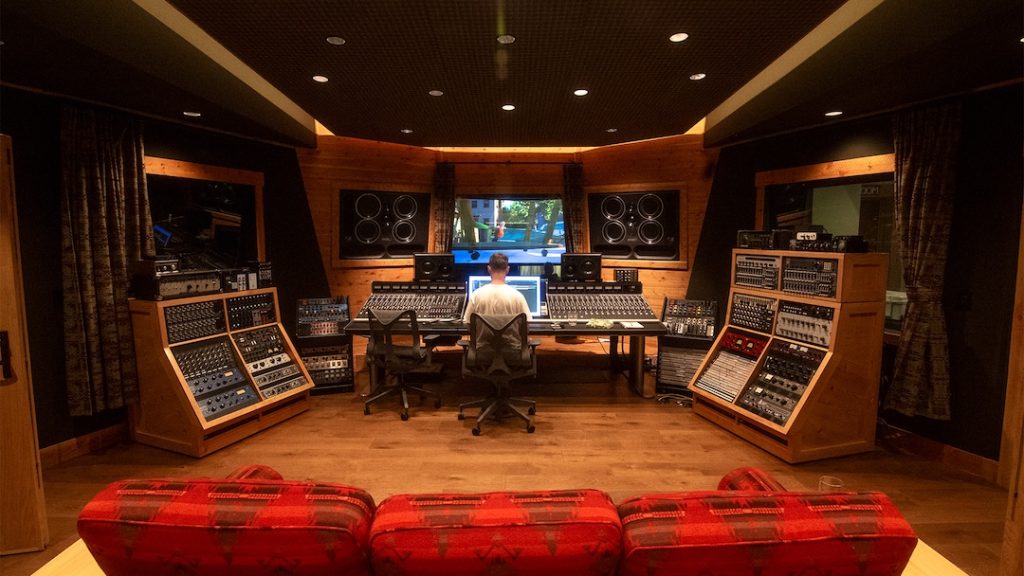
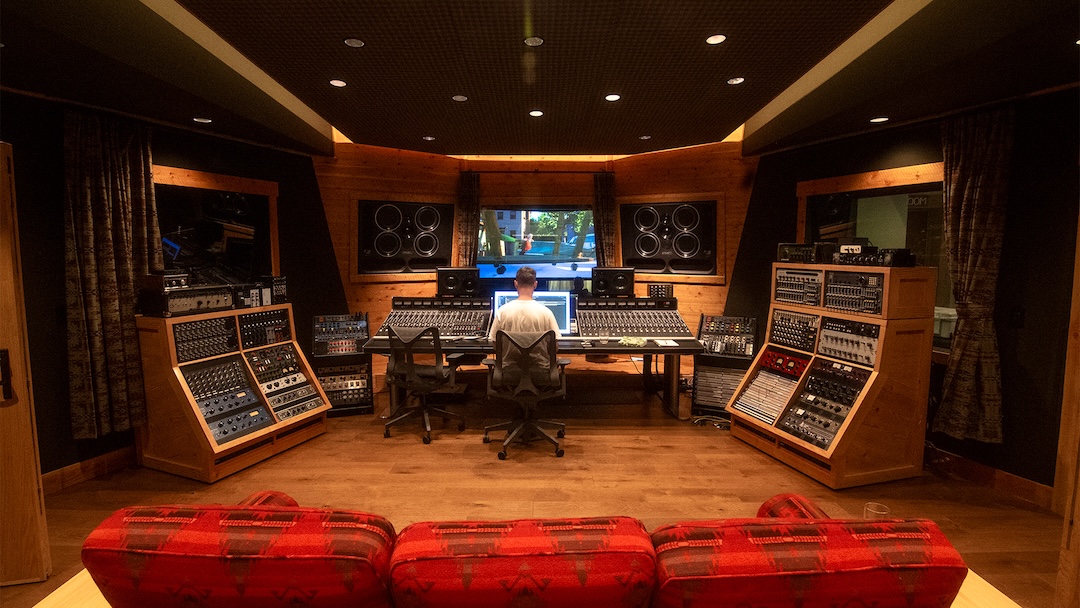
Los Angeles, CA (August 6, 2026)—Four-time Grammy Award-winning producer, musician, DJ and professional photographer and videographer Ryan Lewis has installed a Harrison 32Classic console and seven Harrison Audio D510R 500 Series racks at his renovated private studio in Washington state.
The facility, completed in 2017, has been revitalized in partnership with pro audio equipment retailer and integrator Vintage King Audio as Lewis prepares to make it commercially available in the spring of 2027. Now living in Los Angeles, Lewis has also taken delivery of a second Harrison 32Classic for a commercial facility currently under construction in the Highland Park neighborhood of the city, scheduled to open in the first half of 2027.
• Discover more great stories—get a free Mix SmartBrief subscription!
Lewis first came to prominence with hip-hop duo Macklemore & Ryan Lewis, who swept the rap categories of the 2014 Grammy Awards with their debut independent album The Heist and “Thrift Shop” single, also winning for Best New Artist. He went on to collaborate with Kesha on Grammy-nominated song “Praying,” as well as co-writing and co-producing the opening song from The Greatest Showman motion picture soundtrack.
“I chose the Harrison for the legendary EQs, the crazy filters, the mic pre’s, 32 channels, eight buses, the history of the brand and Dave Harrison, who invented the inline console—but none of that was why I bought it,” Lewis says. “Unlike most consoles, there are integrated converters everywhere—the console is a Dante interface. That fundamentally changes what a console can do in a studio.”
• Les Mis Goes Immersive at Radio City Music Hall
The 32Classic includes premium A-to-D and D-to-A converters with routing of channel, cue/matrix master, group bus and main stereo mix bus inputs and outputs, as well as 12 immersive playback inputs to the monitor section, via the onboard Dante interface. The console’s channel directs, group buses, three stereo cue/matrix mixes and main stereo mix are all additionally available as analog outputs. “You’ve got great converters inside the board,” Lewis says, “and then all of that analog signal is still routable after the DAW has already received it.”