
New York, NY (July 27, 2026)—At first glance, you might be forgiven for thinking that the Solid State Logic Oracle mixing console is just another digital desk. The compact form factor, three large display screens and channel fader panels, almost identical to SSL’s UF8 DAW controller, certainly give off a digital worksurface vibe.
But Oracle is very much an analog console, from input to output, combining the brand’s PureDrive mic preamps, E and G Series EQs and other legacy SSL features with digital recall of every knob, switch and fader in a design the U.K. manufacturer is marketing as ActiveAnalogue.
Mixing consoles providing digital control of an analog signal path are not new. In the mid- 1980s, Amek, Saje and Trident all pioneered large-format analog desks with some form of digital assignability, reset and recall control. There were only a few buyers.
Forty years on, users are now comfortable with digital controller workflows and manufacturers have access to more advanced technologies and components. As a result, today’s market could be more receptive to a fully analog, inline production console with near-instant recall and reset of all gain, processing, pan and routing settings.
Oracle’s worksurface, approximately the same dimensions as SSL’s popular but aging AWS desk (launched 20 years ago), will feel familiar to anyone who has sat behind any of today’s controllers—or an analog console, for that matter. Input channels are laid out with all the physical controls that might be expected on any large analog console, from channel input selection, gain and a high-pass filter to pan and large fader. Similarly, the master section includes all the necessary controls for the four stereo buses, eight stereo group faders, monitor speakers, DAW transport and other features.
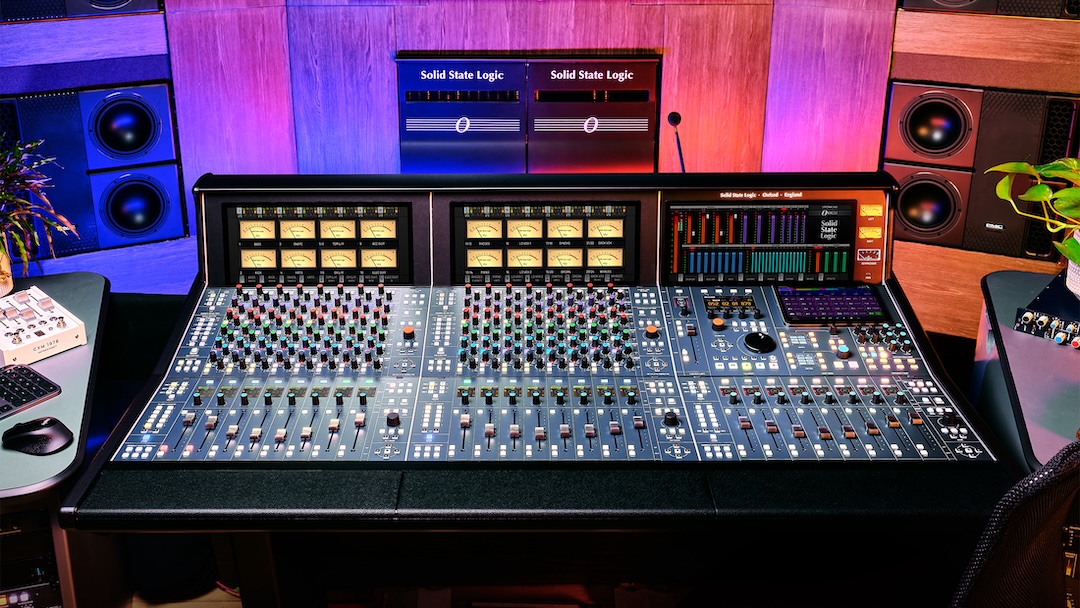
Two configuration options are both based on a single surface housing two bays of eight channel strips each, plus a center section. This being an inline console, there is both a small fader and a large fader input path—each with an insert—through each channel. Eight stereo inputs can also be introduced to the group faders, so Oracle 24 offers 64 inputs on mixdown while Oracle 48 supports up to 112 inputs.
ANALOG SIGNAL, DIGITAL CONTROL
The biggest attraction of Oracle is obviously that it’s a fully analog SSL console with the functionality and sound quality associated with the brand, yet it can save and almost instantly recall every setting across the board. Both the creative and economic advantages should be immediately apparent. An artist or engineer can quickly move from one session to another and fully reset the console in virtually the same time as it takes to switch between Pro Tools sessions—a real timesaver. What’s more, SSL’s O Session software allows the entire console to be configured offline, significantly reducing setup time at the start of or between sessions. Sleep Mode is an additional cost-saver.
Layering digital control onto an analog signal path presents opportunities to expand the surface’s capabilities way beyond anything a typical analog console could offer, of course. Digital worksurface novices needn’t feel intimidated, however, as Oracle can largely be operated just like a typical analog console, using familiar dedicated controls. That said, in today’s hybrid production environments, Oracle’s ability to switch between operating as an analog console and as a controller for up to three separate DAWs, each on a separate layer, may also be attractive.
Control strips to either side of each eight-channel block provide access to features typically only found on a digital desk or controller. For example, in console mode, there are several ways to quickly bring a detailed view of a selected input channel or channel section onto the display above it. The operator can then step or scroll, depending on the controls used, from one channel to another. Further, sections of an input channel can be copied and pasted to other channels, and channels can be linked for stereo operation—tasks involving repatching, or impossible, on a regular analog console.
The order of input channels can also be rearranged, should, for instance, an engineer wish to focus on certain channels or groups of channels. There are 16 channel strips on Oracle’s surface but potentially many more inputs, whether in console or DAW mode, so the control strips to either side of each channel bay also provide switching to bring other bays and layers in front of the engineer.
• Drive, Mix, Climb Rocks, Repeat
The processing order for each input can also be rearranged, allowing filters and EQs to be moved and put before or after inserts, for instance. And this may be unique to Oracle: Each frequency band of the EQ section can be separately cut or soloed, allowing precise adjustment without interference from the other bands.
Happily, despite so much going on, visual feedback is very clear. Input channel functions are color-coded, with the long and short fader paths indicated respectively by green or red LEDs, or LCD legends, as well as font size. With just a glance, it’s easy to see what the input sources are and which channel functions—filter, EQ, insert—are assigned to which input path.
Ten aux sends, color-coded purple, can be placed in either path and configured as all mono, five stereo or any combination in between. An operator can step through pairs of sends and control them using the two knobs, which provide access to levels (mono auxes) or level/pan (stereo) or, again, because this is digital control surface, aux levels can be mixed from the faders. An EFX button, found on other high-end SSL consoles, provides access from channels to unused multitrack buses for use as extra sends to effects.
DYNAMICS, ROUTING AND BUSING
Some might be disappointed by the lack of SSL’s famed channel dynamics but think about it for a moment. How often do you apply the exact same processor to every source at the same time across the console? Plus, for customers at this price point, who likely already have significant collections of outboard gear, there are alternatives—and plenty of insert points.
There are 16 multitrack and four stereo buses (A, B, C, D), routable from those channel bay control strips. Main bus A has both pre- and post-fader insert points; B, C and D have a single insert. Select a detailed view of any of the main buses and a precision stereo image feature becomes available that enables the rebalancing of the return from an outboard device that is out of calibration. A thoughtful touch. SSL is well known for its G bus compressor, but Oracle goes a step further, integrating an enhanced version of the company’s The Bus+ compressor, as well as dynamic EQ, both with dedicated surface controls, across the master stereo out.
The three bay-wide display screens can each be selected to show a variety of information, including numerous metering options, from bargraph to VU and with various ballistics. Screen brightness—in fact, of any illuminated feature, including the SSL logo—may be adjusted. A variety of solo modes may also be selected, including solo in front, introduced on SSL’s 9000 Series, which places the chosen channel in context with the mix with an adjustable level differential.
Finally, O Session and O Setup, two separate apps that may eventually become one, are where projects are saved and recalled and Oracle can be set up offline. Individual channel views are the same detailed view as on the console display and, when linked to the console, enable remote operation of every control, if desired.
• Discover more great stories—get a free Mix SmartBrief subscription!
SSL may well have identified a market niche for a compact analog console with large console capabilities, especially now that control rooms are trending toward a smaller size. Oracle packs a lot of inputs and outputs into a small package, but don’t be deceived—anyone building a patchbay for Oracle will discover that it is similar in size to that of the larger 9000 and Duality consoles. The big difference, though, is that while those consoles have recall, manually resetting them is a time-consuming task. With Oracle, one click of the mouse and—presto!— the session is underway.
SSL plans to launch a major update to Oracle’s software this summer, so the console’s feature set will be enhanced and expanded in the coming months. Prices start at $150,000.