
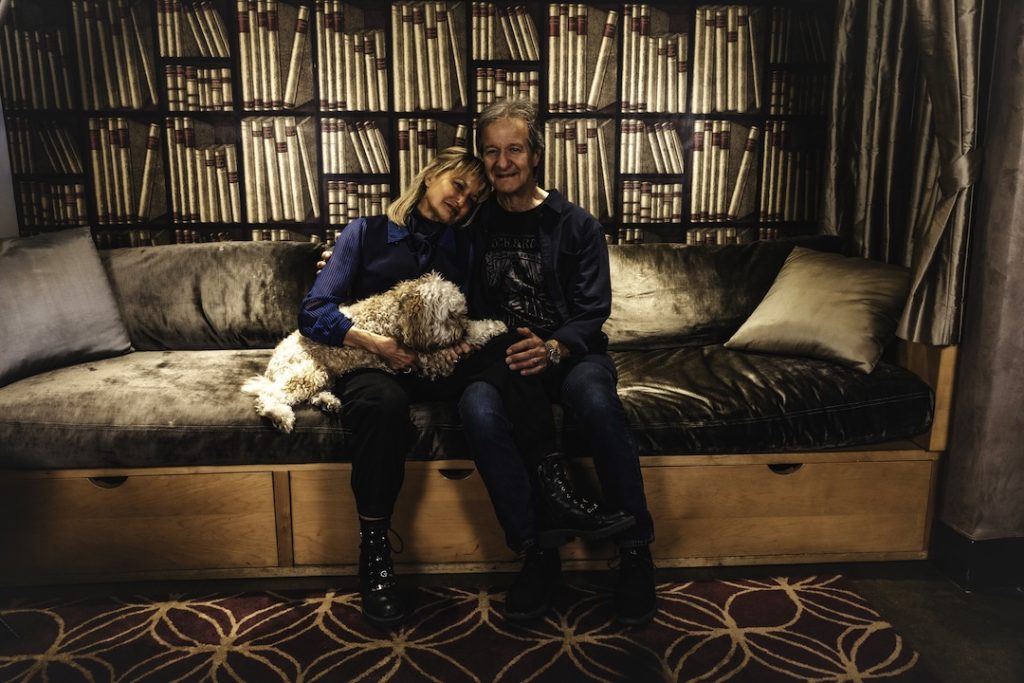
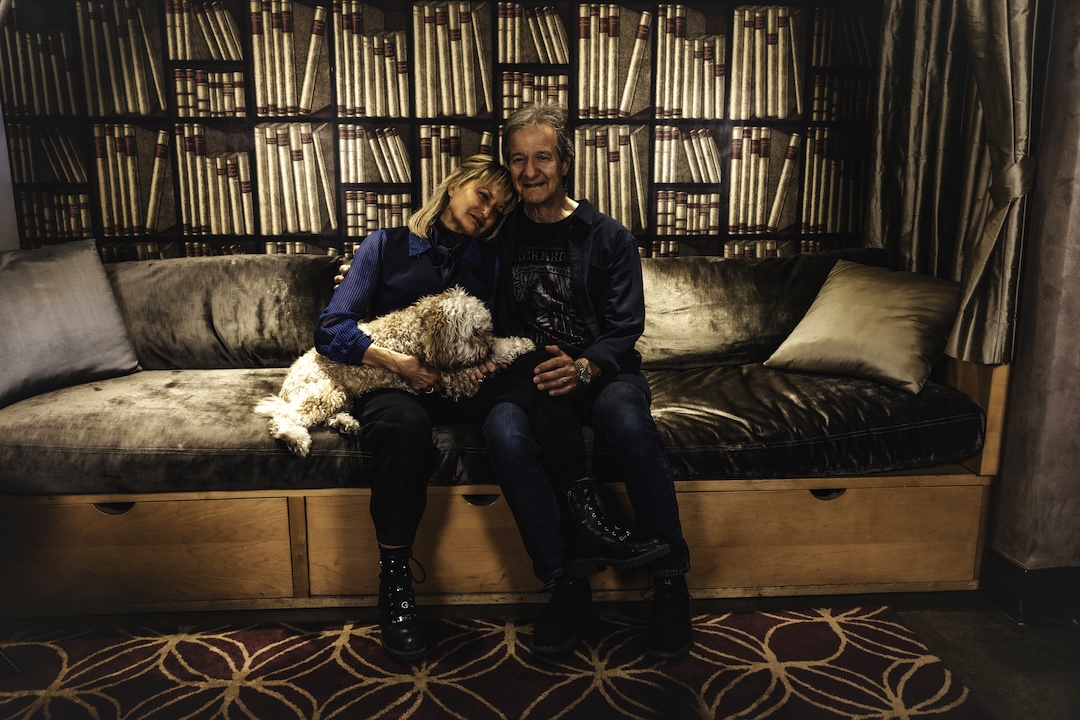
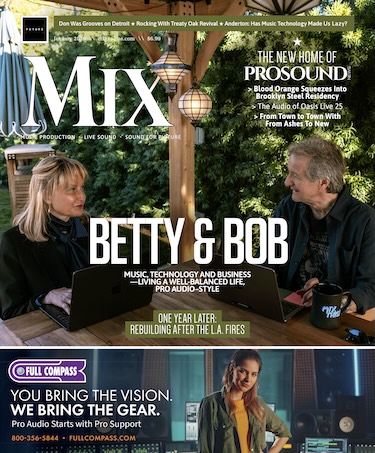
Los Angeles, CA (January 7, 2026)—If they lived and worked in the worlds of politics, finance or entertainment, we might call them a “power couple.” In a London Times Sunday feature, the writer might refer to them as “royalty.” But seeing as they have spent their entire adult lives in the music and recording industry, and that both of them would much prefer hanging out backstage with the crew over being onstage with the rock stars, not to mention that they’re both quiet and humble by nature, we’ll just call them Bob and Betty.
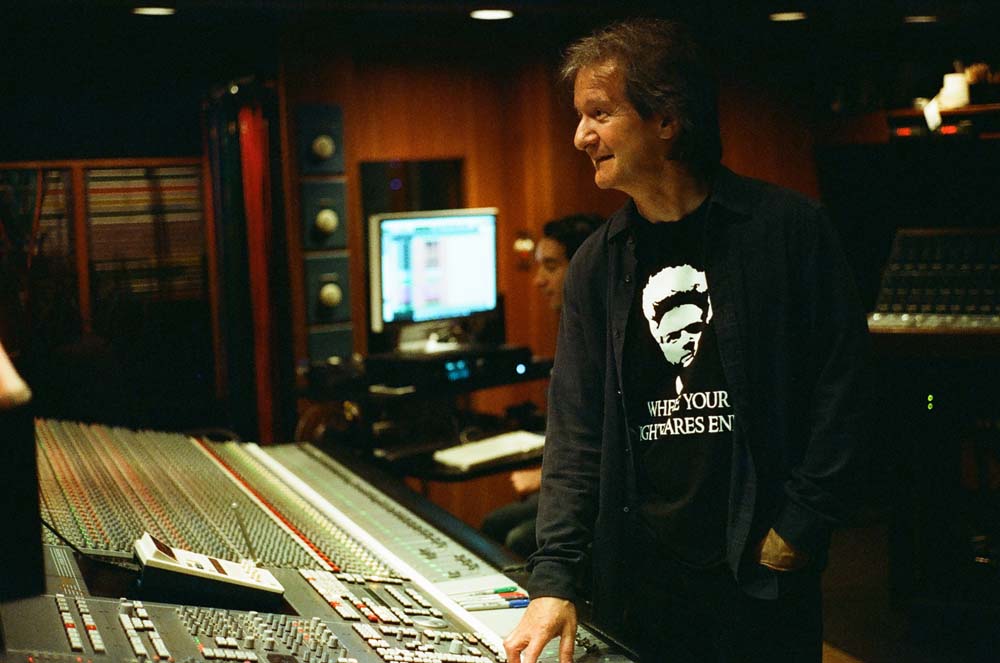
Bob is, of course, Bob Clearmountain, inarguably one of the Top Five music mixers of the past 50 years. Chic, Roxy Music, The Band, David Bowie, The Rolling Stones, Bryan Adams, Bruce Springsteen…but that is not this story; Bob’s talent, artistry and ear for rock ‘n’ roll are well-documented.
Lesser known is that his first trip to a real studio, Mediasound in New York City, was made as the bass player in a band. He had spent years wondering how records got made—how Led Zeppelin got that sound, how the Beatles created those textures—and the minute he stepped in a control room, he felt instantly at home.
His second trip to Mediasound came six months later, for what he thought was an internship. On his first day, after making his first crosstown delivery, he returned to shouts of “Where have you been? You’re supposed to be in Studio A assisting!” He had no idea what an assistant engineer was supposed to do, but he listened and learned. Duke Ellington was the artist. The trumpet player came in late, drunk at noon. People were dropping F-bombs. “It was fireworks,” Bob recalls. “I was 19—this little white kid from Greenwich, Connecticut—and suddenly I was in a session with Duke Ellington.” He never left the studio again.
Discover more great stories—get a free Mix SmartBrief subscription!
Betty, meanwhile, is Betty Bennett. While she might not be as well known to the audio community as Bob, she is no less accomplished in her professional life. After studying business and accounting in college, she was living in Kalamazoo, Michigan, working in real estate, when she met the directors of Soundcraft USA, then a major player in the live sound console market. She was hired to run the office, and before turning 23, running the company.
Five years later, she engineered the company’s move to Los Angeles, convincing the owners in England that they needed to be “closer to the action.” Two years after that, on January 19, 1986, she negotiated the sale of the company to Harman, where JBL was looking for a console to fill out its live sound portfolio. The following day, she gave birth to her daughter Alexandra.
As if that weren’t enough, the year before, she had quietly co-founded Apogee Electronics along with her then-husband, the late live sound engineer and product designer Bruce Jackson, and Christof Heidelberger, with the singular mission of improving the sound of digital audio.
For the next 40 years, she served as President, navigating the company through the rapid technological advances in digital audio, taking over sole ownership of the business, and expanding into new markets up and down a growing product line. In November of last year, she sold the company to Rockforce Holdings, a startup founded by industry entrepreneur Dirk Ulrich, who four months earlier acquired Manley Labs.
WAIT, THERE’S MORE
When Bob was 12, his father brought home a reel-to-reel tape machine so that his mother, a schoolteacher, could use it to record and play back in class. Bob quickly commandeered it and started experimenting. By the time he got to high school, he was playing in bands and knew the A/V basics.
As a pre-teen, Betty used to walk around her small-town Ohio neighborhood with a tape recorder, capturing sounds for her soon-to-be-released film productions. At her sister’s house recently, while going through a box of childhood memories following their parents’ passing, she was reminded that she wrote her fifth grade, end-of-year report on the stock market.
Bob is a lifelong tinkerer, with a particular penchant for electronics and smaller construction projects. He’s the guy in high school who could set up your stereo and it would immediately sound better. He is conversant about the components inside a compressor, and he handles most of the wiring and control systems inside his studio. He has been part of the design-build team for all of his mix rooms over the years. He has a curious mind and he likes to know how things work.
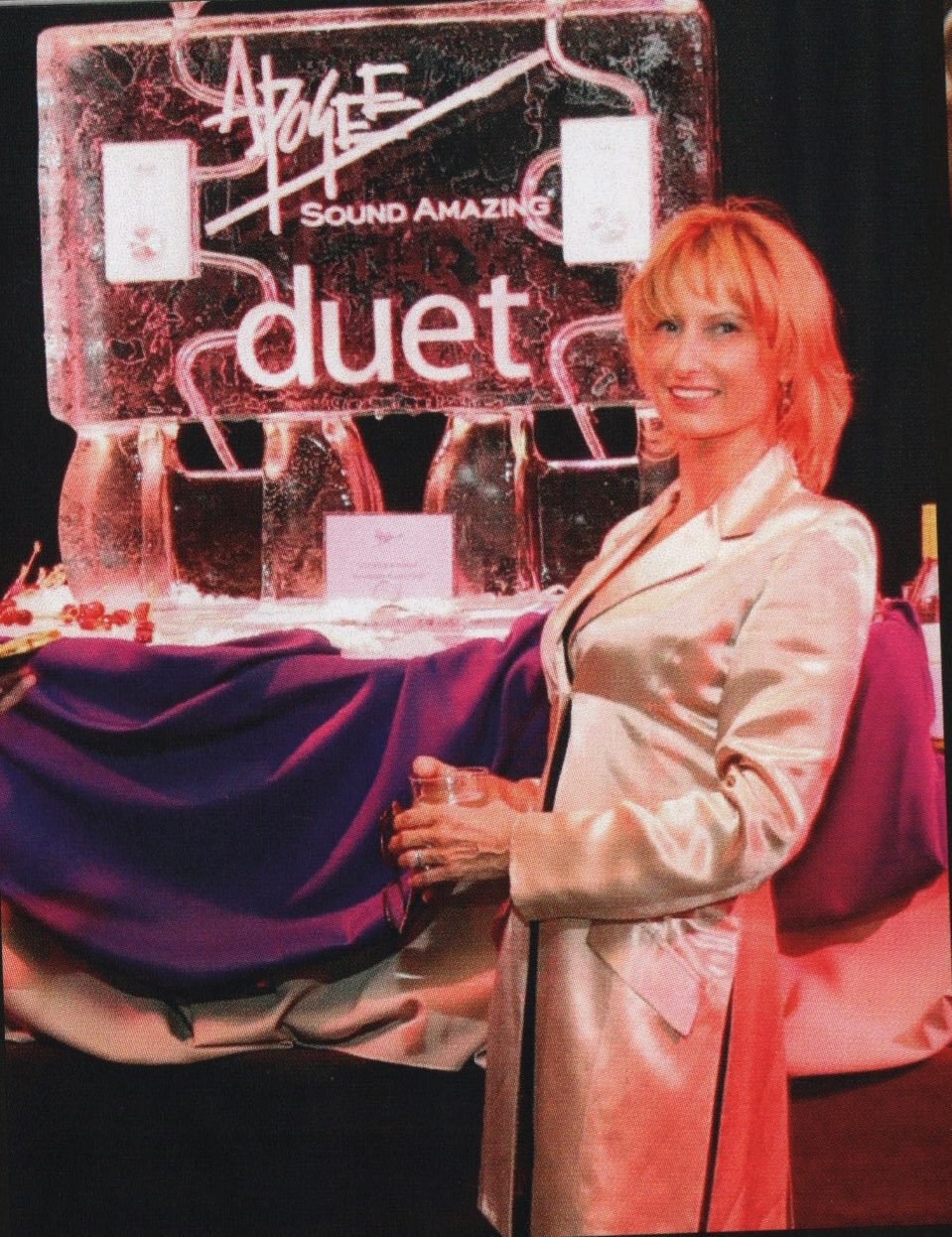
Betty has always been a bit of a nerd. She started learning about programming in the late 1970s and could write her own code in BASIC by the mid-’80s. She’s equally comfortable with a solder gun in hand or sitting in an Apple board room discussing the Cypress chip and the introduction of iOS to the audio industry. She is fluent in the language of manufacturing, from end-of-life parts to circuit board design. She also has an innate, uncanny ability to see five years into the future—where markets are developing, where technologies are emerging, where opportunity lies.