
Don’t Pass Up PART ONE!
COME TOGETHER
Looking back, it seems odd that though they were both flying high in their careers, interacting with the same people in the same relatively small industry, they didn’t meet, hadn’t even heard the other’s name, until one day in 1991 when Bob was working with Bruce Springsteen at A&M Studios and called Apogee to ask if he could try out an AD-1000 converter, hoping to up the quality while recording to DAT. Betty was about to leave the office and offered to make the delivery.
“Actually, I didn’t want to go that day,” Betty recalls. “I was going through a divorce at the time, and I had to pick up the kids at nursery school, so I was kind of pained to drive into Hollywood from Santa Monica. And I pictured Bob Clearmountain as, like, this really big guy with his pants below his butt crack, you know what I mean? Then I dropped it off and there he was, this really nice guy who asked a lot of questions about gear.” And I thought, ‘Who is this beautiful woman who knows this much about gear?’” Bob recalls. He had no idea she owned the company.
Betty left to pick up her kids. Bob went off to London to work on a long project. They didn’t see each other again for six months. When they finally reconnected, it was during the development of Apogee’s UV22 technology, where Betty was organizing mastering-engineer listening tests. She invited Bob. He came. The conversations began.
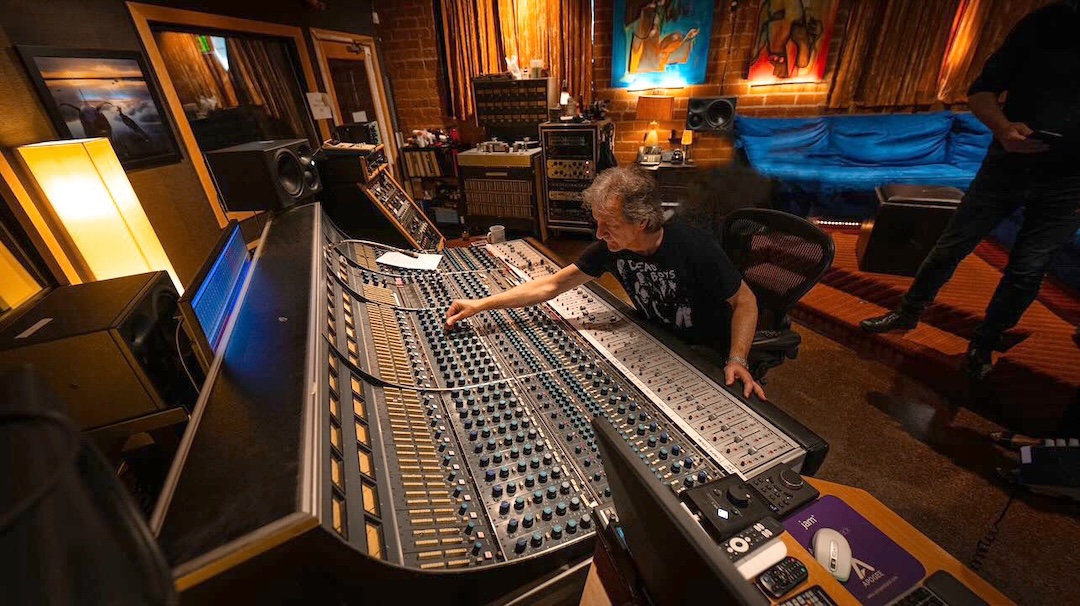
They married a few years later. Over time, their partnership became a blend of complementary strengths: Betty’s strategic and technical leadership, and Bob’s deep understanding of how artists and mixers actually use the tools Apogee was creating. Their collaborations helped fuel many of Apogee’s most impactful innovations, including the AD 8000, Duet, Jam X, Symphony Studio, and the Clearmountain plug-ins.
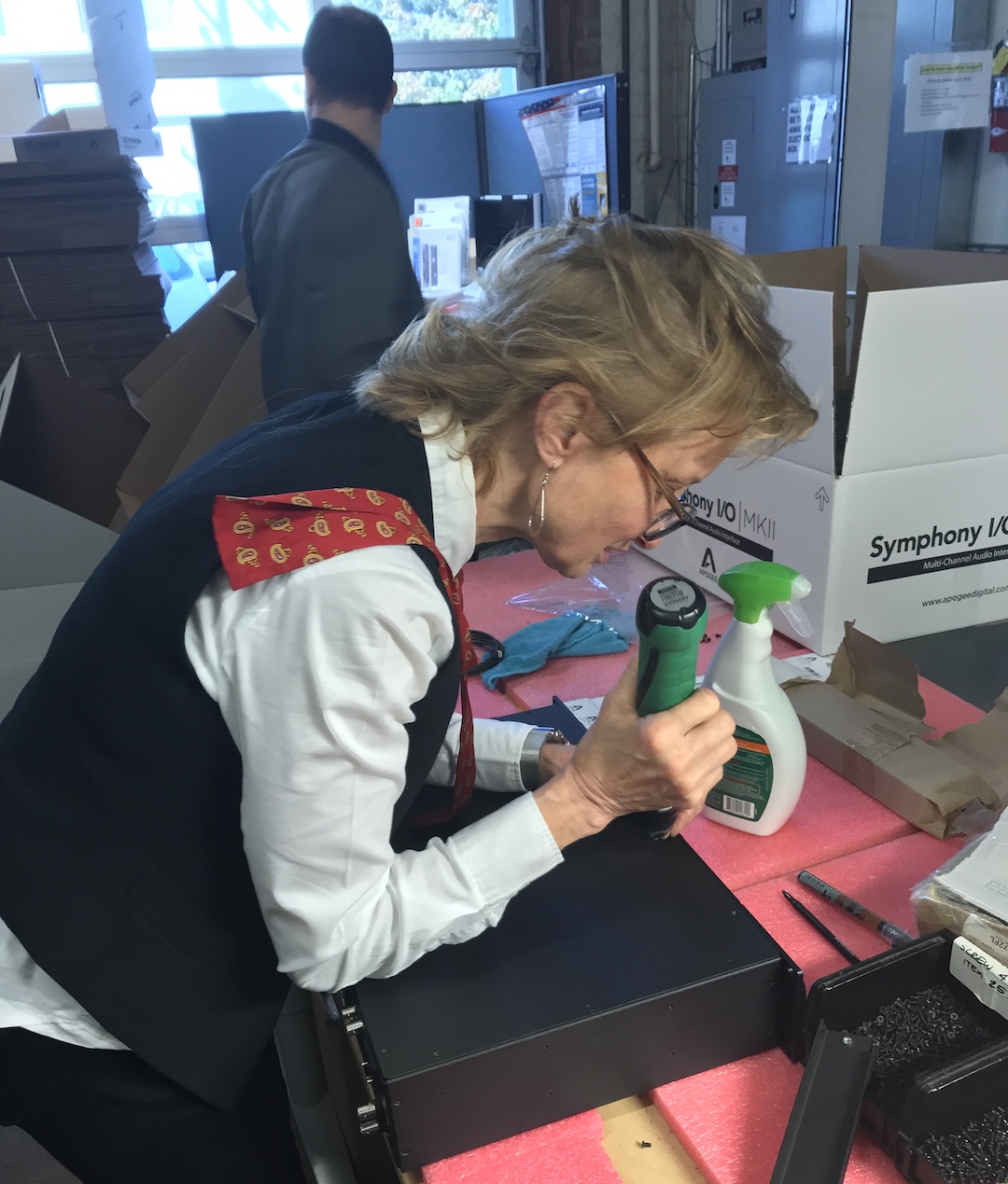
“I had an advantage, because when I got together with Bob, I got to know audio from the perspective of the producer and mixer as well,” Betty says. “He is unique in the fact that he embraces technology, and he’s always been an early adopter. He embraced digital, he embraced 5.1 from the beginning and he embraces immersive audio. He isn’t afraid of new things; he’s curious about new things.”
“Betty’s always pushed me to be on the edge,” Bob adds. “When 5.1 first started, I was like, ‘Oh, boy, five speakers. How are people going to keep five speakers in phase?’ And she’s saying, ‘You know, you should be doing this.’ A few days later, I woke up in the middle of the night, figured out how I could do it, and just kept doing it.
“Then when immersive came along, I’m like, ‘Shit, how am I going to monitor this? How am I going to control all those speakers?’” he continues. “And Betty says, ‘Well, you should be using our Symphony.’ I thought, well, it does kind of work, but what if we did a little upgrade? It took six months because we had to rewrite everything, but it turned out really well and is incorporated into Symphony Studio.”
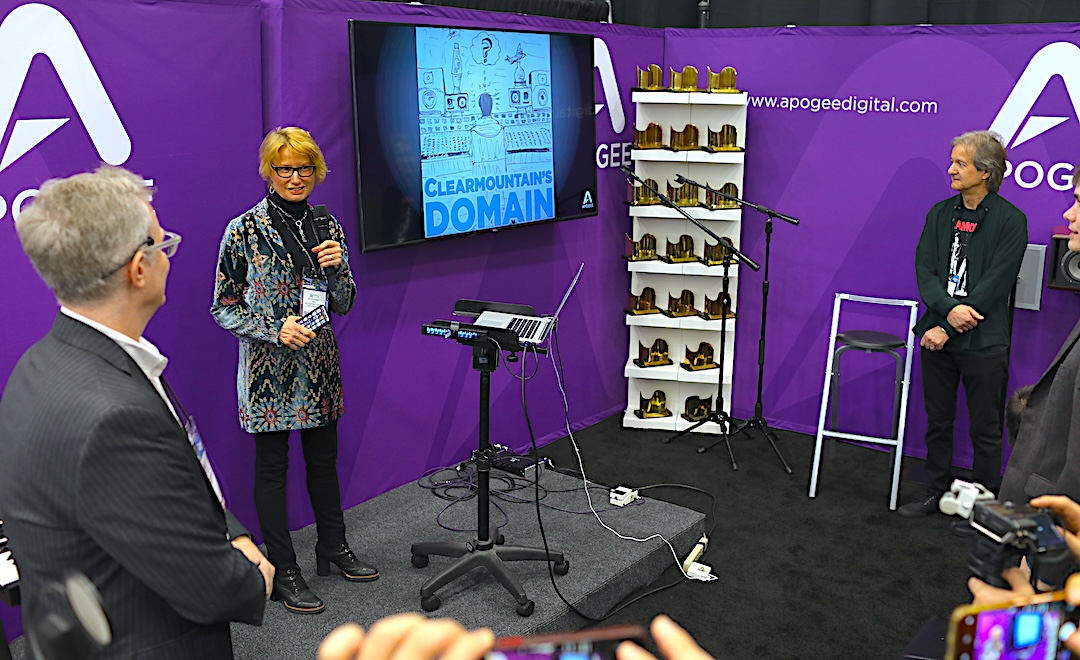
Dozens of similar collaborations and contributions have taken place over the years, including the introduction of the revolutionary Duet interface in 2007 to address the home studio and musician markets. “Duet nearly caused an internal revolt at the company, with some absolutely opposed to going, as they would say, ‘down market,’” Betty says, “but I could see that the industry was moving toward the high-end home, and Duet came out directly out of our relationship with Apple and Logic. Then later, Jam X was a big launch because we worked with Apple developing the iOS audio code and interface.”
Discover more great stories—get a free Mix SmartBrief subscription!
When Betty looked ahead at the rise of podcasting and content creation, Apogee released the popular HypeMic, with the signal hitting one of three built-in analog compression settings—engineered by Bob—prior to conversion. When the company decided to enter the plug-in market in 2019, admittedly a bit late, the first two releases were called Apogee FX and Clearmountain’s Domain.
Life was good. Bob was mixing. Apogee was humming. And then Covid hit.