
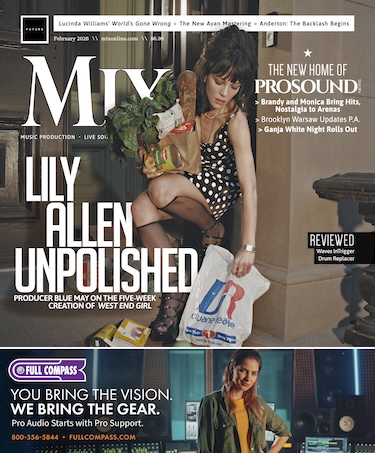
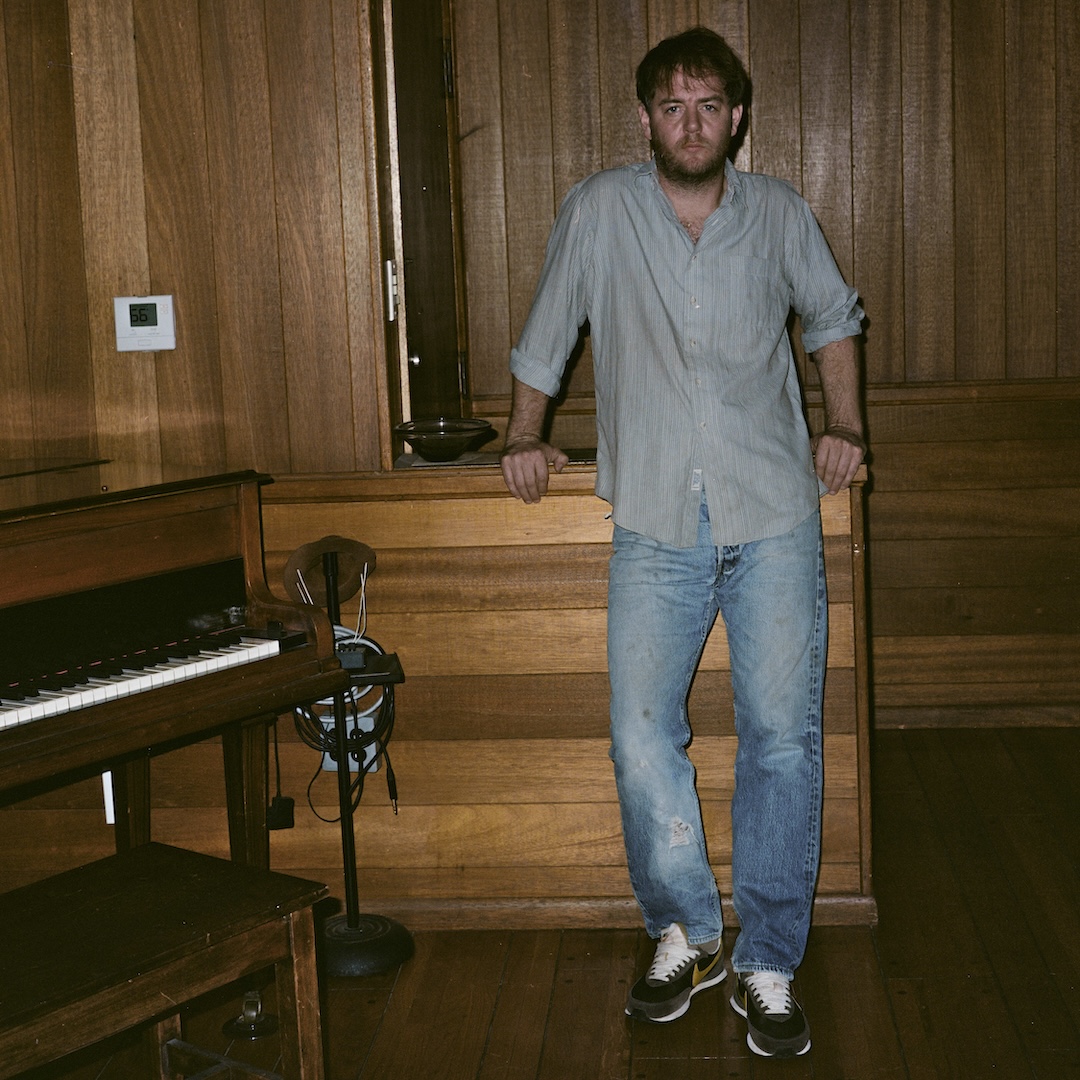
Los Angeles, CA (February 9, 2026)—Tucked high in the narrow, winding roads of Los Angeles’ historic Beachwood Canyon, producer Blue May has turned the living areas of his home into a modern, fully realized studio. The space feels organic, with early 20th century accents, lived-in furniture and a wood deck that offers an enviable bird’s-eye view of the city. His two dogs roam freely, adding to the relaxed atmosphere that mirrors May’s own down-to-earth presence. In a black hoodie and worn jeans, he sits with his back to the control center, facing the couch where Lily Allen crafted her lauded album, West End Girl.
Sonically, West End Girl—Allen’s fifth album, and her first since 2018—taps back into the quirky, clever appeal of her early work. Thematically, it lays bare the unraveling of her marriage to actor David Harbour, holding back none of the messy, complicated details. It’s brave, bold and unapologetic, resonating deeply for its honesty and vulnerability. The trust she had in May, the safe creative space he built for her, and her own unmistakable talent proved to be the key forces behind the album’s brilliance.
May’s working relationship with Allen began when he stepped in as the creative director for her 2018 No Shame tour, overseeing every facet of the extensive run: musical direction, visuals, lighting, stage design and, crucially, hiring the personnel around her. At a time when Allen was not yet sober, touring had become one of the most difficult parts of her career, and May was able to create a different kind of environment, one she could actually enjoy. Their trust was built during that stretch of touring over two-plus years, a period that came with its own set of challenges.
Then, years later, once she decided to go back into the studio, what likely caught Allen’s attention was May’s production on Mercury Prize-nominated albums by Kano, Joy Crookes and Ghetts. At the same time, he never hid his fan status of Allen, his respect for her as an artist and musician, or his long-term goal of returning to a core element of her music and helping her step back into pop star territory.
“Artists in the middle stage of their career, it’s easier to make stuff for the devout fans,” says May, a graduate of the performing and creative arts BRIT School. “I promised Lily I’d try and make her something that was really good so she could have the confidence to be classic Lily, but as a 39-year-old, and say whatever she wanted to say without the fear that there’d be a backlash.”
The two of them had a false start in 2022 that didn’t yield anything, but at the end of 2024, during a trip to Los Angeles, Allen reconnected with May and told him she wanted to try again. This time, he decided to bring more talent into the room to take some of the pressure off.
SONG CREATION
“When I tried to work with Lily before, it was just me, another producer and her,” he says. “I was trying to re-create how she made her first two records with Greg Kurstin and Mark Ronson.
She’s an incredible songwriter; she doesn’t need anyone to write her lyrics, but it was clear it was going to be helpful to have someone else throw the first ideas—good or bad—into the room so Lily didn’t feel like she had to be the one to sing the first idea. Top-liners don’t have that level of fear. They’re willing to sing into the room, and then Lily could do her version.”
May assembled a circle of songwriters that included Violet Skies, Chloe Angelides, Hayley Penner and Jason Evigan, along with producers Kito, Chrome Sparks, Leroy Clampitt, Oscar Scheller, Micah Jasper, Leon Vynehall and Alessandro Buccellati to collaborate on the album. Aside from Kito, May had only worked with a couple of them before, and just barely at that.
• Suzy Shinn Is Dialed In, Part 1
“I wasn’t trying to manufacture a situation that encouraged Lily to air out her personal life,” he says. “I just wanted her to be Lily and have her sharp take on whatever she wanted to point her focus at. Deciding to completely expose herself through her music—that she chose to do herself. That’s where I think Lily the pop star goes, ‘Fuck it. I need to do this. This is what my calling in life is.’ I don’t think I, or anyone else, can engineer that. She decides to do that.”
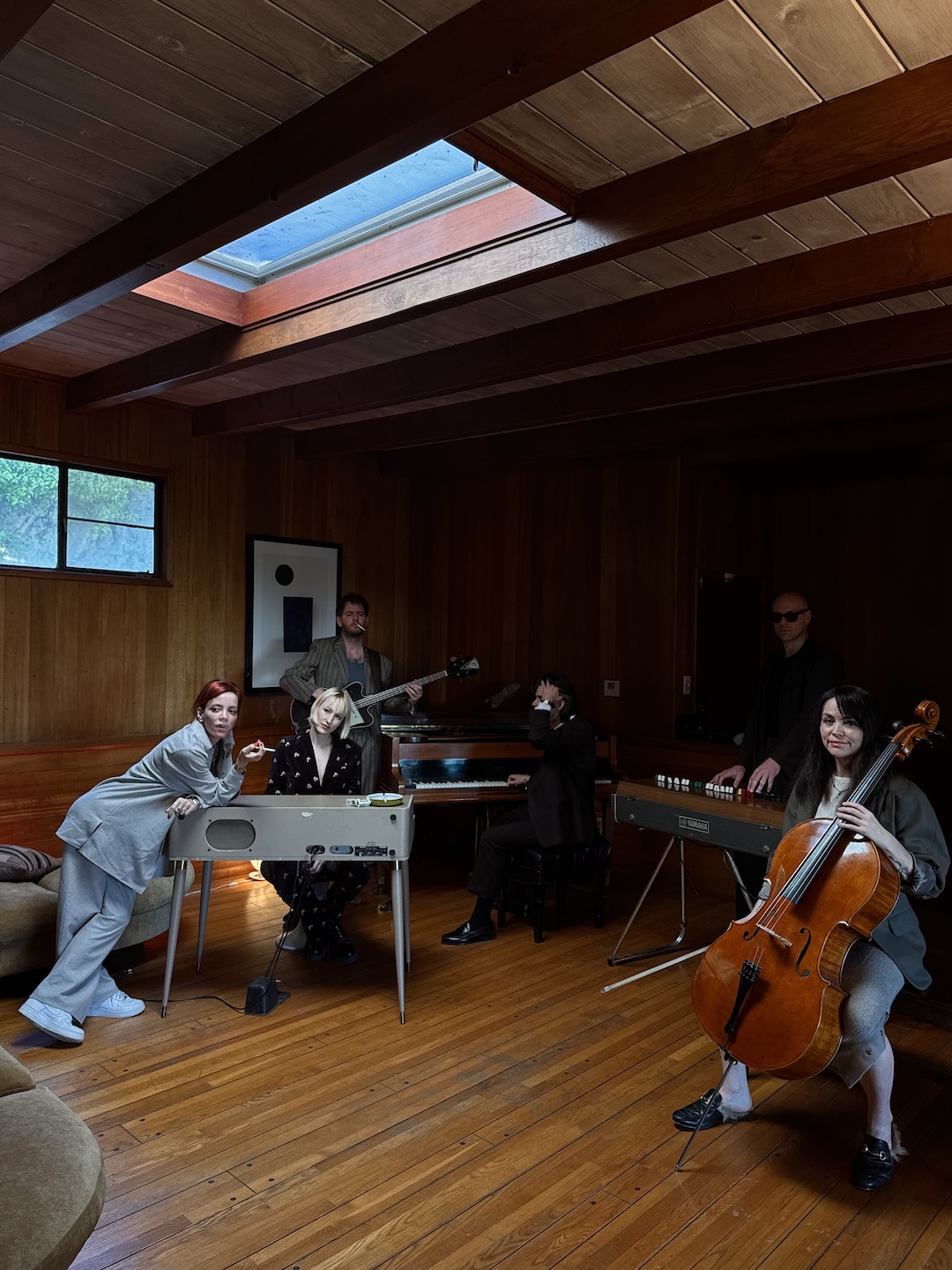
Allen arrived with 14 song titles. Over the course of 10 days, she pulled titles at random and told the stories behind each one. While she talked, May and sometimes the other producers would sketch out a sound bed for the narrative. “Tennis” took shape as a Sunday-morning soul song. “Dallas Major” became a 1990s disco track. “Ruminating” turned into something intentionally anxiety-inducing. “With ‘Ruminating,’ Lily started talking about this moment and this phone call,” May recalls.
Discover more great stories—get a free Mix SmartBrief subscription!
“I’d come across this one beat on my Korg Triton a couple of days earlier that was really intense, quite industrial, and I sped it up. Almost before the story was finished, I was floating that in the room to see if I could capture attention. Then someone’s like, ‘Oh, I like that.’ Then immediately someone’s singing a melody over it, or someone else is playing, adding another layer to the beat. It’s very response-driven.”
When Allen told the story behind “Pussy Palace,” the track where the full extent of her ex-husband’s betrayal is revealed, May sensed that feeling of blood draining from your body, the sudden drop, the weight that pins you down when your reality flips without warning.
“To me, that’s a descending line,” he explains. “There was a sound I’d been playing with very loosely for years, tuning each oscillator of the Minimoog to a different note so it made a chord. I could play one note, and it sounds massive. Two minutes later, Leroy [Clampitt] had the beat. Musically speaking, that song was written in five or ten minutes.”