
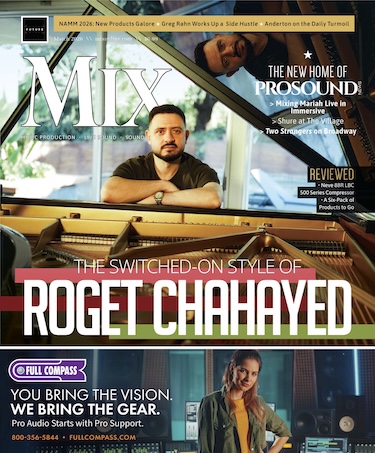
Don’t Pass Up Parts One and Two!
ROSÉ, BRUNO, FLO, LECRAE
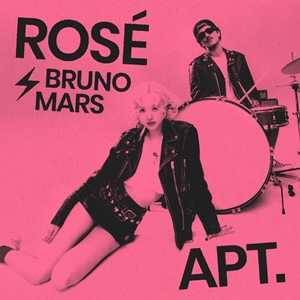
In contrast, for his session with ROSÉ on “APT.,” Chahayed tapped back into his early production and songwriting instincts, choosing to “let the keys do the talking.” At the same time, he emphasizes the importance of restraint.
“Sometimes you have to let things breathe and figure out what the artist wants to do, because you’re going to be annoying if you’re always playing,” he explains. “Some people don’t know when to stop. That’s something I learned in a heavy hip-hop environment. It’s in your best interest to be quiet, lay back and watch your surroundings.”
The session took place at producer-songwriter Cirkut’s home studio. Other than ROSÉ, Chahayed had worked with everyone else in the room. When she arrived, they explored a few ideas, but nothing was fully capturing her interest. During a pause, ROSÉ began showing songwriter Amy Allen the Korean drinking game APT, which includes a rhythmic chant. Songwriter Theron Thomas suggested incorporating it into a song. Cirkut then pulled up high-energy, super pop-y drums, while Chahayed and producer-songwriter Omer Fedi started experimenting on the keys.
“[On Fedi’s suggestion] I pulled up a horn sound on the Mellotron,” says Chahayed, and while ROSÉ was in the vocal booth, he continued working. “I came up with the chords for the pre and the hook, and I had a little idea for a bridge. We put together the track and left thinking we made something pretty cool. I think Rosie felt the same. Later on, they were like, ‘Make sure you don’t send the bounce out to anybody; delete it off your phone. We don’t know if this is going to happen or how she feels about it right now.’ I just forgot about it, but it felt special.”
Nine months later, Chahayed ran into D’Mile, one of Bruno Mars’ key creatives, and asked after the artist, whom he has known and worked with for a decade. As it turned out, Mars was working on “APT.” Three months after that, Chahayed received the latest version of the song. “I didn’t hear it for about a year, and then all of a sudden, Bruno elevated it to a new level,” he says.
Chahayed’s path to the title track on British trio FLO’s album, Access All Areas, was far less deliberate. He was working with producer/songwriter Pop Wansel on beats for Kehlani when the idea took shape. Kehlani ultimately didn’t use it, but, as Chahayed explains, “That happens with a lot of beats. You make a beat in a session for one artist, and then two years later, you hear, ‘I actually gave it to so-and-so.’ People will send the same beat to three or four different artists and cross their fingers. Some may not respond, some might say, ‘I got a song to this,’ and in rare cases, you’ll have two people that recorded a song on it.”
When FLO expressed interest in the beat, it was further developed by adding bass, pads and a synth lead, all built around a soulful sample that left room for layering additional sounds.
Likewise, “Holidaze,” from Lecrae’s Christian rap album Reconstruction, grew out of a session with Jon Bellion and producer Tenroc. Bellion is a longtime collaborator whom Chahayed often links up with when he’s on the East Coast.
“Usually, when we write a song, it’s for [Bellion],” he says. “We made an idea and he wrote the hook and we left the verses open. Lecrae pulled up to his place one day and was like, ‘I want to play the album and just catch up with you.’ At the end, he was like, ‘Do you have anything for me?’ and Jon played him the demo. Lecrae decided to put verses on it and keep Jon on the hook.”
As Chahayed’s relationships with collaborators have deepened, his working process has evolved. Where he once relied on his playing to signal his involvement, he now adopts a more conversational approach. Some days, the studio is less about recording than it is about talking— creating the space for artists to get comfortable enough to share. Once that trust is established, he’s found, the results tend to be stronger.
“I like to lay down the foundation of the song, let them talk and listen from a distance,” he says. “A lot of times, once I know what they have going on and they’re cutting vocals, I’ll step out of the room. When you’re cooking something, you don’t want someone watching your every move. If it’s a younger artist, or someone less experienced, I want to make them feel like they know what they’re doing, but I will also give my feedback. With the bigger artists, if I have feedback, I’ll say, ‘Why don’t you let me try something different?’”
Hearing Chahayed speak about marquee music artists in this pleasant studio paints a glamorous picture of a modern-day producer-songwriter, but he is quick to correct this conception.
Discover more great stories—get a free Mix SmartBrief subscription!
“The process is, many times, not glamorous,” he says. “In many cases, I was sitting at home and someone sent me a beat and I added something and it happened. For the most part, you’re sitting in a dark room with no windows for eight hours. It’s like when you’re watching a movie like Star Wars. Those are all toys, but it looks like outer space. It’s crazy that we’re able to create this sonic illusion of something insane when we were just in a little room with a few keyboards.”