
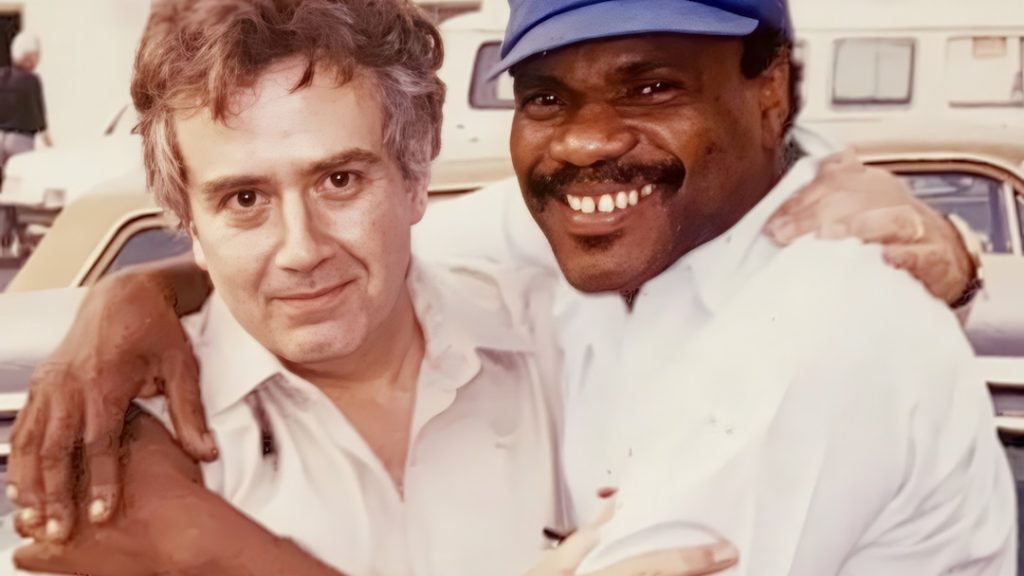
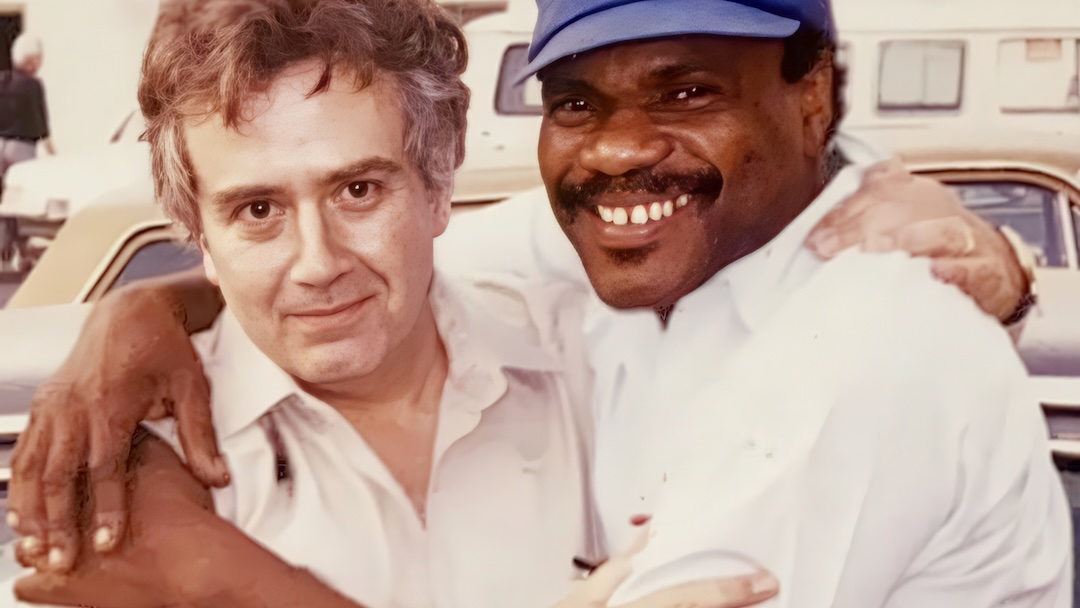
In early 1975, we got a call from Billy Preston’s manager, Bob Ellis, who told us that Billy was interested in having Malcolm [Cecil] and me work on his next album for A&M Records. Billy was at the peak of his career and riding high with his biggest hit, “Nothing From Nothing,” so it was an easy decision to head over to Sunset Boulevard and meet with him and his manager.
Bob’s office was up one flight of stairs in a two-story brick building on the south side of Sunset, just across the street from the Continental Hyatt House Hotel. The hotel, sometimes referred to as the Continental Riot House, was famous for the nonstop partying from touring rock bands staying there. It wasn’t uncommon to see TVs fly out of a window and crash into the driveway pool below.
Bob’s office felt warm but slightly over the top, with crown moldings, high-end furniture, and Gold records covering the walls. He also managed his then-wife, Diana Ross, as well as Ronnie Wood, Rufus, and Chaka Khan, to name a few. We were impressed.
The first thing I noticed were the frogs: frog figurines on his desk and more on the tables around the office. I couldn’t help but ask about them.
“Frogs bring good luck,” he said.
Ever since then, I too have kept a small brass frog on my desk for good luck.
The first thing pretty much everyone noticed about Billy at the time was his enormous afro. The second thing was his gregarious and open yet humble personality. He welcomed us into the office with a big smile, revealing a big gap between his front teeth, just like mine.
We had done our homework. Billy’s contributions to The Beatles (also known as “The White Album”) and Let It Be had earned him the title of the Fifth Beatle, while his collaborations with Eric Clapton and Sly & The Family Stone— plus sessions with Little Richard, Sam Cooke, Ray Charles, The Everly Brothers, and the Reverend James Cleveland, among others— had solidified his A-list status. His playing, whether on Hammond B3 organ, Fender Rhodes, Clavinet, or piano, was instantly recognizable.
His gospel roots were never far away, bringing a spiritual touch to his playing and making him completely unique. There wasn’t another musician who could claim to have been coveted by both The Beatles and The Rolling Stones at the same time, while both bands were in their prime, or to have been touted as Ray Charles’ successor by Ray Charles himself.
• Seen on the Scene: NAMM 2026, Part 1
Billy already knew a lot about us, too, and being the keyboard master he was, he was interested in what we were into, especially TONTO [Margouleff and Cecil’s massive, pioneering multitimbral polyphonic analog synthesizer—Ed. Note]. The meeting had not lasted more than a few minutes before Malcolm and I happily said yes to recording his next album, which would become It’s My Pleasure. It was also the start of a friendship that lasted right through to his unfortunate passing in 2006 at the age of fifty-nine.
With recording about to get underway, Malcolm and I decided to move on from the Record Plant, so we took TONTO and our gear back to Point Dume and set up our electronic music center in Malcolm’s house. Billy lived in Topanga, just off Topanga Canyon Boulevard. Tony Randall and I were basically his neighbors, and Malcolm lived only twenty short minutes away. We all had a lot in common, and it didn’t take us very long to bond.
Discover more recording stories—get a free Mix SmartBrief subscription!
Billy’s property was more of a ranch than a house. He had a rehearsal studio with a keyboard rig and an excellent P.A. system so we could review the songs that he had in mind to record. It gave us a roadmap of how to approach tracking the album.
COME BACK TOMORROW FOR PART TWO!
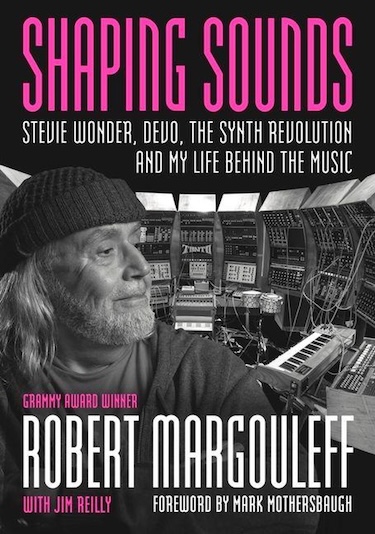
Excerpted from Shaping Sounds: Stevie Wonder, DEVO, The Synth Revolution, And My Life Behind The Music by Robert Margouleff with Jim Reilly, and reprinted by permission of Jawbone Press. Shaping Sounds will be published May 19, 2026. Shaping Sounds is available in audio at pushkin.fm/shapingsounds or wherever you purchase audiobooks.