
Luton, U.K. (April 28, 2026)—London Police report they shut down a sizable counterfeit vinyl operation last week. Nearly 6,500 vinyl records, said to be worth an estimated £259,920 ($351,160), were seized by the Police Intellectual Property Crime Unit (PIPCU) of City of London Police on April 22. The raid took place 30 miles north of London in Luton.
“Counterfeit vinyl harms legitimate businesses and causes real losses for artists and the wider music industry,” said Jamie Kirk, Detective Sergeant at PIPCU, in a statement. “This operation sends a clear message that the sale of counterfeit goods will not be tolerated and highlights the impact that strong partnership working can have in tackling intellectual property crime.”
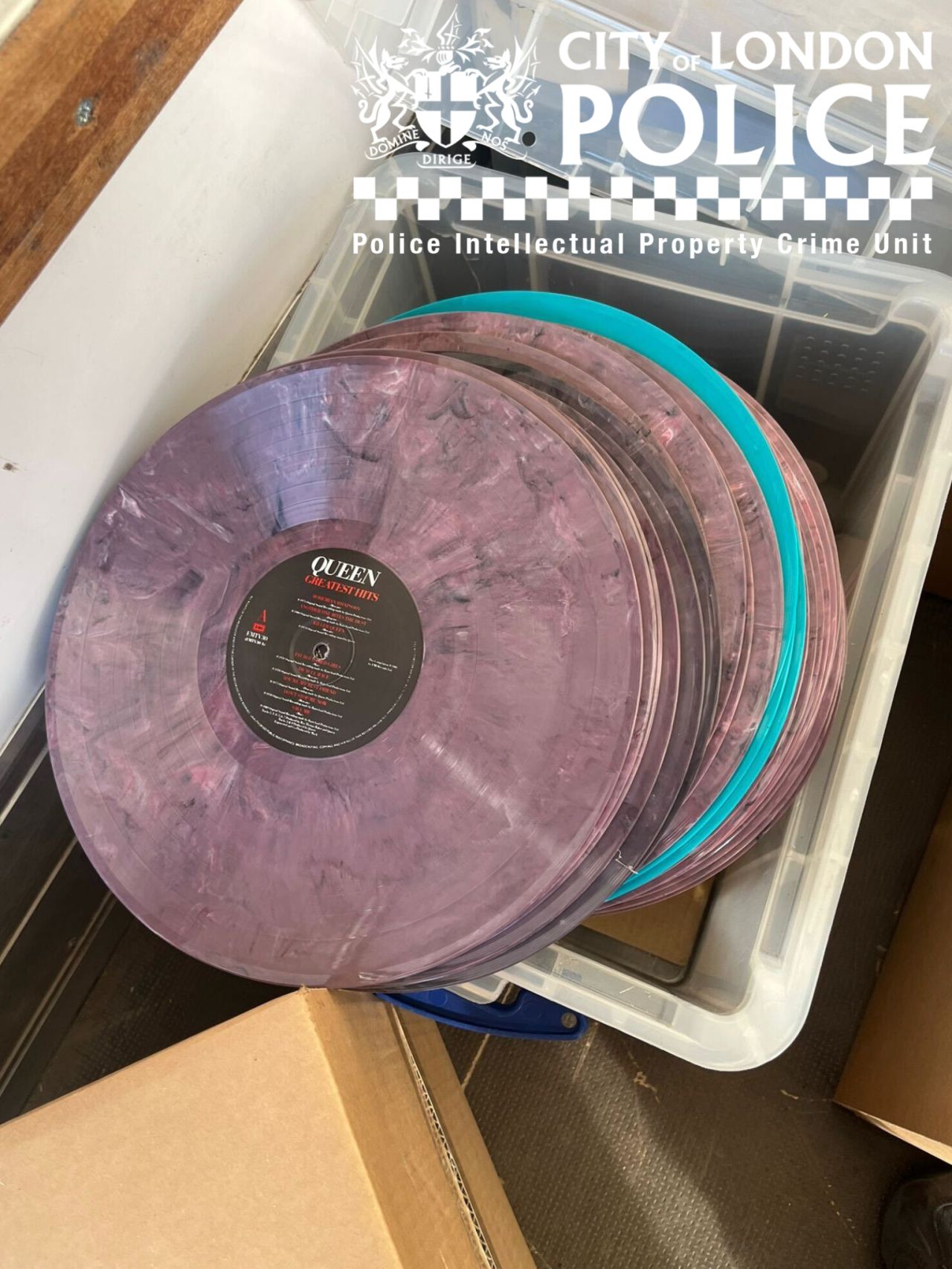
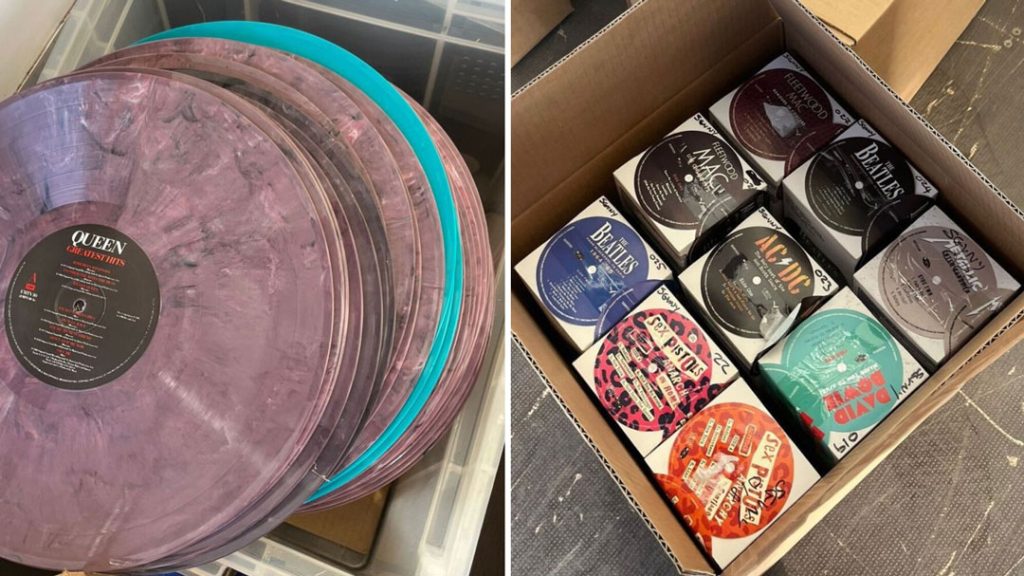
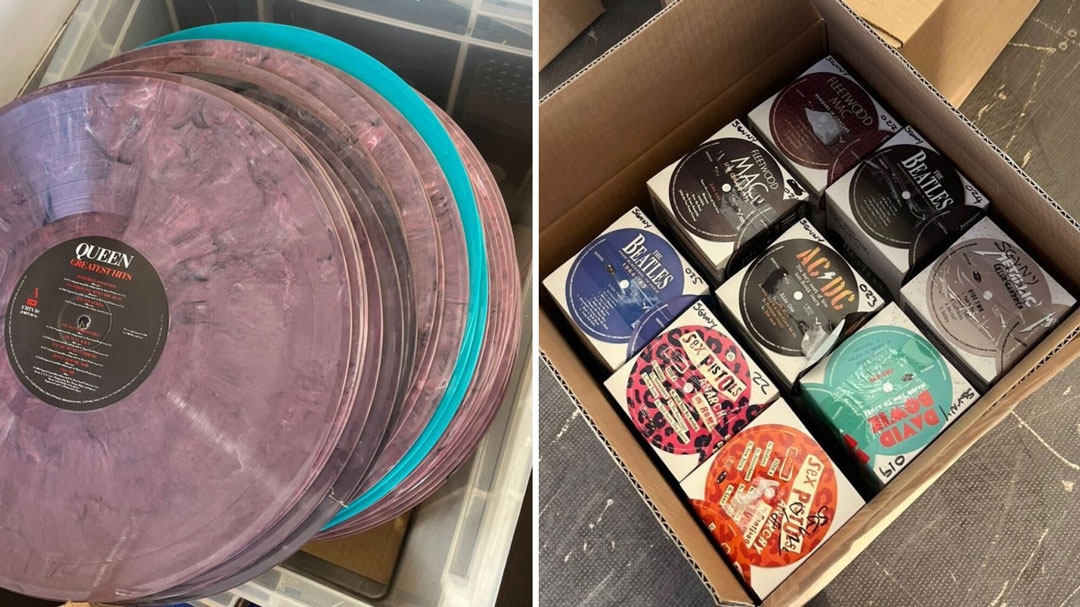
The PIPCU released two images on social media to announce the raid—one of a storage bin containing marbled vinyl and another with a cardboard box of record labels. The vinyl records appear to be pirate pressings of Queen’s Greatest Hits album, which has legally sold more than 25 million copies worldwide since its release in October 1981.
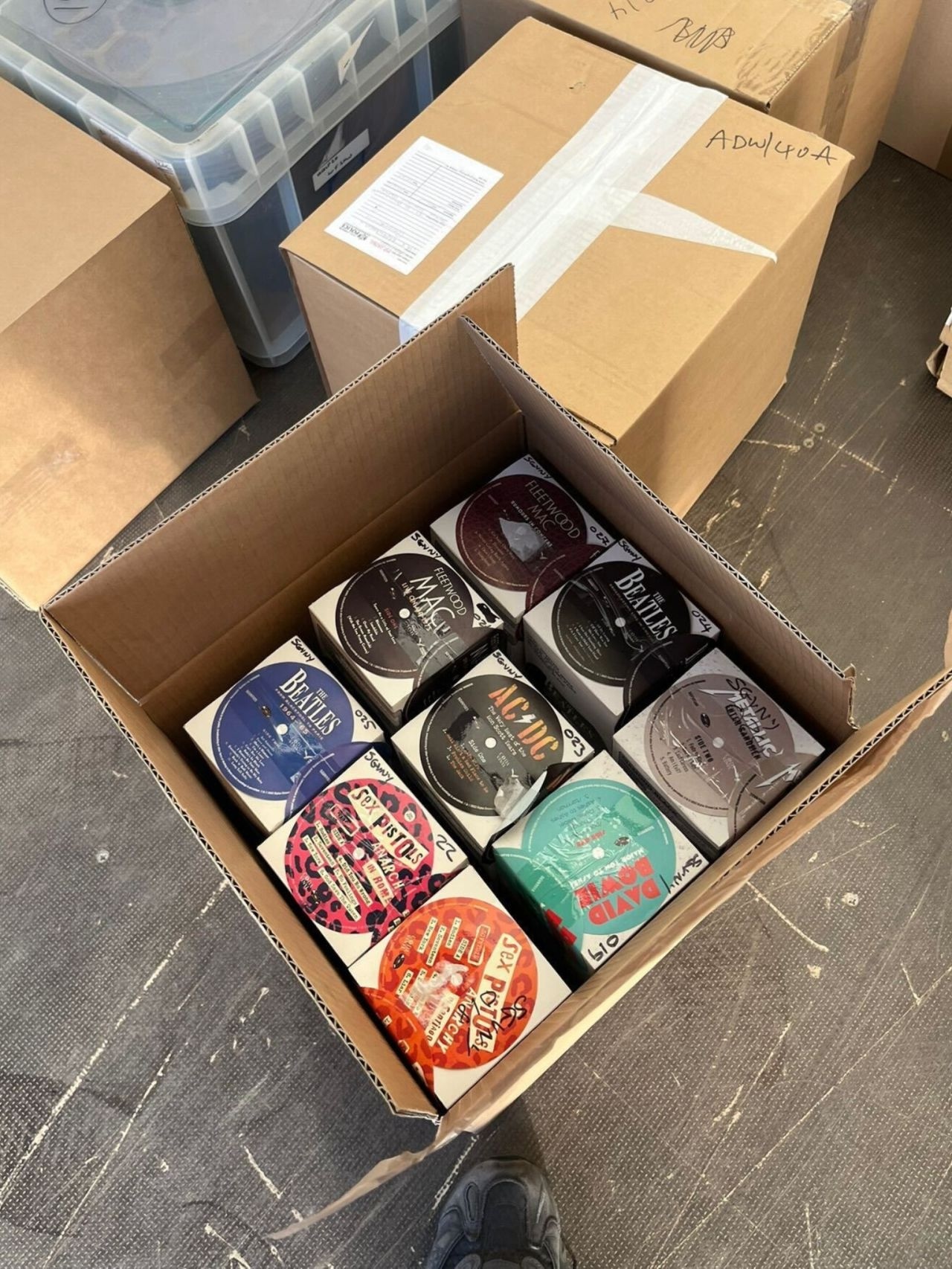
Meanwhile, the record labels in the box appear to be for releases from Coda Records, a purveyor of “gray area” live broadcast recordings. Such releases are said to be considered legal—though unsanctioned by the artists—in some countries due to copyright loopholes. Whether such releases are among the 6,498 records seized is unknown.
• Birth of the Bootlegs—Part 1: The First Bootleg Record
The PIPCU worked in conjunction with U.K. music trade group British Phonographic Industry (BPI) to make the Luton seizure. Peter Ratcliffe, Director of Content Protection at the BPI, noted in a statement, “The vinyl revival means that there are sadly criminals trying to take advantage and cash in through counterfeiting. Like all illegal markets, this doesn’t just damage our UK music industry, it potentially impacts every one of us as citizens, as these ill-gotten gains often fund other forms of criminal activity. But we continue to take the fight back to the criminals, and the BPI’s Content Protection Unit is delighted to have worked hand in hand with City of London Police’s PIPCU to help successfully disrupt what is clearly a major illegal counterfeiting operation.”
The Luton seizure wasn’t the first time the PIPCU and BPI have collaborated; they previously teamed up in February 2024 to raid an illegal London vinyl pressing plant that was reportedly making counterfeit records. That effort resulted in the seizure of 18 tons of evidence, including four pressing machines and what was estimated to be more than £1 million in counterfeit inventory.
Discover more great stories—get a free Mix SmartBrief subscription!
Left for dead in the 1990s, the vinyl music format has staged an amazing comeback in the last two decades, becoming a major powerhouse for the legitimate music industry worldwide. Vinyl continued to lead physical formats in 2025 around the globe; according to the BPI, U.K. vinyl sales jumped 13.3 percent in 2025 to 7.6 million units—a bounce upwards of more than 900,000 over the previous year. The U.S. saw similar growth, as the format sold more than $1B last year, according to the RIAA, moving 46.8M units.