
Don’t Miss Part One!
THE VINTAGE HOME
This was far from a lo-fi affair. “I say it was done in my house, but that’s a bit cheeky,” says producer/engineer Patrick Hyland, “because most people’s home studios don’t have a big box of Burl converters. And with this album, especially, I did try to do the lion’s share of the tone shaping before the conversion.”
Hyland mikes the drums with two overheads, a close mic on each tom, and either one or two mics on the kick and snare. “I love active ribbon mics and I’m really fond of AEA,” he says. “I probably use their mics more than any other microphone company. When people ask me what the best bang for your buck is for a decent set of mics, I tell them, the AEA Nuvo Series. If they cost five times as much, I would still buy them.”
For close mics, “The Josephson e22s are wonderful microphones that are really versatile. I’m sure part of the mystique that initially got me interested in them was reading TapeOp when I was 17 and being like, ‘Oh, this is the Steve Albini mic.’ Growing up, many of the albums that got me interested in recording were engineered by Steve Albini, who was famous for using quite a lot of mics. But the longer I do this, the more I appreciate the old-school way of recording—if you can get most of your sounds just from two overhead mics, then everything else falls into place.”
Credit is also due Kris Bulakowski, the band’s drum tech, he says. “When you have someone who is exceptionally good at tuning drums, my goodness, my job gets a lot easier.”
Hyland hasn’t always had the luxury of making a lot of noise in his house. “On the album Laurel Hell, with the situation I was living in at that time, I couldn’t make loud noises at all hours, so almost all the guitars went through tube amplifiers into a load box and a virtual cabinet. This album is all miked-up cabinets. John Capito, an amp technician here in Nashville, indirectly played a big role in the sound by keeping all my old amps running and building lots of new and novel custom amps.”
The bass was a mix of two amplifiers, both miked up, plus a direct signal, he continues. “I’m going to brag about this—one of the amps was an Ampeg SB-12 that I bought from Glenn Worf, one of the most legendary session bass players of all time. We had a mutual friend, an amp tech. So it was Glenn Worf’s old Ampeg plus a Hiwatt.”
For the various acoustic instruments that also feature on the record, Hyland would typically use his AEA R44. “I do gravitate toward ribbon mics,” he reiterates.
THE VERSATILE VOCALIST
Music by Mitski is difficult to categorize, blurring genres not just from one release to the next but from one song to another on any given album. For example, Laurel Hell, released in 2022, has been described as indie-pop, synth-pop and electrorock. The Land…, released the following year, was her first album with a full band, mixing Americana, country, folk and orchestral pop. Those threads are picked up on her latest album, which also introduces elements of bossa nova and lounge jazz.
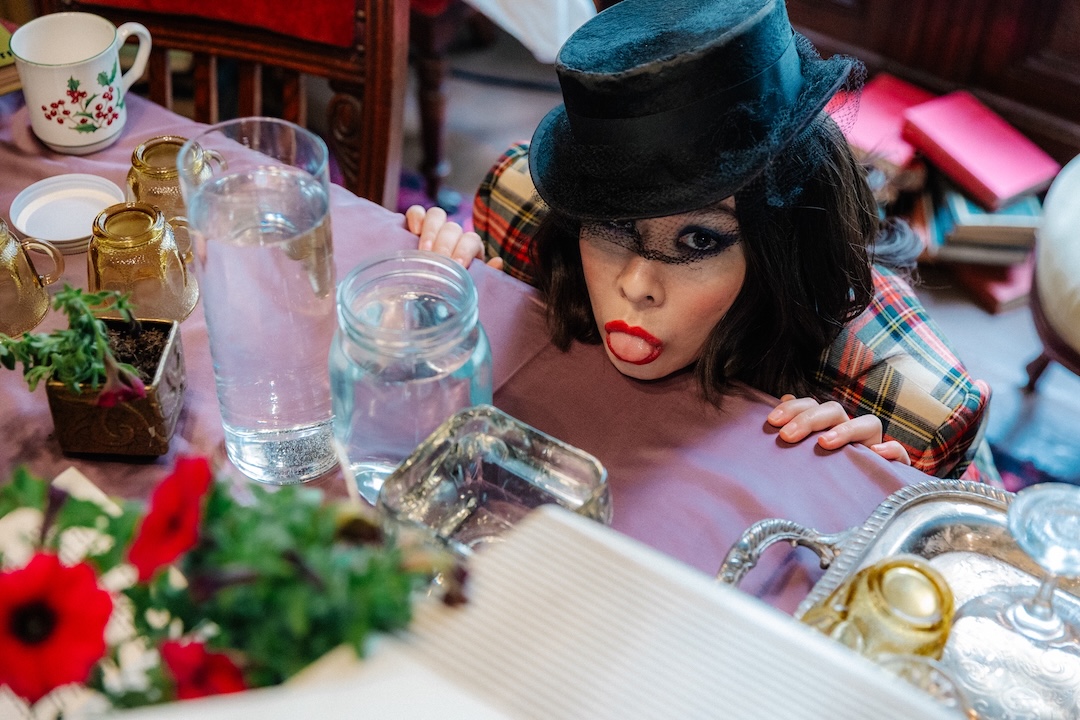
Mitski’s vocals can similarly be a moving target, according to Hyland. “With Mitski, everything is so elusive,” he explains. “Every time I think, ‘Okay, I’ve got it worked out, this is going to work,’ for the next song, it sounds ridiculous. Every time I think I can settle back and rely on some kind of formula, it’s immediately disproven.”
Discover more great stories—get a free Mix SmartBrief subscription!
As a result, he will often try a variety of mics. “I do have a handful of go-to mics,” he says. “I use a Josephson tube mic, the C725. I really like Josephson microphones because I think they’re one of the only companies that’s making truly original things. There’s also an older Sony microphone, the C-37P, the transistorized version of their big flagship mic, which is easier to find and much less expensive. Those might be the two I use the most.” That said, “She often sounds good with a dynamic mic—whatever is handy, like an RE20, SM7B or 421.”