
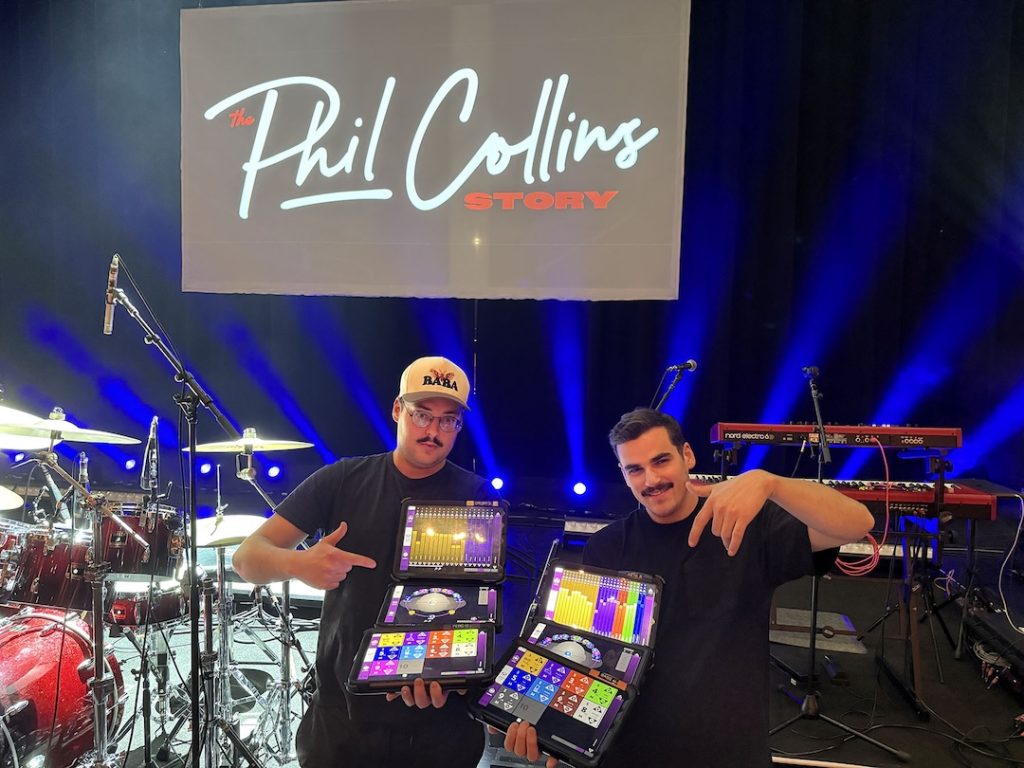
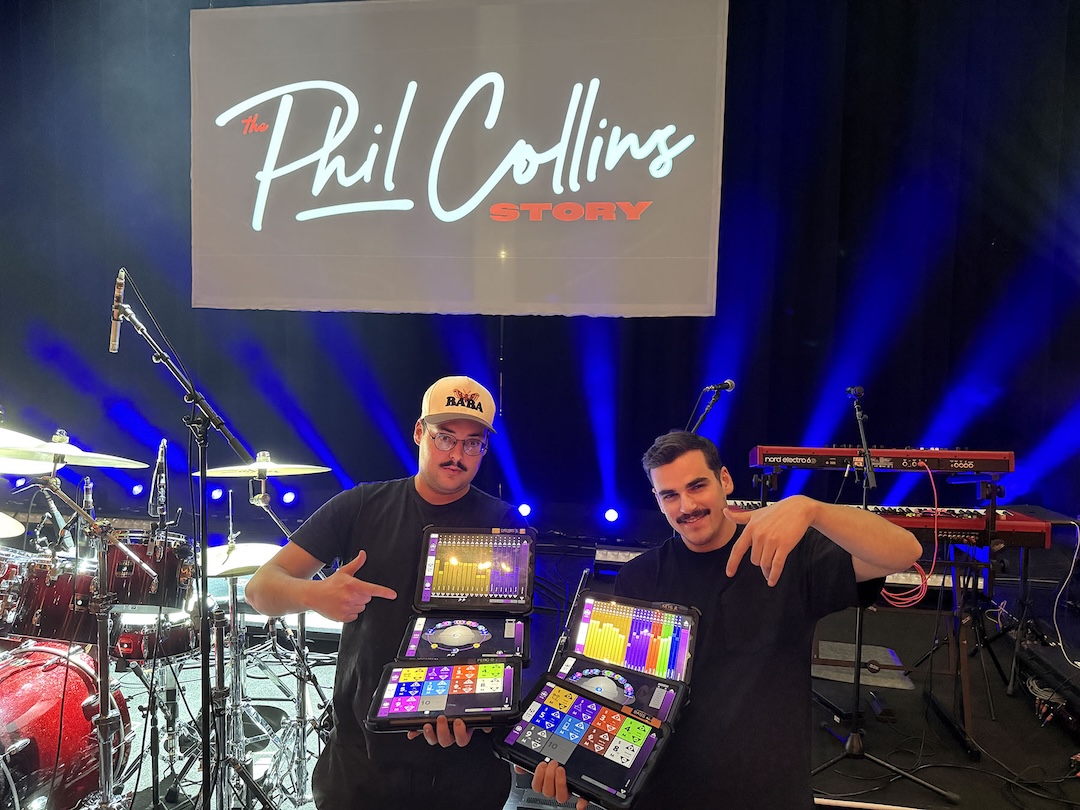
Syracuse, NY (July 14, 2026)—While he had a cheery, happy go lucky image throughout the 1980s, it was always readily apparent that Phil Collins was a complex guy—so it’s only appropriate that a new multimedia tour honoring the pop superstar is equally complicated. Mixing film, live music, theatrics and more, The Phil Collins Story follows the artist’s career across his Genesis days and solo career, and now the show is in the midst of a 50-city North American tour, carrying production from Clair Global.
Sound is central to the storytelling, so the audio for the show is delivered through a DiGiCo Quantum225 console, used for both front-of-house and monitor duties, with the latter critically utilizing a DiGiCo DMI-KLANG card for signal distribution and control, paired with iPads running KLANG:app for the musicians on stage. Manning the desk is Theodore “Ted” Woolsey, who also created the show’s the sound design, working with A2 Ethan Ginsburg-Margo.
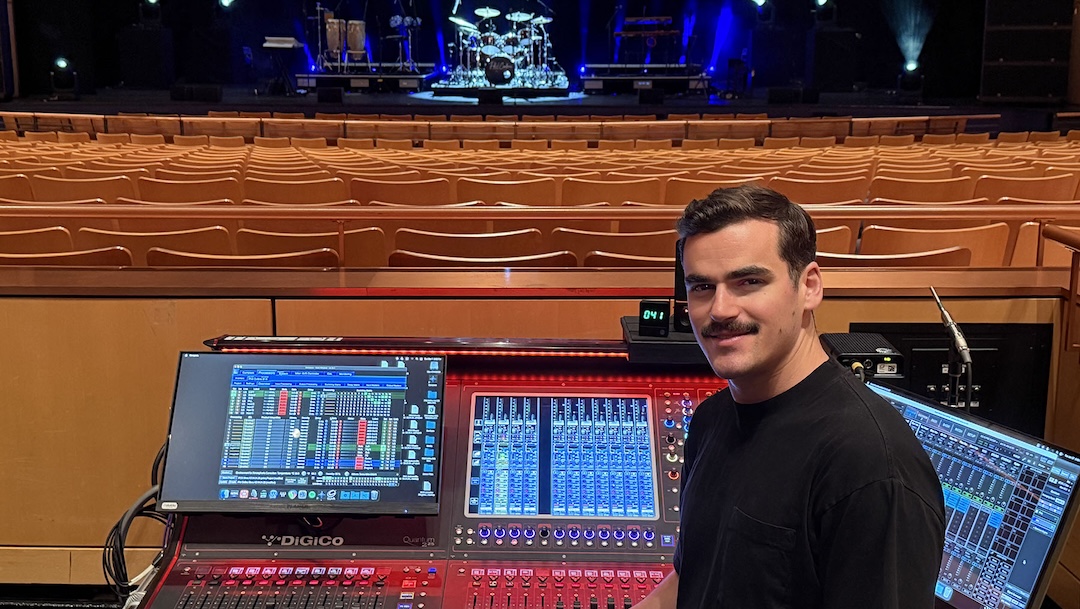
Sound, lighting, and video all operate independently of each other, relying on their respective managing engineers to keep the show together. “The show starts with the music director running a Logic session with a click track off of his laptop next to his keyboard,” Woolsey explains. “That goes to the six musicians in the band through the KLANG:app on their iPads, and it also cues the lighting and video operators, who have their own KLANG mix as well as the click. When they hear the click, they start the show manually.”
The FOH mix position features authentic outboard gear like Bricasti reverbs and a Yamaha SPX2000 multi-effects processor, but modern effect emulations like Waves plug-ins are also put to use. Perhaps the biggest nod to modern production, however, is the implementation of KLANG, used to provide immersive monitoring to the live musicians onstage. “I designed the setup so that there’s no need for a monitor engineer,” says Woolsey. “I’m using KLANG so that the musicians can mix themselves. The intuitive KLANG:app interface makes personal mixing easy for them, while the immersive mix engine helps them find the right balance much more quickly.”
• Inside the Live Sound of Live Aid, Part 1: London
The system is one Cat 5 line with the DMI-KLANG card out of the console leading into an access point that drives all the iPads, all shared off the same I/O. In addition, the entire show is programmed with snapshots so that during the initial rehearsals each of the musicians dialed in all of their individual mix levels per song.
• Subscribe to Mix magazine and our daily SmartBrief newsletter for free!
“Then I saved that data with the snapshots, so when I hit the next song, it changes their mix automatically to the mix that they dialed in for each song,” he says. “The combination of the Quantum and the KLANG is like having a monitor engineer that knows the whole show, but each musician is handling it themselves. And I like giving control to the musicians; they can easily make their own monitor tweaks through KLANG:app, focus on their playing, and be fully immersed in the show. And that also lets me focus on the live show and my front-of-house mix. Really, it’s the best way this show could be done.”