
This article first appeared in the March 1995 issue of Mix
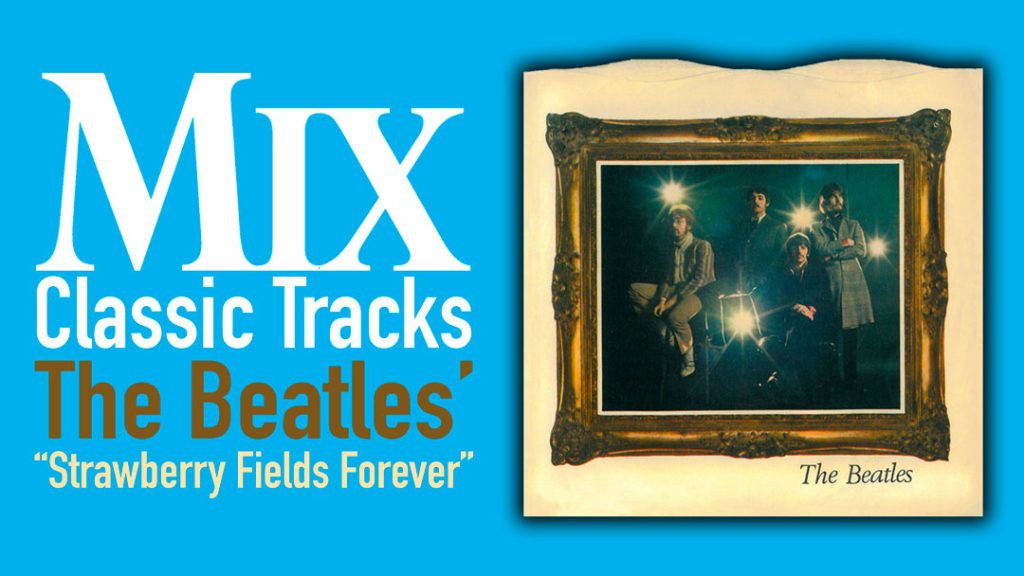
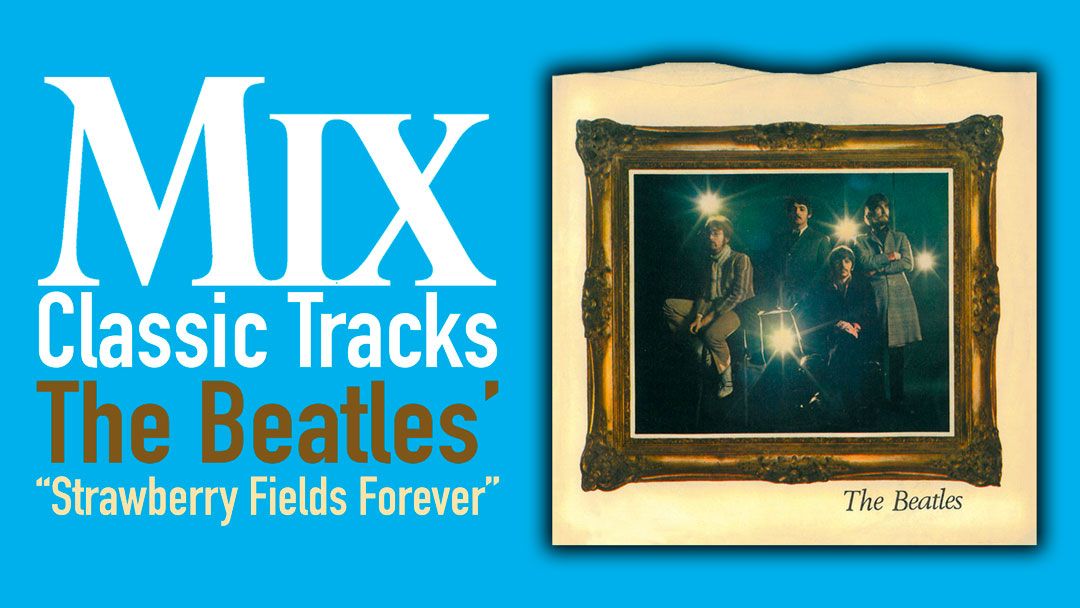
The 1966 album Revolver had prepared us somewhat for the mind-blowing directions the Beatles were headed in at the dawn of the Psychedelic Age, but still, it’s safe to say that no one—not even the Beatles themselves—was expecting anything like their incredible double-A side single of February 1967, “Penny Lane”/”Strawberry Fields Forever.” For my money. this is the most revolutionary single of all time, and George Martin has said he believes it’s the greatest record he ever made with the Beatles. There were no real precedents, and there’s been nothing quite like them since, either. “Strawberry Fields,” in particular, is utterly unique in pop music, and, not surprisingly, an interesting recording story.
A couple of things happened to John Lennon in 1965 and early ’66 that changed the way he wrote songs. First, he fell under the spell of Bob Dylan, whose output during this era was truly staggering: Bringing It All Back Home, Highway 61 Revisited and Blonde on Blonde—albums overflowing with poetic brilliance and flights of imagination. Lennon credited Dylan with opening him up as a songwriter and letting him step away from the standard pop songwriting subjects of the day. At the same time, Lennon was taking a lot of LSD, smoking pot almost constantly, and generally exploring some of the deeper reaches of his inner being, for better or worse. “Strawberry Fields Forever” is a hybrid grown from those influences—a deeply hallucinatory audio dreamscape plucked from Lennon’s subconscious. Strawberry Field is a real place—a Salvation Army home for disadvantaged children set on sprawling grounds near Lennon’s childhood abode in Liverpool. But it is the unreality of just about everything in the song—the instrumentation, the lyric phrasing and the bizarre technical details of the tracks—that places the song in its own netherworld.
After a three-month hiatus during which the individual bandmembers worked on their own pursuits for the first time, the Beatles convened back at Studio Two at Abbey Road in London on November 24, 1966, to begin work on their next album. The first track they tackled was Lennon’s new song, “Strawberry Fields Forever,” which he ran down for the group and producer George Martin on acoustic guitar. Geoff Emerick was the engineer. According to the indispensable sourcebook, The Beatles: Recording Sessions, the band worked from 7:00 p.m. until 2:30 a.m. putting together take one of the song, which was positively skeletal compared to what it would finally become a few weeks later. Still, it was a multitrack affair, consisting of the famous mellotron “flute” line (played by Paul), various guitars, including some distinctive slide by George, the rudiments of Ringo’s drum part, maracas and various vocal harmonies. This was still the era of 4-track bouncing to record multiple parts; it predates the ability to mechanically sync up tape machines. The studio’s console at that point was an old EMI valve model, and the 4-tracks were Studer J37s (Abbey Road didn’t get an 8-track machine until late in 1967, after Sgt. Pepper).
A few days later, the group returned to the studio on two consecutive evenings to put down several more takes, concentrating on the rhythm track but also adding piano, bass and more double-tracked Lennon vocals. For the next nine days, Take 7 was labeled “best,” and had this been 1965, that’s probably close to what we would’ve heard on the finished master. But the rules of the game had changed for the Beatles, and they now felt they could take their time with recording, so that sessions’ “best” became just another take, and more sessions followed a week and a half later, with the group making it up to Take 24 and adding overdubs of bongos, tambourine, more guitars, tympani and some of the famous backward hi-hat line.
• Classic Tracks: The Eagles’ “Hotel California”
“Up to that time, we never remade anything,” George Martin wrote in his 1979 autobiography, All You Need Is Ears. “But this time we did. ‘Maybe we should do it differently,’ said John. ‘I’d like you to score something for it. Maybe we should have a bit of strings or brass or something.’ Between us, we worked out that I should write for cellos and trumpets, together with the group. When I had finished, we recorded it again, and I felt that this time, it was much better.”
Then, typical of the way Martin and Emerick worked back then, those horn and cello tracks (Take 25) were grafted onto two tracks of a 4-track that contained the current “best”—a 2-track reduction of takes 15 and 24. “Once again, all four tracks were full,” writes Recording Sessions author Mark Lewisohn, “and there was another reduction mix. Onto this was added two separate recordings of John Lennon’s lead vocal, tracks three and four. At the end of the second overdub, Lennon muttered the words ‘cranberry sauce’ twice over…By the end of the evening, the remake of ‘Strawberry Fields Forever’ had taken on an intensity of almost frightening proportion. With its frantic strings and blaring trumpets, very heavy drum sound and two manic, exceptionally fast Lennon vocals, it was far removed from the acoustic take one of the song recorded on 24 November. Would John be satisfied with it now?”
Well, not quite. Lennon decided he liked the beginning of the earlier, less scored, “best” version, and also the “finished” Take 26. He said, “‘Why don’t you join the beginning of the first one to the end of the second one,’ Martin remembered. “There are two things against it,’ I replied. “They are in different keys and different tempos.’ ‘Well,’ he said, ‘You can fix it!” So a week after Take 26, Martin and Emerick went back into the studio to see if they could pull off this difficult feat.
“I thought: If I can speed up the one and slow down the other, I can get the pitches the same,” Martin wrote. “With any luck, the tempos will be sufficiently close not to be noticeable. I did just that, on a variable-control tape machine, selecting precisely the right spot to make the cut ‘exactly 60 seconds into the song,’ to join them as nearly perfectly as possible. That is how ‘Strawberry Fields’ was issued, and how it remains today—two recordings.”
• Discover more great stories—get a free Mix SmartBrief subscription!
Whew! A number of the different takes of “Strawberry Fields” have come out on bootleg albums and CDs through the years. and what struck me most in listening to them was that almost all of what I once believed was studio trickery is, on closer inspection, actually just very weird musical parts by oddly combined instruments. It’s a masterpiece of arrangement more than anything, and the studio sleight of hand (backward tracks, the distinctive fades) is actually fairly simple, even by the standards they’d established on certain tracks of Revolver.
As fate would have it, “Strawberry Fields” and “Penny Lane” were not destined to be part of the Beatles’ next album. Their record company, evidently believing that the public might forget about the Beatles if they didn’t release a single in the winter of ’67, convinced the group to release the two songs in February of that year. By the time the single came out, the band was already deep in the throes of their next masterwork: Sergeant Pepper’s Lonely Heart’s Club Band. But that, to say the least, is another story.