
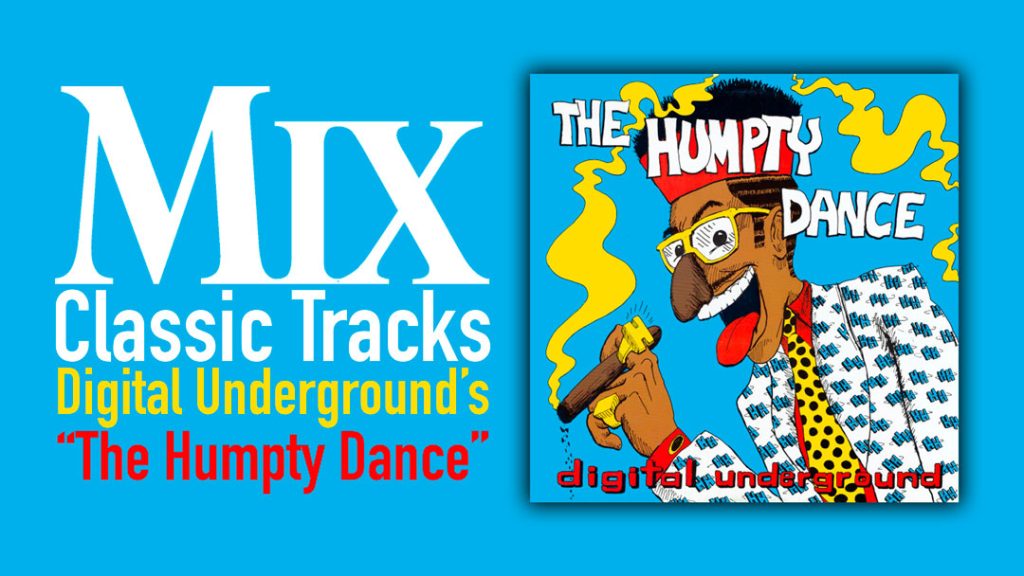
When “The Humpty Dance” landed in January 1990, it sounded like nothing that came before it—not the battle-hardened lyricism ruling New York, nor the gangsta realism N.W.A had unleashed on the West Coast. Hip-hop in 1990 was serious, staking out territorial claims—and then along came Humpty Hump, a flamboyant, fictional character with a fake nose and a deep-fryer backstory, rapping over a bassline that defied physics and a collage of samples that producers have borrowed ever since.
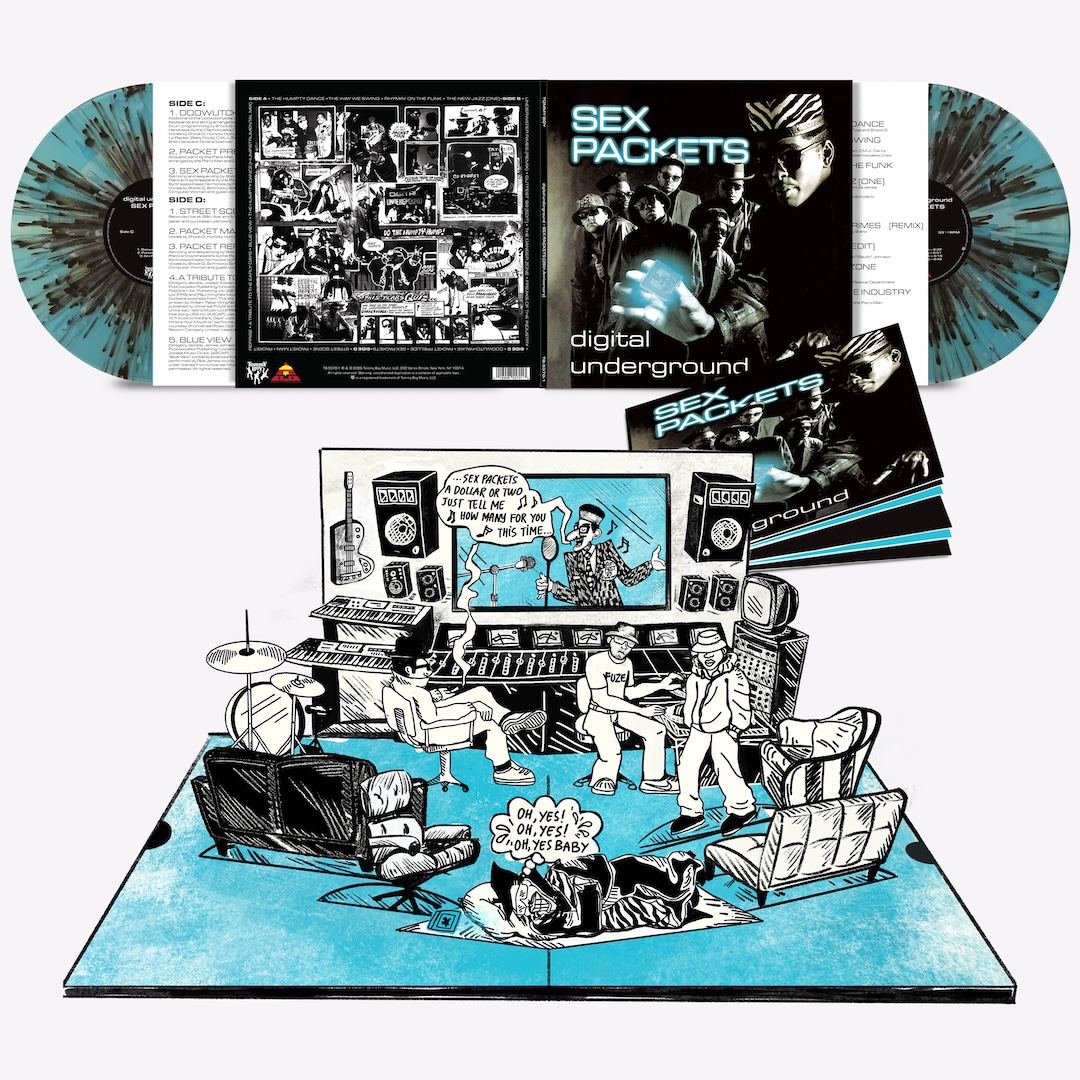
“The Humpty Dance” was the breakout single from Digital Underground’s debut, Sex Packets, which went Platinum and earned a spot on Rolling Stone and The Source’s lists of the greatest hip-hop albums of all time. The single shot to No. 1 on Billboard’s Hot Rap Singles chart and crossed over to No. 11 on the Hot 100. This spring, Tommy Boy Records marks the album’s 35th anniversary with a newly remastered and expanded edition, featuring unreleased tracks and a gatefold package built around original Rackadelic artwork by Shock G.
Digital Underground was Gregory “Shock G” Jacobs’ creation: a collective driven by deep funk obsession and instinct for the outrageous. Born in Queens and shaped by time in Tampa’s electro-funk and Miami bass scenes, Shock taught himself piano by sneaking sessions at music stores and college campuses across the country before settling in Oakland, Calif., across the Bay from San Francisco.
He pursued formal music theory studies at Hillsborough Community College in Tampa. This music education made him a producer who heard harmony and structure where his peers heard beats. His idol was George Clinton, but the Parliament- Funkadelic influence ran deeper than samples—it was in the humor, the characters, the concepts, the whole Digital Underground philosophy.
THE EAST BAY VIBE
The group that recorded Sex Packets included rapper Ronald “Money B” Brooks, turntablist David “DJ Fuze” Elliott, and crooner Earl “Schmoovy Schmoov” Cook, along with a rotating cast that reflected the communal energy of the always vibrant East Bay scene. Atron Gregory—who managed the group and owned TNT Records, which released Digital Underground’s early singles before Tommy Boy came into the picture—has long argued that Digital Underground could only have emerged from the Bay Area. As he writes in the anniversary re-issue liner notes, “In the Bay, you could create a character like Humpty Hump, flip a funk classic into a hip-hop party anthem, and not be boxed in by expectations.”
The hub of that world was Starlight Studios in nearby Richmond, its walls lined with gold records from En Vogue, MC Hammer and Tony! Toni! Toné! “When you would walk in, you would see all of these acts that recorded there,” says Money B, “and you’re like, ‘Okay, this is the real deal.’”
Gregory’s camp locked the studio out for 24-hour blocks, cycling acts in as sessions finished. Artists stuck around, ideas flowed freely, and the energy of one room spilled into the next. “A lot of times, we would just hang out in each other’s sessions,” Money B says, “especially if it was a good song.”
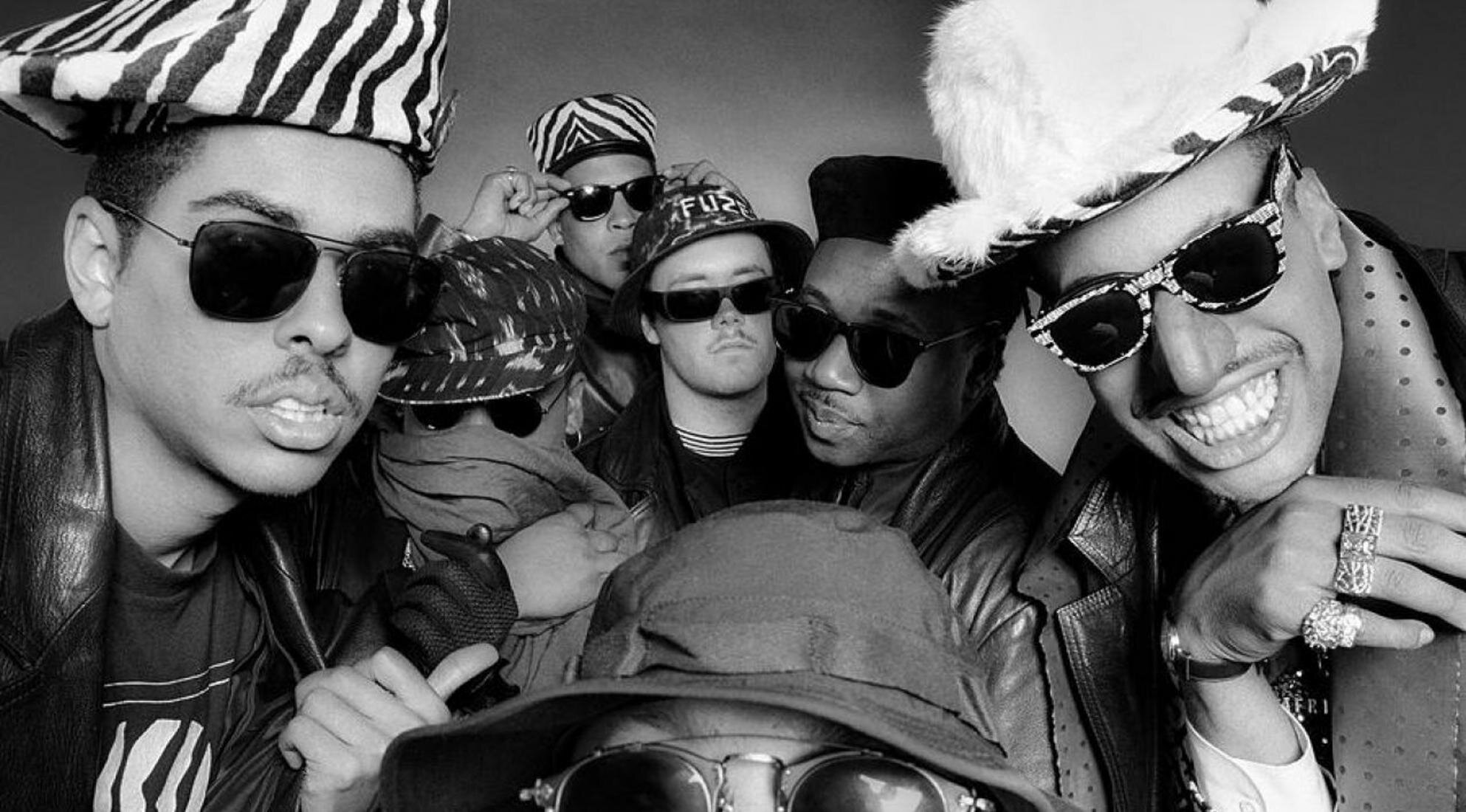
“The Humpty Dance” was born at the group’s house, however, where Shock G and DJ Fuze were working one night. Money B heard the four-track cassette version the next morning.
“Everybody loved it,” he recalls. “We all had a tape and we’d be playing it.” It had a rawness to it: highs cutting through, the mix alive with loose, late-night session energy. The job at Starlight, recording with engineer Steve Counter to twoinch, 24-track tape, was to capture that feeling and then some. “Shock and Steve worked really hard to get the sound to where it needed to be.”
SAMPLES, AND MORE SAMPLES
The drum track is deceptively simple, but five elements were assembled into a single groove: a one-measure kit loop from Sly and the Family Stone’s “Sing a Simple Song;” a handclap snare from Parliament’s “Theme From the Black Hole;” programmed hi-hats running continuously in eighth-notes; a deep tonal kick alternating between two bass notes; and a single guitar hit per bar.
The challenge? Each sampled element came from a live studio performance; nothing sat on a grid. Getting them to breathe together as one rhythm required painstaking manual alignment.
“When you’re sampling a live performance, it’s not all quantized and on time,” Money B explains. “Something sounding as simple as ‘The Humpty Dance,’ if you even strip the bassline and just hear the break, it’s a complicated thing to try to line everything up for it to sound like one beat.”
Discover more great stories—get a free Mix SmartBrief subscription!
Watching producers strip those drums for samples of their own, he has an answer for anyone who thinks the process was simple. “If it’s just this clap and this break, why didn’t everybody go and remake it themselves? It’s because Shock did the work for them.”
The track also uses a vocal sample from Parliament’s “Let’s Play House” through the chorus, and incorporates the Vibrettes’ 1973 recording, “Humpty Dump.”
…AND THAT BASS LINE
Then there’s the bass line, that slippery slide that musicians and producers have been chasing for 35 years. The reason the sound is so elusive, Gregory explains, comes down to how Steve Counter processed the track: “The bass line was reversed, and then it was EQ’d all the way up to distortion, and then brought back down just so it wasn’t distorted.” Those who have attempted to re-create the iconic sound, “because they didn’t really know what happened, they can’t quite get there,” he says.
The synth that Shock used to play the line remains in question. Money B remembers Roland equipment in the studio; Gregory is confident it was a Yamaha, citing, as evidence, a Yamaha tattoo that Shock later had inked on his arm. Shock would approximate the bass line live by working a keyboard filter and bending pitch with the slider.
Getting the vocal right was its own story. Shock tracked Humpty’s voice at Starlight, but something felt off; the energy of the demo wasn’t transferring. The original had been made on a Friday night, and it felt like it. Money B had a one-word diagnosis. “I just said, ‘Hennessy,’” he recalls, “because I know when they made it, they was hanging out, and that was his drink of choice at the time.” They got a bottle, and Humpty Hump came to life.
UNDERGROUND RISING
The first sign that Digital Underground were on to something big came at the 1989 BCM Summer Dance Festival in Berlin, where they appeared on a three-day bill alongside heavy R&B and jazz acts.
“EPMD and Queen Latifah were watching our soundcheck because everybody was curious about who we were and what we were going to do,” says Money B. “When ‘The Humpty Dance’ dropped during soundcheck and that bassline dropped, I looked and I saw [EPMD’s] Erick Sermon, and, you know, heads started turning a little bit. I was like, ‘Okay, yeah.’ That was the first time that I ever seen a reaction from another artist outside of us.”
• Classic Tracks: Fine Young Cannibals’ “She Drives Me Crazy”
EPMD ended up sampling the track extensively, Sermon admitting to Money B his group had used it on roughly 20 records—not all of them cleared.
That became a pattern. “The Humpty Dance” has appeared in nearly 200 recordings from artists like Public Enemy, Will Smith, the Spice Girls and Sade. Money B once played LL Cool J’s “Mama Said Knock You Out” in the car with his then-four-yearold son. The kid listened for a moment and said, unprompted, “Daddy, that sort of sounds like some of your music.” “He caught it,” Money B says.
Shock G passed away on April 22, 2021, but over three-and-a-half decades, “The Humpty Dance” has taken on a life of its own. The track is still being borrowed, flipped and re-imagined on records being made today. “I realize ‘The Humpty Dance’ and the iterations of it that were used is a soundtrack to people’s lives,” says Gregory, “and that just makes me feel really, really good.”