
Don’t Pass Up Part One!
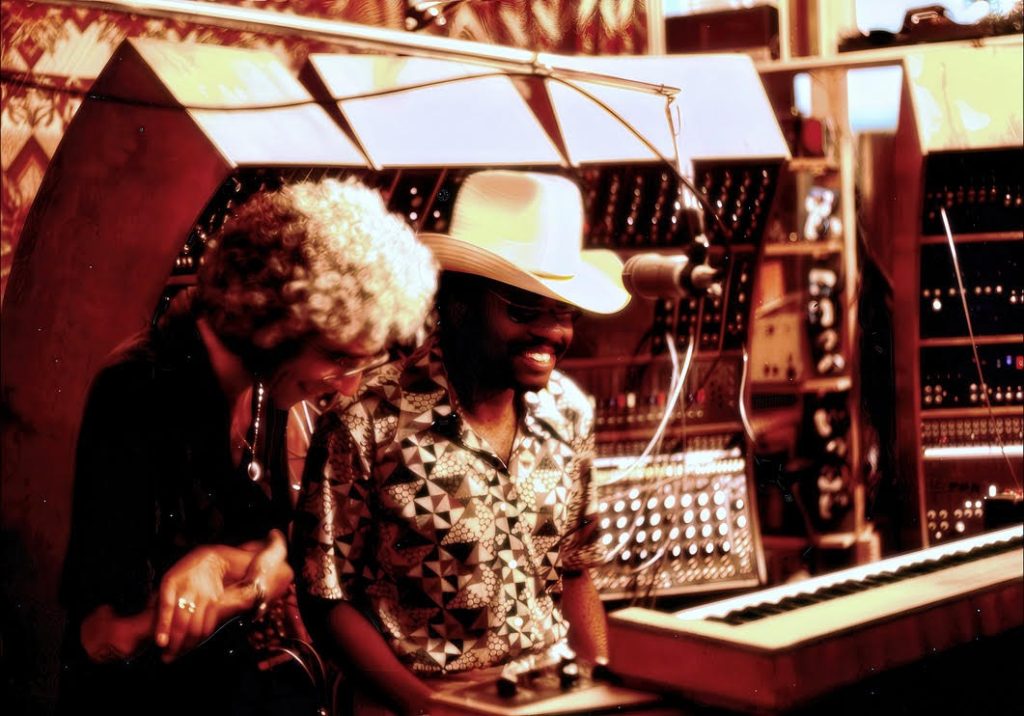
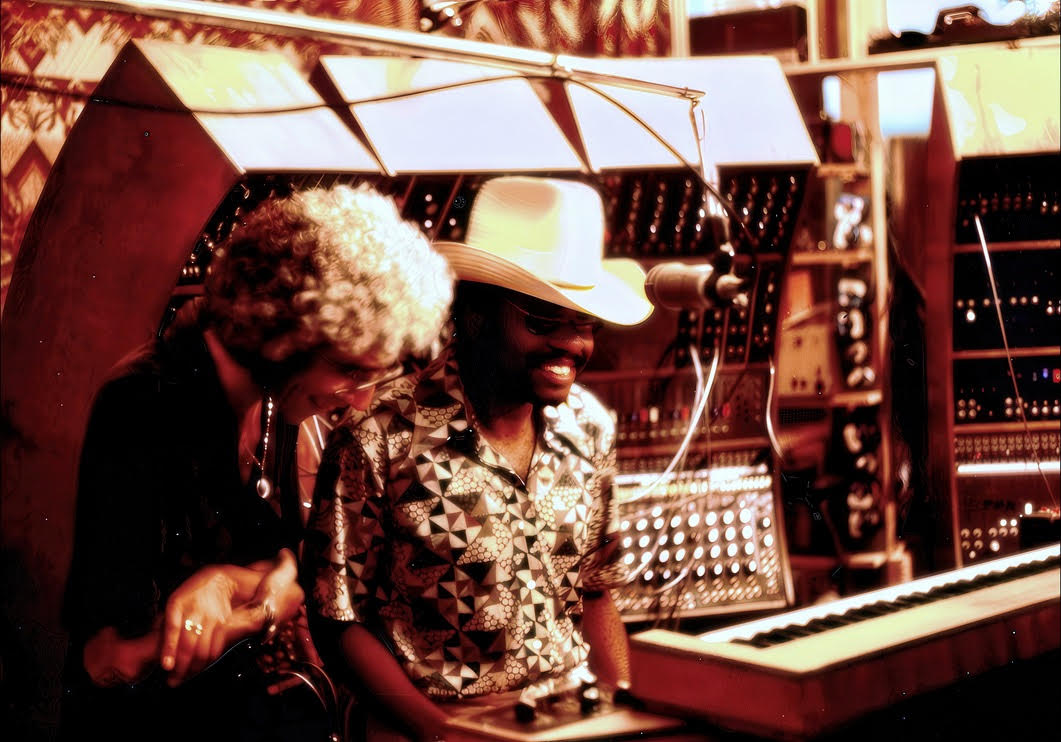
Once we had done the preproduction work at the ranch, we decided to do the actual recording at Kent Duncan’s studio, Kendun. Kent was the owner and an ace mastering engineer we had previously worked with during the mastering of Minnie Riperton’s Perfect Angel. His studio was located at the end of Glenwood Place, a dead-end street in Burbank. He had just built a second studio behind his mastering room. It was state of the art: upgraded Tom Hidley studio design with signature compression ceiling, Hidley quad monitors, highly modified API console with Deane Jensen transformers, and two sizable, isolated studio spaces. There was also an excellent grand piano. It felt like the Record Plant revisited, right down to the green-and-brown shag carpeting.
Peter Chaikin, our second engineer at the Record Plant during our days with Stevie, followed us to Kendun and picked up right where he left off. We all felt at home and got to work right away.
One of the essential elements of Billy’s rig was the Hammond B3 and its Leslie cabinet. A single Leslie cabinet has two speakers, a treble horn and a bass speaker, which rotate, creating a swirly, tremolo-type sound. Usually, B3s use only one Leslie cabinet. However, Malcolm and I decided to use two and mic them in stereo, with one panned to the left and the other to the right.
We spent a lot of time setting up the treble horns in stereo with a pair of AKG C414 EB condenser microphones. We recorded the bass speaker on the bottom in mono with an Electro-Voice RE20. The sound was huge, spacious, and simply astounding. We put the cabinets in a back studio with lively walls for lots of natural reverb and ran the connecting cables under the door into the front studio, with Billy at the keyboard and the drums facing each other.
The drums had their own multi-microphone setup, which took hours to perfect. As usual, we mixed from the drummer’s point of view. We used a pair of AKG C414s overhead, Sennheiser dynamic 421s on the toms, an RE20 on the kick, a Neumann KM 84 on the hi-hat, and two Shure SM57s top and bottom on the snare. We added a pair of Sony C37s for room sounds. That was pretty much the standard approach for Malcolm and me.
We used a pair of AKG C414 EBs on the acoustic piano and recorded it as an overdub to take advantage of the studio’s acoustics. We placed the mics at the bottom and top of the keyboard so that the sonic image was left-toright, reflecting Billy’s point of view. You could hear the motion of the notes as his hands moved up and down the keyboard. For us, the movement itself was musical. Billy’s electronic keyboard stack included a Fender Rhodes, a Clavinet, and a few other keyboards, all set up in the control room. The bass and guitars were set up with direct inputs in the control room. Everybody had good eye contact.
Discover more great stories—get a free Mix SmartBrief subscription!
For our first session at Kendun, Billy pulled into the parking lot in the car he drove every day. It was a showstopper: an early ‘60s Bentley sedan with right-hand drive, bone white with a Chrysler V8 under the hood. The car was seriously hot-rodded, and it was rumored that George Harrison had previously owned it. Everybody at the studio went outside for a gawk.
A few days later, Malcolm and I got to ride in it. The car was overpowered and totally out of balance because of the weight of the retrofitted engine on its front end. Its shock absorbers were nonexistent, and the whitewall tires were the wrong size. It lunged and floated over the road. The brakes were pretty much nonexistent, too. I only rode in it once or twice, and I felt like I was taking my life into my hands each time. But although it was terrifying to ride in, it really was a beautiful old jalopy. Billy loved it.
COME BACK TOMORROW FOR THE CONCLUSION!
Excerpted from Shaping Sounds: Stevie Wonder, DEVO, The Synth Revolution, And My Life Behind The Music by Robert Margouleff with Jim Reilly, and reprinted by permission of Jawbone Press. Shaping Sounds will be published May 19, 2026. Shaping Sounds is available in audio at pushkin.fm/shapingsounds or wherever you purchase audiobooks.