
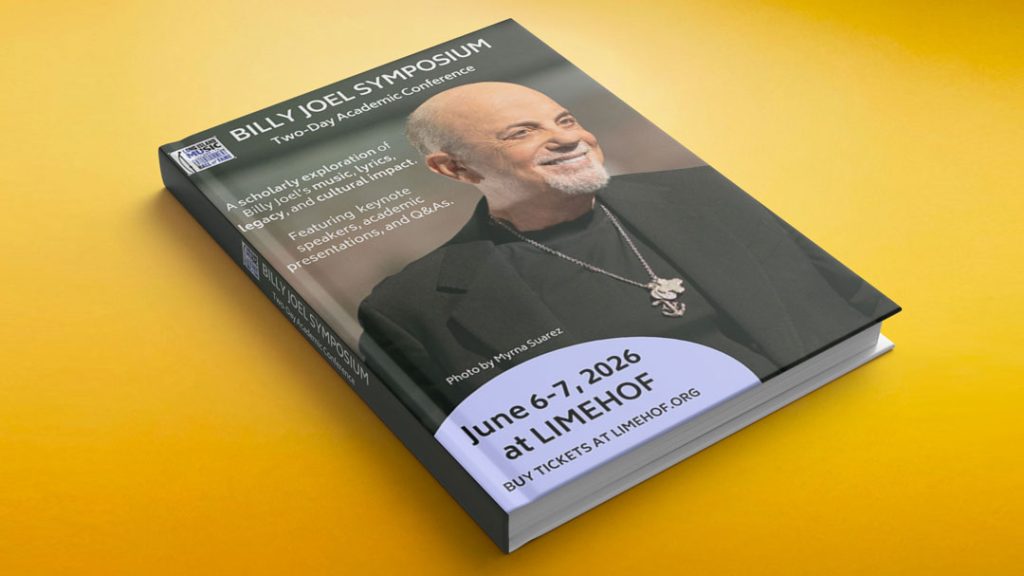
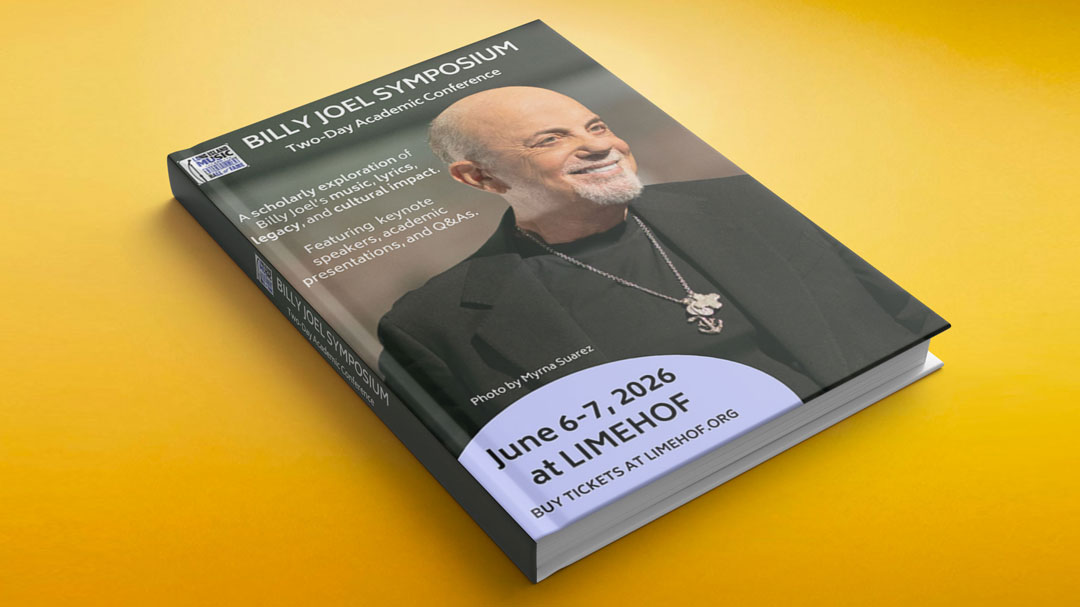
A few months ago, I made a stupid mistake: I read that the Long Island Music and Entertainment Hall of Fame was planning an academic event about the region’s favorite musical son, Billy Joel. Right then and there, I should have doom-scrolled off on my merry way, but instead I kept reading.
It turned out LIMEHOF is hosting The Billy Joel Symposium on June 6-7 and it sounded interesting, so I marked it on my calendar. A summer weekend spent indoors listening to academic papers like “Piano Man as Ethnographer: Billy Joel and the Anthropology of Deindustrialization?” I am so there.
But I write for a living, so I started wondering what I would have put together for that symposium…and you can see where this is going. On a whim, I submitted a proposal for a paper that would look at Joel’s career in relation to the development of digital recording technology. I figured the worst that could happen was that the Hall would accept the proposal, and if it did, so what? The paper would be easy to write, and researching it would be a snap between the Mix archives and making some calls to get expert insights from audio pros Joel worked with over the years. It would be fun!
Well, the worst happened—and it was the worst. They accepted the proposal. It was a nightmare to write. Researching it was not a snap. Interviewing legendary producers and engineers was great, but the rest of it was not even remotely fun. I was appalled to discover that academic writing is actually hard work. Adding insult to self-inflicted injury, my wife reveled in pointing out that I had done this to myself for absolutely no reason. Between multiple false starts and endless revisions, I probably wrote upwards of 12,000 words for a paper that had to be 1,700 max (I handed in 2,300). Cutting it all down to fit, I had to take out most of those recording stories and insights; maybe they’ll wind up in some future Mix articles.
One part that was fun, however, was discovering how Joel’s early career really did parallel the dawn of digital recording.
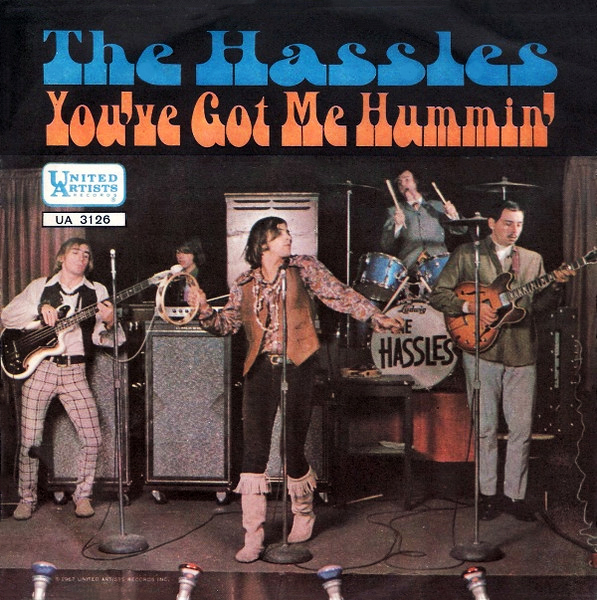
While The Hassles, featuring an 18-year-old Billy Joel on keys, were releasing their first album in 1967, on the other side of the world, NHK in Japan was unveiling the first digital audio recording system—a 12-bit/30 kHz device that did little more than prove digital recording was possible. In 1969, as the Hassles upgraded by making Joel the frontman on their second album, NHK upgraded its system to record 13-bit/32 kHz audio across two channels. In both cases, it was too little too late; The Hassles and the NHK system both went nowhere.
• Mix Music Production NYC 2026 Launches with Early Bird Tickets
In 1971, Joel released his first solo album, the famously poorly recorded Cold Spring Harbor. Meanwhile, over in Japan, Denon issued the first commercially released digital recording. The record—two tracks of avant-garde, experimental percussion—was not a hit. Neither was Cold Spring Harbor.
Throughout the early 1970s, both Joel’s solo career and digital recording made sporadic progress; during this period, both Sony and the BBC created digital recording systems, but the BBC’s was proprietary and used for broadcast work, while Sony’s was exhibited at trade shows but never went into production. In the States, Joel kept releasing albums and got minor radio play with “Piano Man,” but none of it translated into record sales.
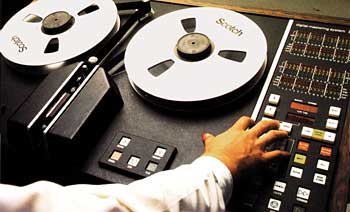
And then, in 1978, as Joel finally made it big with a string of hits from his album The Stranger, digital recording finally broke through, too. That year, the 3M Digital Audio Mastering System was introduced—a true digital multitrack recorder. Running a cool $150,000 per machine ($675,000 in 2026 dollars), it could record up to 32 tracks, fitting 45 minutes of material on a single digital tape. It was a major step forward, but given the price, only a handful of machines were available at first.
By that time, Joel was working with legendary producer Phil Ramone and engineer Jim Boyer; his albums were being tracked on 24-track analog, but that changed with his 1981 live album, Songs in the Attic, which was recorded digitally on a rented 3M System.
Not only was it the first live album to be digitally multitracked, but it also became the first album ever to be recorded digitally but mixed analog, as it was transferred down to 24 tracks on a Studer A800. The reason for that wasn’t technological, but rather financial—it would cost too much to keep renting the 3M machine during the mix process. As Ramone noted in a contemporary interview, “Digital is obviously the way to go eventually, but I think we need to avoid having the studios and their clients strangled by the cost.”
Ramone reverted to analog to record and mix The Nylon Curtain (1982) and An Innocent Man (1983), and it wasn’t until The Bridge (1986) that digital recording was used for one of Joel’s studio albums. From then on through his final studio album, 1993’s River of Dreams, everything he put out was recorded digitally, but still mixed analog—which means his last album came out before DAWs began radically changing the industry at the turn of the Millennium.
• Subscribe to Mix magazine and our daily Smartbrief newsletter for free!
Everything you just read was reduced to four sentences in the final paper, however, because the paper had to focus on the Nineties onward, since that’s when digital recording took over for good.
But how does that work if Joel hasn’t put out an album since 1993? Since then, he’s recorded a scant 14 songs—most of them covers, many of them duets on other artists’ albums, and nearly all of them made in Pro Tools. Talking with producers and engineers who recorded some of those latter-day tracks, they all agreed DAWs wouldn’t have changed Joel’s process if he was still recording on the regular. Even today, he’s always preferred recording like he did in the analog days, with full band takes capturing the magic of musicians interacting in real time, rather than meticulously building a perfect track piece-by-piece from the ground up. Will Billy Joel ever record another album? Probably not, but it’s safe to say if he does, he won’t go changing.