
DON’T PASS UP PART ONE!
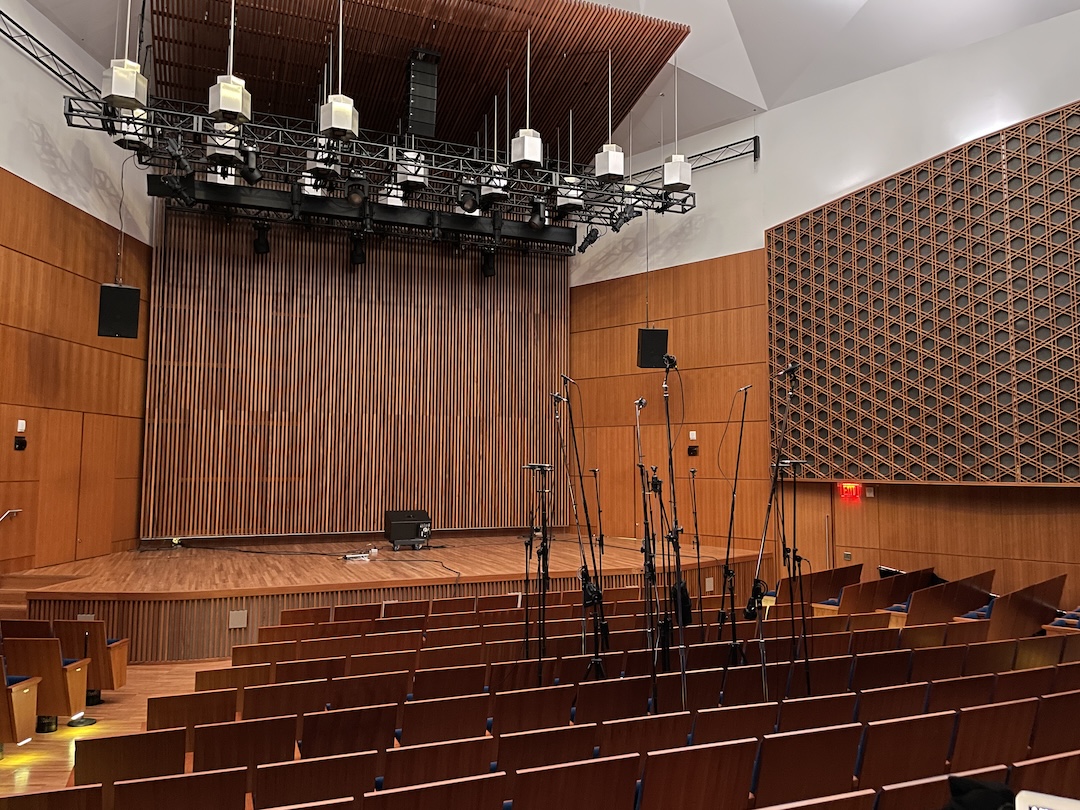
When Gray came to mix the project in Dolby Atmos, there was no need to spread the tracks around because everything had been recorded with the panning essentially baked in. “I’ve always got the close mics and I’ve always got the immersive mics, so I can balance that perspective. When I was done tracking, the positionality of the music was already done,” he confirms.
With so many tracks involved, things could potentially spiral out of control. “It could get overwhelming and daunting unless you’ve been through it a thousand times before and you know what to do,” Gray admits, “but the Pro Tools folders and routing were very well organized; the routing for the record was created before I started the editing. I have every post-production tool for immersive—because I’m still searching daily for problem-solving tools—but nothing comes remotely close to achieving what a well-placed microphone in a room can do. This is true for mono, for stereo and definitely for immersive.”
THREE DISCRETE MIXES
Immersive mixers are inherently inclined to preserve the original intent of the artist and producer when creating an Atmos version of a previous stereo release. But for Immersed, Gray says, he wanted to create the best immersive and the best stereo representations of the material as discrete mixes, without referencing one to the other. He didn’t even start the stereo mix until the immersive mix was mastered.
“I have the unique opportunity to be the composer, producer and mixer,” he says. “This allows me, for better or worse, the ability to control intent. I literally am allowed to do whatever I would like. I knew that as soon as I went into two channels I was going to need to make a bunch of concessions that might unlock something and be really cool. I didn’t want to start exploring it in stereo and then go back and tinker with the Atmos mix, so I felt it was necessary to create a line in the sand.”
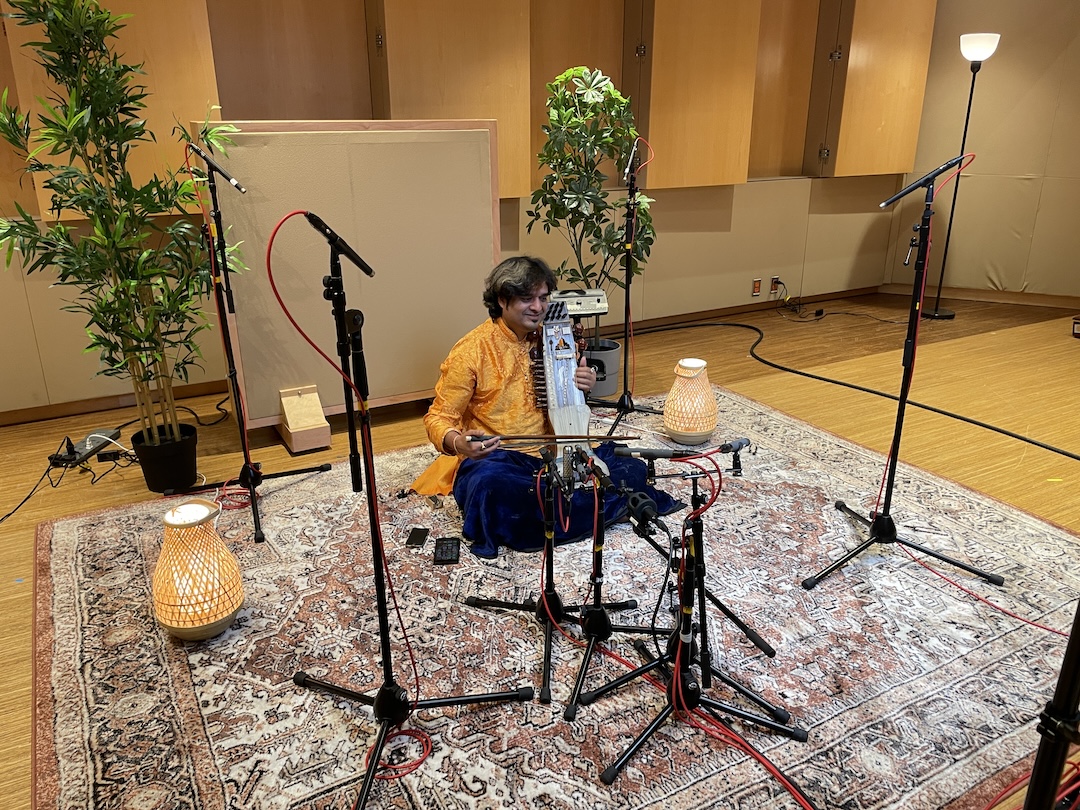
In stereo, he reports, a lot of the immersive mic arrays were unnecessary and, further, created phase and timing issues. “Oftentimes, I would keep the ones that were the most decorrelated,” he says, adding that the biggest issue proved to be the panning relationships. “This record is very much written front to back, bottom to top. So, there’s a brass ensemble behind and a string ensemble in front. [For the stereo mix], I had to remap the space and make those conversations between left and right.”
It also required a lot of EQ and compression, he continues, “because you need to carve space, where in immersive, you don’t. I was mixing through my master chain; I want bus compression and saturation. In stereo, you want that glue, that sense of movement and motion. It was a reminder of the beauty of the two formats.”
Gray, who has been studying the translation of immersive home entertainment mixes to cinema and has worked on several immersive albums for theatrical playback, visited rerecording engineers Steve Foster and Mike Kennedy at Company 3 in Toronto to create a third mix.
“I brought an ADM file that acted as a 9.1.6 stem out for various instrument groups, sound effects and reverbs, as well as some separate objects dedicated to tabla, bass, vocals and other things,” he explains. “Objects localize to discrete locations in cinema playback, while the bed creates array behavior. But this is a very point-source composition, so it’s a DCP of only objects, with only LFE in the bed.”
Gray has presented the cinematic mix— there is an accompanying film—at Dolby Theaters across the U.S., Europe and Canada. “It was beautiful,” he says, “and it presented the immersive experience in a grand way.”
Discover more recording stories—get a free Mix SmartBrief subscription!
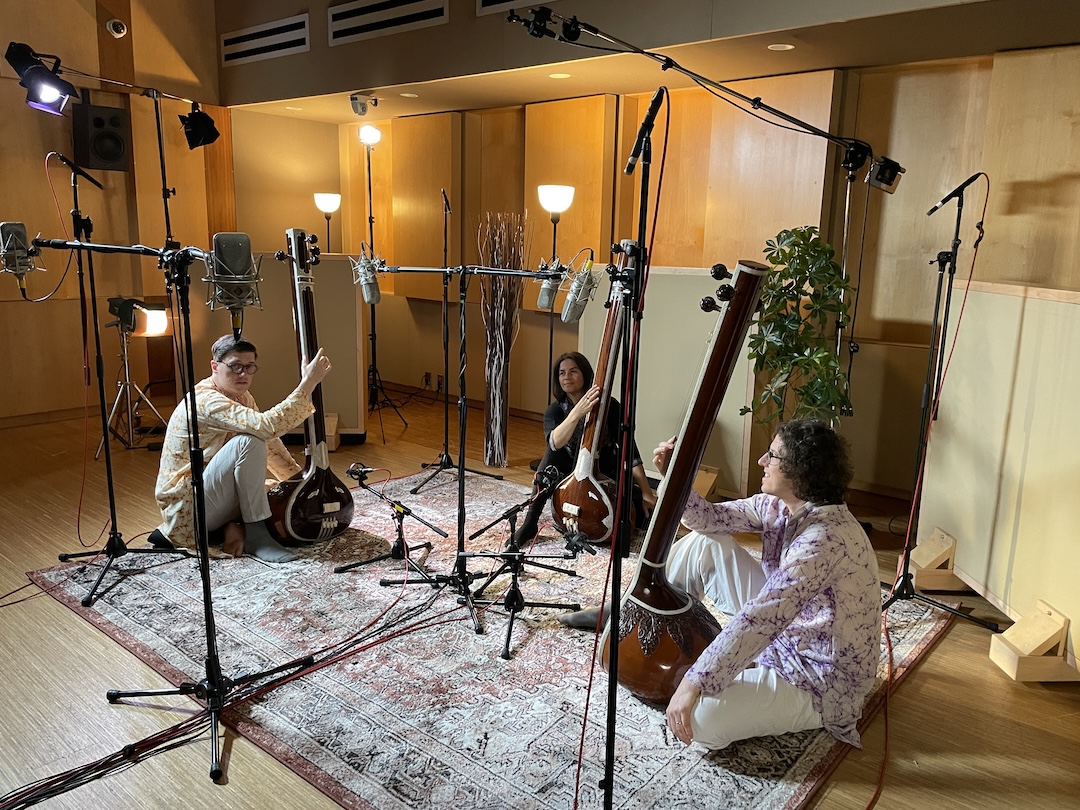
As if wearing so many hats and managing the complexities of the project weren’t enough for one person, Gray also partnered with cinematographer Michael Fisher to document the entire production process, particularly the mic setups. The videos, available on the Immersed Blog page at his website (justingraysound.com), provide a roadmap or, at the very least, inspiration, for anyone wishing to follow in his footsteps.