

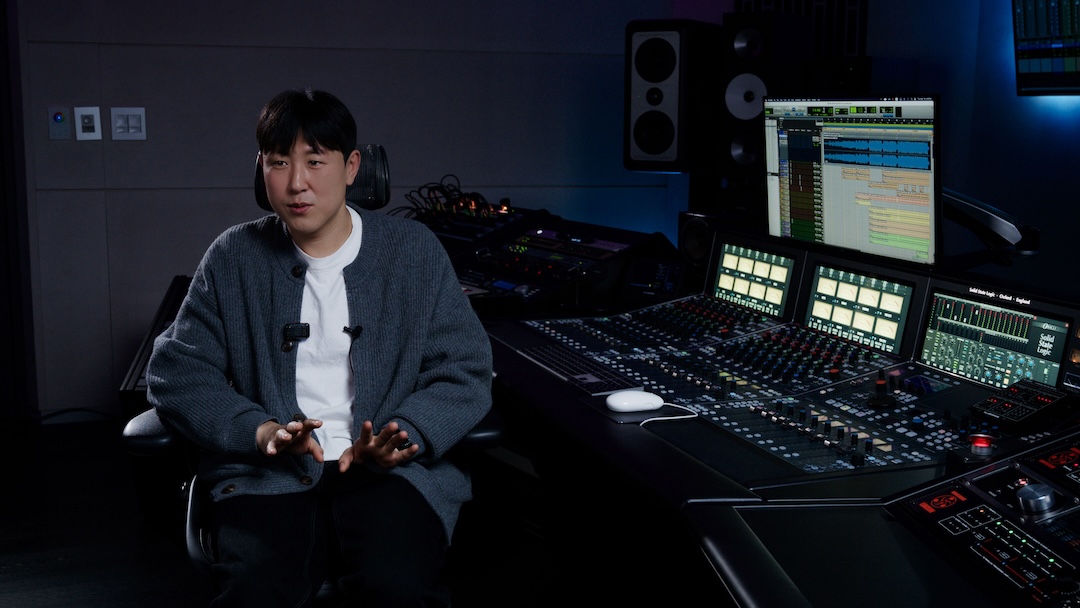
Seoul, South Korea (June 9, 2026)—K-Pop pioneer SM Entertainment has integrated a new SSL Oracle into BigShot Studio at its facility in Seoul, South Korea.
“There are days when I have to open and close more than 10 sessions in a single day; in the past, I had to manually write down the settings of outboard gear and recall them one by one, which was quite inconvenient,” and could result in errors, says mixing and recording engineer Lee Min Kyu. “Adopting Oracle and being able to restore the entire console routing, processing, and knob settings, with a single button, has completely freed me from both the physical effort and the psychological pressure of ‘Will it sound the same?’ The convenience and sheer enjoyment of this instant total recall are honestly difficult to fully describe unless you’ve experienced it firsthand.”
SM Entertainment is a multinational record label, talent agency, production company and music publisher that pioneered the introduction of Korean music artists to a wider global audience. GearLounge, SSL’s distribution partner in South Korea, supplied the SSL Oracle and carried out the integration.
• Mix Music Production NYC 2026 Launches with Early Bird Tickets
In addition to Oracle delivering new levels of efficiency during the K-Pop production process, Lee continues, the signal path needed to deliver what we needed socially. “We felt that SSL’s SuperAnalogue architecture, with its flat response, linear phase and exceptionally wide headroom, offered the ideal technology. Thanks to the immense headroom, even when working with a large number of tracks, many with overlapping frequencies, the sound remains clear and well-defined without becoming congested. This allows us to approach mixing more boldly and explore more three-dimensional sound design, while also achieving a pleasingly open and well-extended midrange.”
• Subscribe to Mix magazine and our daily Smartbrief newsletter for free!
In large-scale sessions, Lee says, “We separate the tracks into stems—such as kick, snare, rhythm, guitars/piano, additional instruments, lead vocals and chorus—and sum them through the console. In K-Pop productions, due to multi-member groups, it’s very common to have layers of overdubs, group vocals and harmonies, often reaching 100 to 200 tracks for vocals alone. In the past, we managed everything using the DAW’s internal buses, but with Oracle’s flexible group routing, we can now respond much more intuitively and efficiently to producers’ mix requests.”