
| MIX VERDICT: KALI AUDIO HP-1 MULTI-REFERENCE HEADPHONES |
| THE TAKEAWAY: “I thought the HP-1s held its own as a worthwhile studio tool.” |
| COMPANY: Kali Audio • www.kaliaudio.com PRICE: $199 USD MSRP PROS: • A quick, portable referencing tool. • Long battery life. CONS: • The shared button control logic could be better. |
New York, NY (December 15, 2025)—Now more than ever, producers, artists and recording engineers are relying on headphones for mixing and/or checking how the mix translates. Kali Audio saw the need for a pair of accurate, inexpensive headphones for a reliable “second look” at a mix, once the speakers have had their turn.
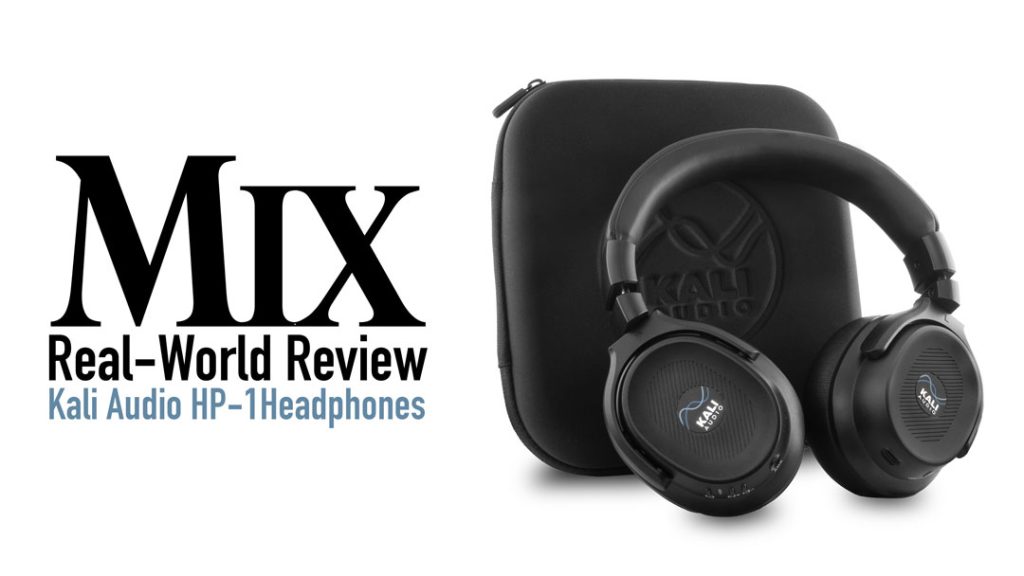
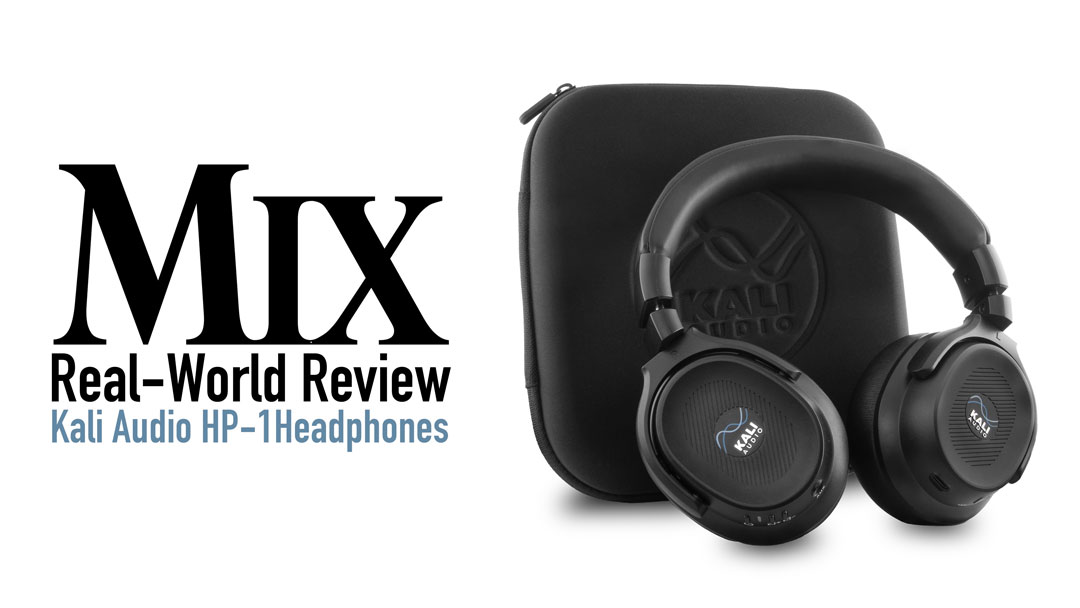
The Kali Audio HP-1 Reference Headphones are closed-back, circumaural, DSP-powered headphones with 40mm drivers. Multi- Reference means there are three different voicings selectable on the side of the right ear cup and indicated by a tri-color LED. The three voices are: Studio (blue); Consumer (white), which are typical consumer headphones with midrange emphasis; and Bass Heavy (red), similar to Consumer but with more bass.
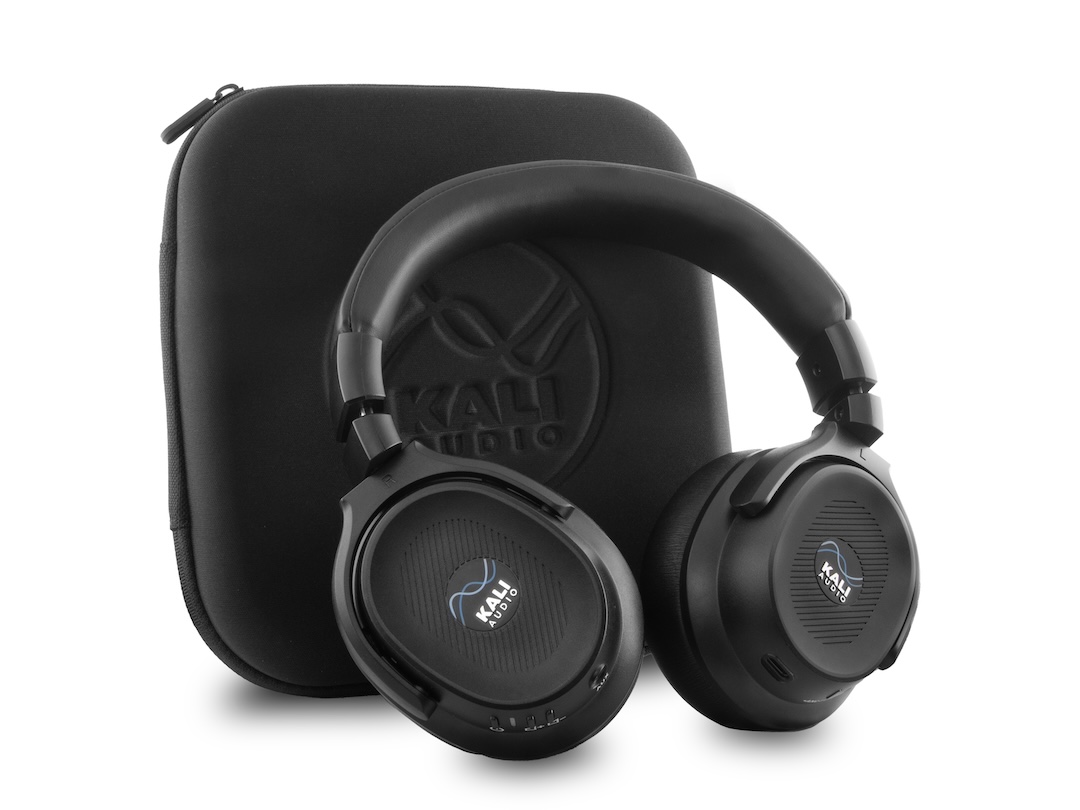
The HP-1 uses buttons with “tap/double-tap/hold” logic for all functions. Using the navigation involved a learning process for me, but the buttons are easy to feel and locate, and a quick-start card was included. The right earcup has a power on/off switch that also toggles Voicing selection and works the transport play/pause button. Just below the Voicing LED are the Volume up/down buttons, which are combined with the Forward and Rewind operation of your connected device.
In addition to the LEDs, there are pre-recorded voice prompts for verifying changes in HP-1’s operation, which was great for on-the-go listening when paired to my iPhone. The Volume up/down buttons are just below the power/voicing button, and it was easy to find for turning down commercials. I did have some trouble learning and using the other transport controls; I think these could be separate buttons. Using the HP-1 for phone calls is nice, with a clear caller sound and my own voice picked up using a dedicated microphone.
• KRK Systems Kreate 5 Monitors — A Mix Real-World Review
On the left ear cup is a single button to activate both Automatic Noise Cancellation and instant Bluetooth pairing. A single tap on the shared BT/ANC button activates ANC using two more microphones, also built into the headphones positioned in each of the earcups. External noise coming into each mic is flipped in polarity and cancels out. While on, the effect on the music is a loss of low frequencies. When the headphone cable is plugged in, the HP-1 unpairs and ANC turns off automatically. At the bottom of the left cup is a USB-C charging port (no USB cable included). The small, lightweight battery will run about 40 hours on a full charge—amazing!
A very short cable is included to plug into a 3.5mm TRS socket for using the HP-1 conventionally. I used a mini-TRS to ¼-inch adapter; the headphones must be turned on for the DSP filters to operate. While Studio mode will give the highest fidelity possible, the DSP has 17 milliseconds of latency, which may be problematic for studio recording/overdubbing; for listening and mixing, this is immaterial. Since the analog headphone cable (to the studio) has to be plugged in, there is not a quick way to A/B or compare a mix done in the studio and using BT for playing a mix from a streaming service.
Discover more great reviews—get a free Mix SmartBrief subscription!
I compared the HP-1s to a variety of headphones around my studio—none cost more than $399. I use an old Hafler Trans-Nova P1500 power amp to drive a couple of Simons Systems CB-4 boxes. I thought the HP-1s held its own as a worthwhile studio tool. They were not as loud and “present” as some of the others, but the real test was to compare a mix I was working on in Studio (blue) mode to my studio monitor speakers.
I use a pair of Focal Professional Trio ST6 studio monitors with a Trinnov Nova Loudspeaker Correction, Optimization system. When I matched the HP-1s to my Focals in equal, midlevel volume, I found the headphones remarkably close using the Studio mode. My preference was to press the earcups on my head for more presence. I liked the Consumer “white” mode as a test for the lowest common denominator sound of home stereo/headphones/earbuds. For me, this is the new “car test.”