
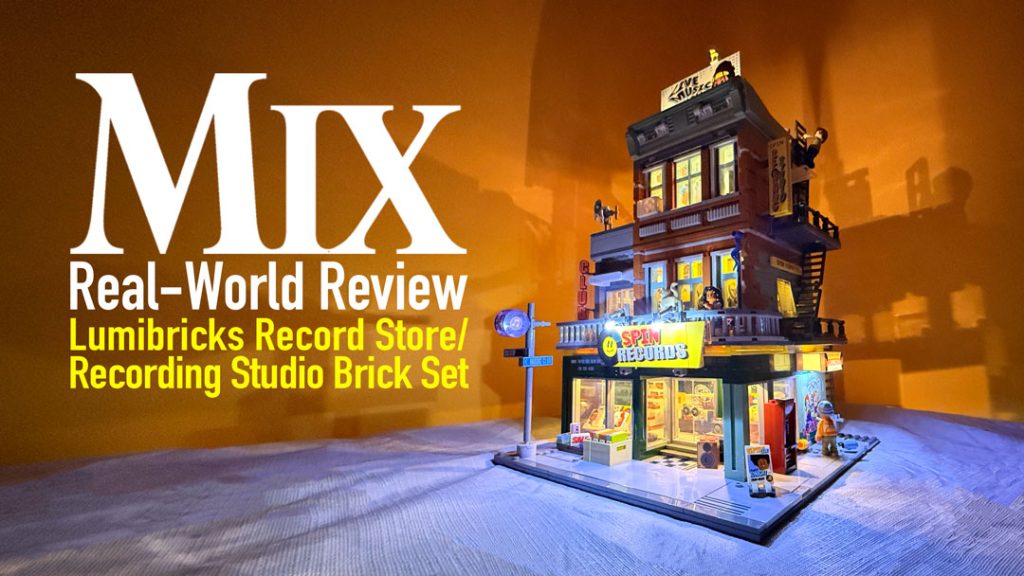
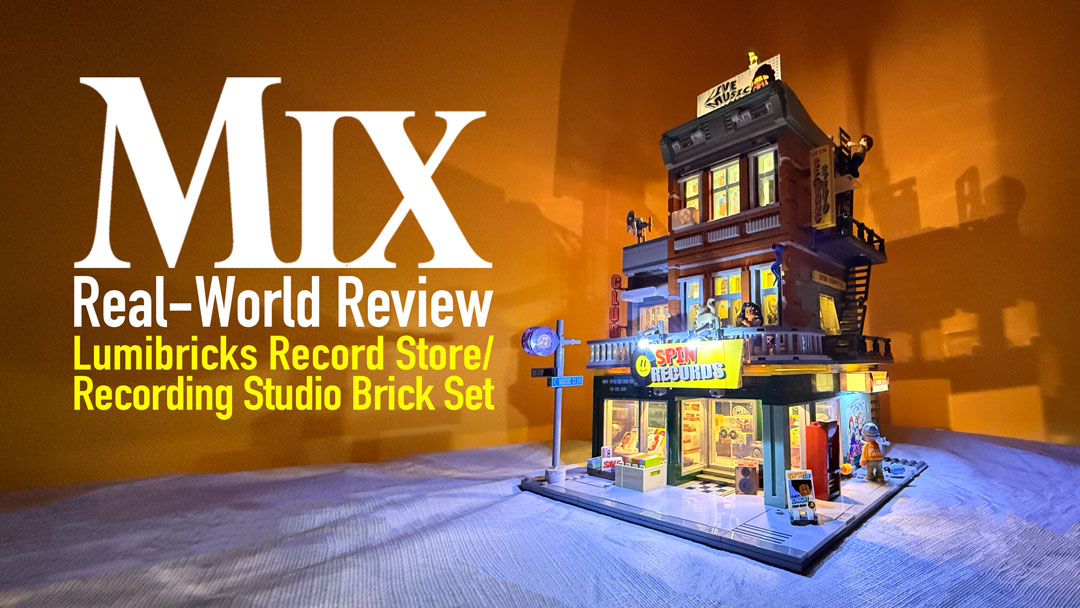
| MIX VERDICT: LUMIBRICKS RECORD STORE / RECORDING STUDIO BRICK SET |
| THE TAKEAWAY: “You’ll have a great time putting this thing together and no doubt it’ll look awesome in your studio afterwards.” |
| COMPANY: Lumibricks • www.lumibricks.com PRICE: $135 PROS: • Fresh concepts like lights and designs bring a welcome update to classic brick-building. • Clever details show designers know their audience. • Nearly 2,000 pieces, ensuring a long but satisfying building experience. CONS: • Wish the ‘studio in use’ sign lit up. |
New York, NY (December 23, 2025)—At Mix, we review serious pro-audio gear, but when the opportunity came along to review a recording studio—specifically a toy recording studio that’s part of the most over-the-top brick-building set we’ve ever seen—we couldn’t say no.
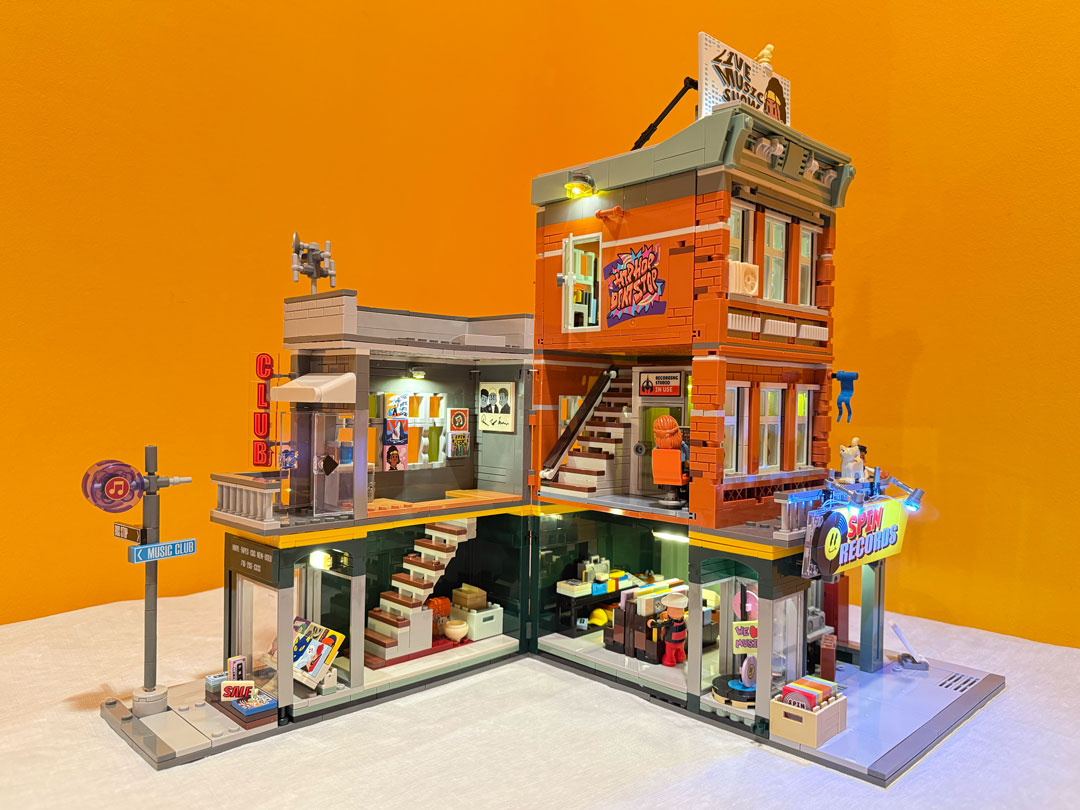
The studio is a key feature of Lumibricks’ Record Store brick-building set, part of its Street Fusion line, and the entire kit is something to behold. Channeling retro vibes from the dawn of hip-hop, it’s like a fever dream of the ultimate urban vinyl shop: three stories of eye-popping design, music-based entrepreneurship and more, nestled somewhere in the boroughs of New York City (the 718 area code on the sign gives it away).
INSIDE GROOVE
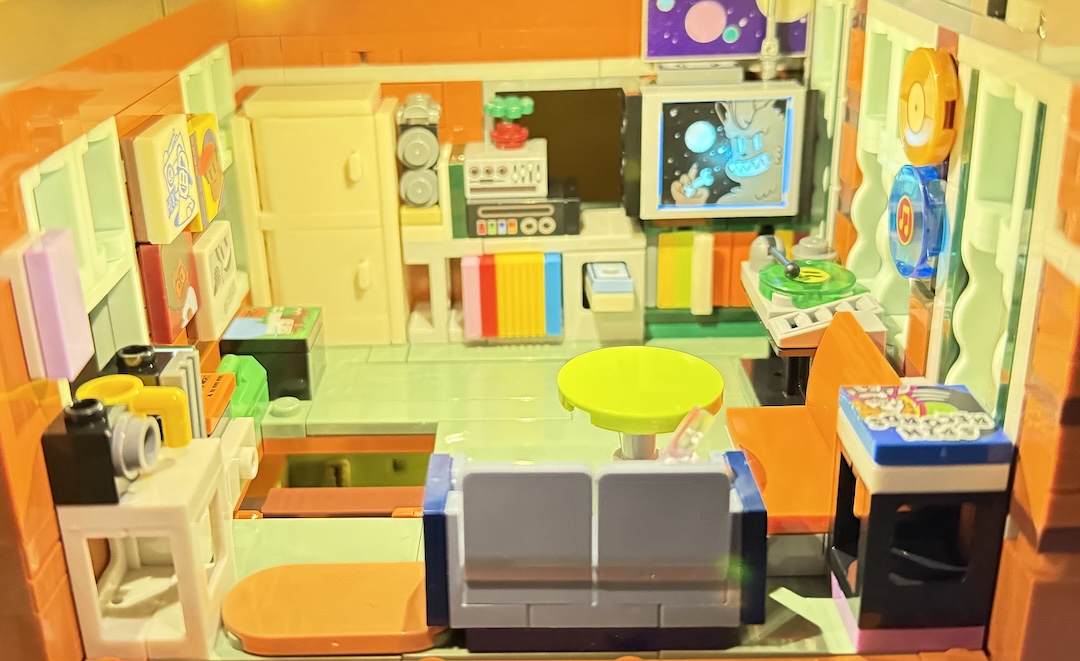
The three-story building features a vinyl shop on the first floor, recording studio on the second, and club and lounge on the third level. Each floor features an incredible amount of detail, and Lumibricks makes the most of it by allowing the building to split in half, opening on a hinge to let you to explore the interior up-close. Moreover, the floors in each room completely slide out, allowing you to examine them from every angle or re-arrange their contents as you see fit before sliding them back in and closing the building again.
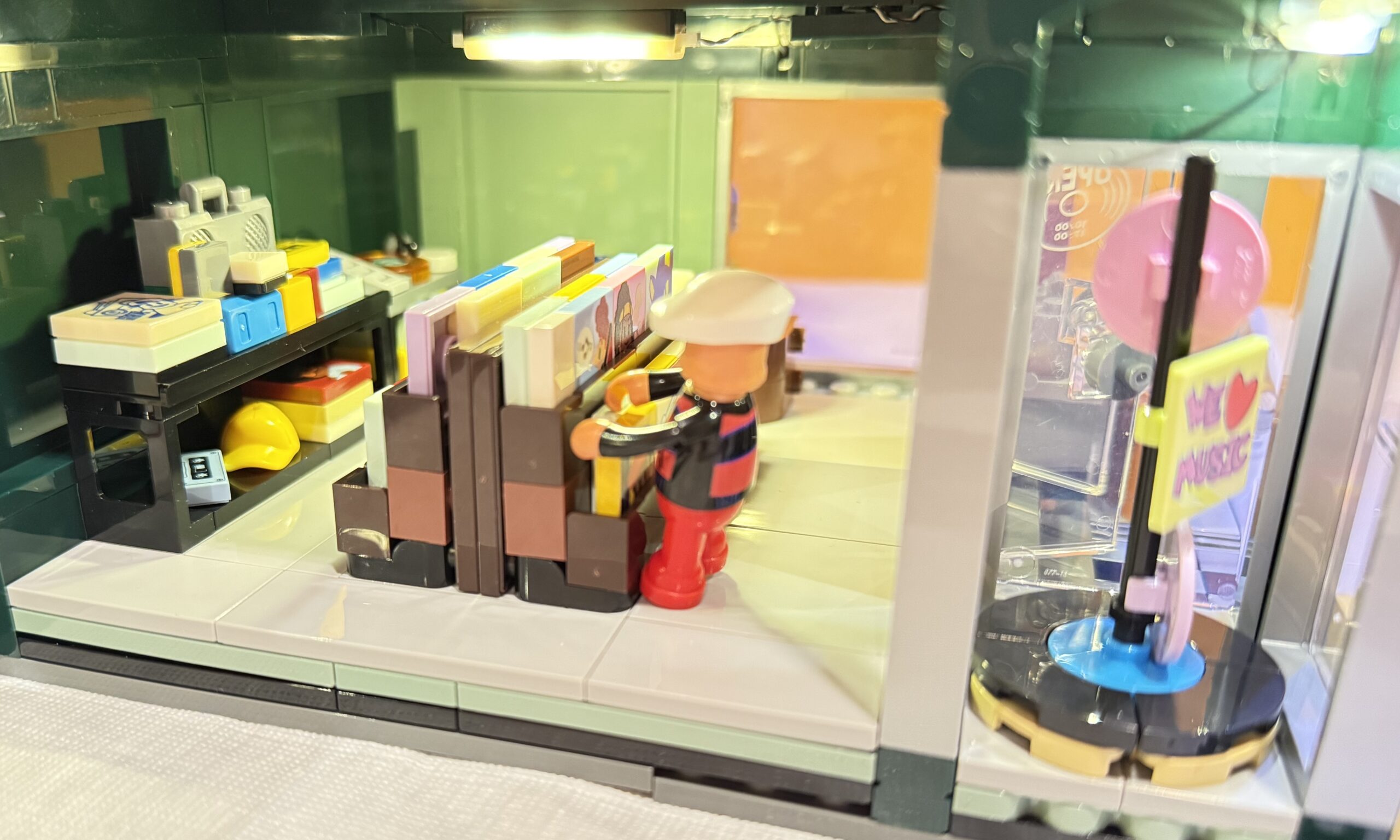
The designers clearly know and love music culture—and have a sense of humor about it, too. For instance, the cash register in the store reads “$150” on the screen, and there’s an ATM machine outside, because a great vinyl store will make you go broke. Outside the building, there’s graffiti on the walls, but hidden inside the studio under the stairs, there’s a janitor’s closet with cleaning materials and recyclables—the requisite pizza box and empty beer bottle. Clever touches like that really help bring the set to life.
Bringing all that detail to light are…lights! The set cleverly integrates LEDs and tiny (and somewhat fragile) wiring that you snake throughout the walls to light up rooms, signage, a TV set and more. Being able to peer through the windows and doors to see what’s going on inside adds a unique level of depth and verisimilitude to the set.
A RACE AGAINST TIME
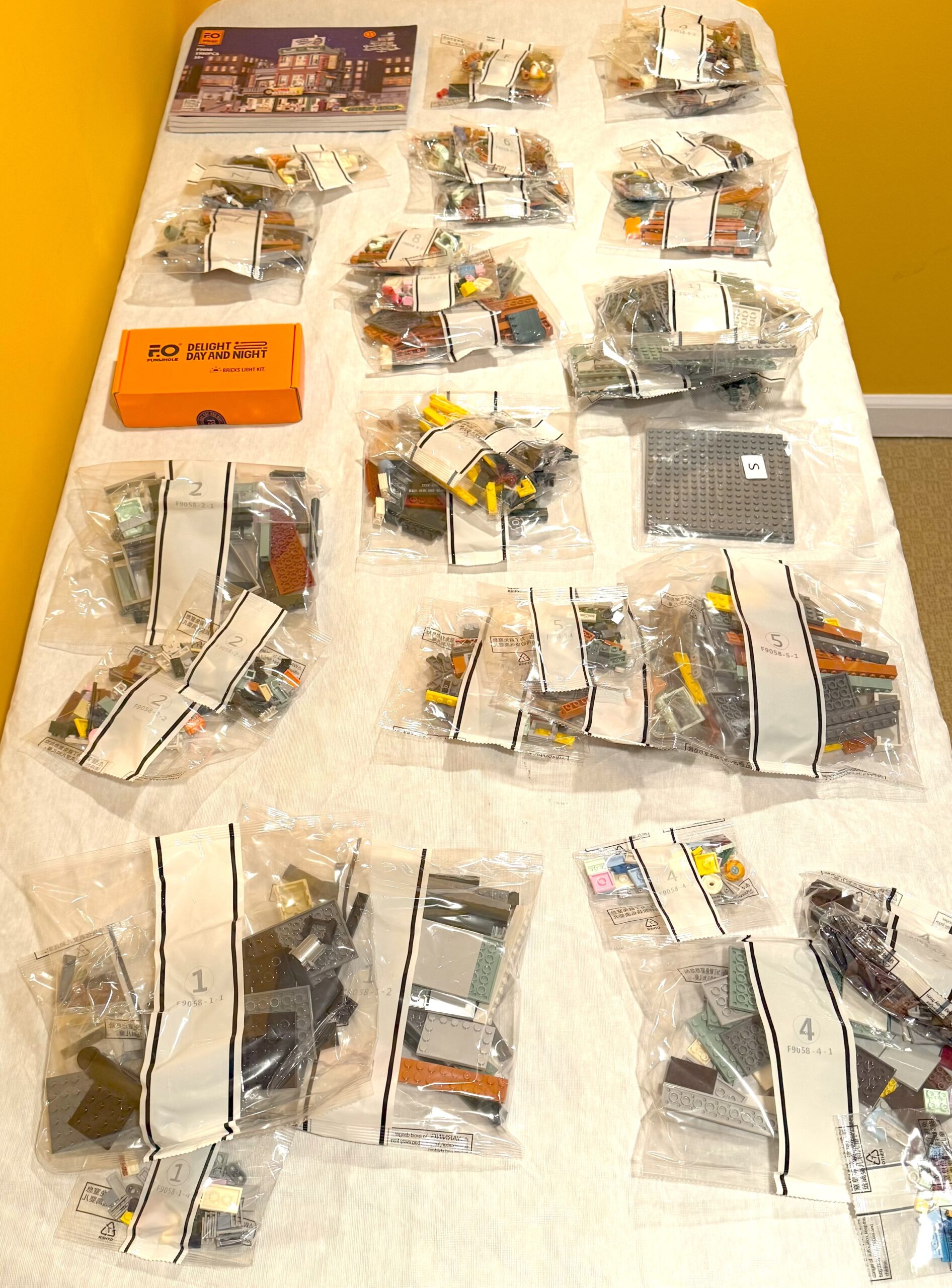
When Lumibricks sent me the Record Store set for review, the company had only one request: Good or bad, they really wanted the review online by December 22. That was fine…but then the set landed on my doorstep December 20.
Could I really build it in two days while also juggling end-of-year work stuff, Christmas shopping and all the rest?
I figured it wouldn’t be a problem—and then I opened the box.
The set is made up of 1,980 pieces (an appropriate number, given the early hip-hop vibes) and they are separated into 38 baggies. Guiding you through all those pieces are three giant, full-color manuals. Also included is a tiny screwdriver for opening and closing the lighting powerpack (it takes AA batteries), a pair of tweezers, the lighting kit, a service card and a special tool for prying bricks apart when you mistakenly put the wrong two together. I used it a lot.
Brick-building experts will notice something missing from that contents list. Me, I haven’t built a kit like this since I was a kid, but back then, the bummer part of every build was the dreaded Sheet of Stickers—the graphics that had to go on to specific bricks to add detail to a build. Inevitably I would tear a few by accident while peeling them off the sheet, and then I’d stick them on crookedly. It was the worst part of the experience.
Luckily, there’s none of that nonsense here—Lumibricks has covered the Record Store set with lots of detailed graphics but they’re all silkscreened on. No stickers in sight!
OFF WE GO
I dove into making the set, certain I could get it done in two days despite everything else going on. But before I did anything, the instructions had me test the lighting system first, and that takes about 20 minutes. While it makes for an underwhelming start, it also is crucial—you don’t want to build the whole thing, integrate the lights and then discover that they don’t work.

After an hour, I’d made most of the first floor…and by that, I mean the floor of the first floor. This was going to take a while, so I enlisted the help of our resident third-year architecture student, home from college on winter break. Without batting an eye, she grabbed the third manual and went to work building the third level.
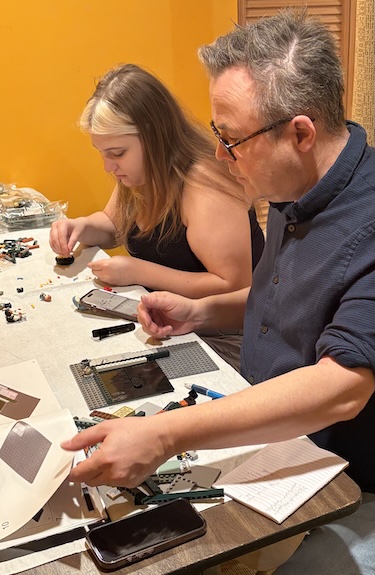
Good thing she chipped in—between the time we both spent on it, we estimate it is a 13-15-hour build for one person. The set is never especially difficult, but it does require focus and we’d strongly recommend a work area where things can be left for an extended period of time, undisturbed by cats, small children and the like.
There were a few random extra pieces in every bag, including the bag that the set’s little people came in. This proved useful when we accidentally broke one’s arm but were able to replace it without issue.
The manuals were very clear, and the colors were usually spot-on, helping to identify bricks as needed. In a clever touch, there were occasional 1:1 diagrams showing the length of, say, a 6-space piece, so that you could hold a piece right next to it and ensure you were using the correct-sized brick.
THE RECORDING STUDIO
While building the record shop on the first floor was fun, and my daughter had a blast building the third-floor lounge/club, the highlight for me—and the whole reason Mix was reviewing the set—was the recording studio on the second floor.
• Sennheiser MD 441-U Brick Set — A Mix Real World Review
This was another area where the details made the building experience even more fun. The space is divided into a control room and live room, and it gives lie to the fact that the studio is based in the current day, despite the retro feel of the overall set.
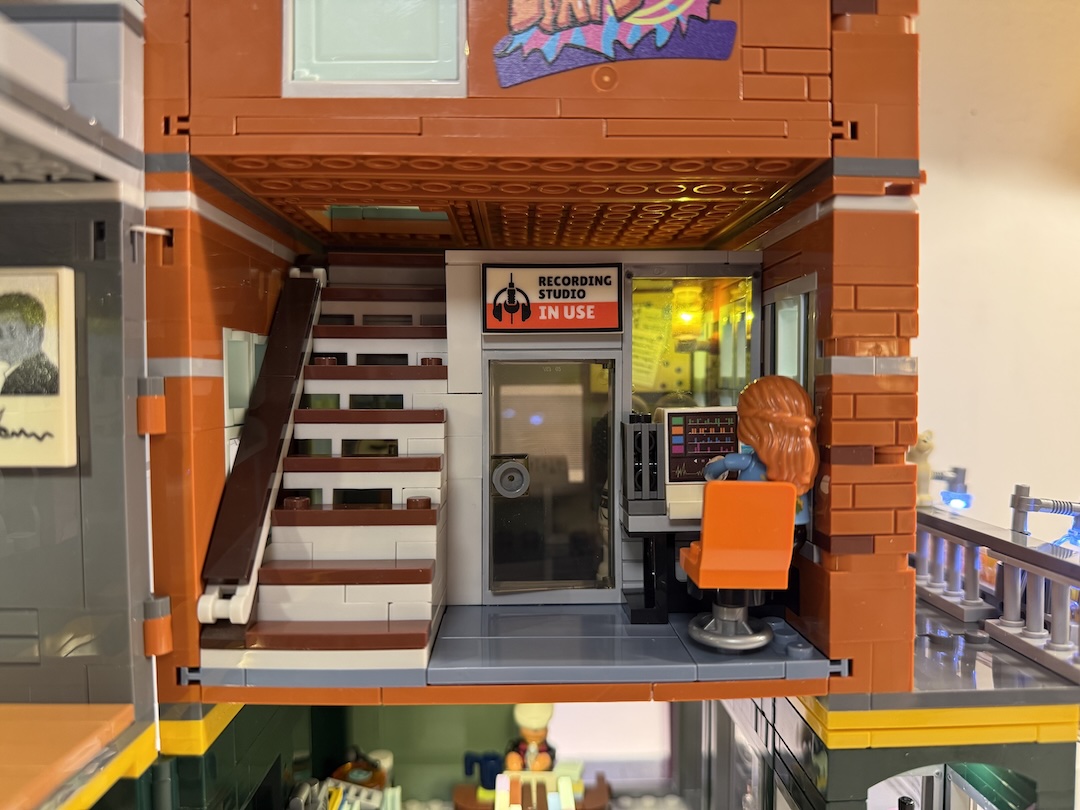
The control room features a computer, monitor with a DAW on the screen, a mouse, coffee mug and a studio chair complete with circular footrest underneath it. Most importantly, it has a ‘Recording Studio In Use’ sign over the door, which sadly doesn’t light up. The control room also features artwork and albums on the walls, and glass doors to the outside balcony.
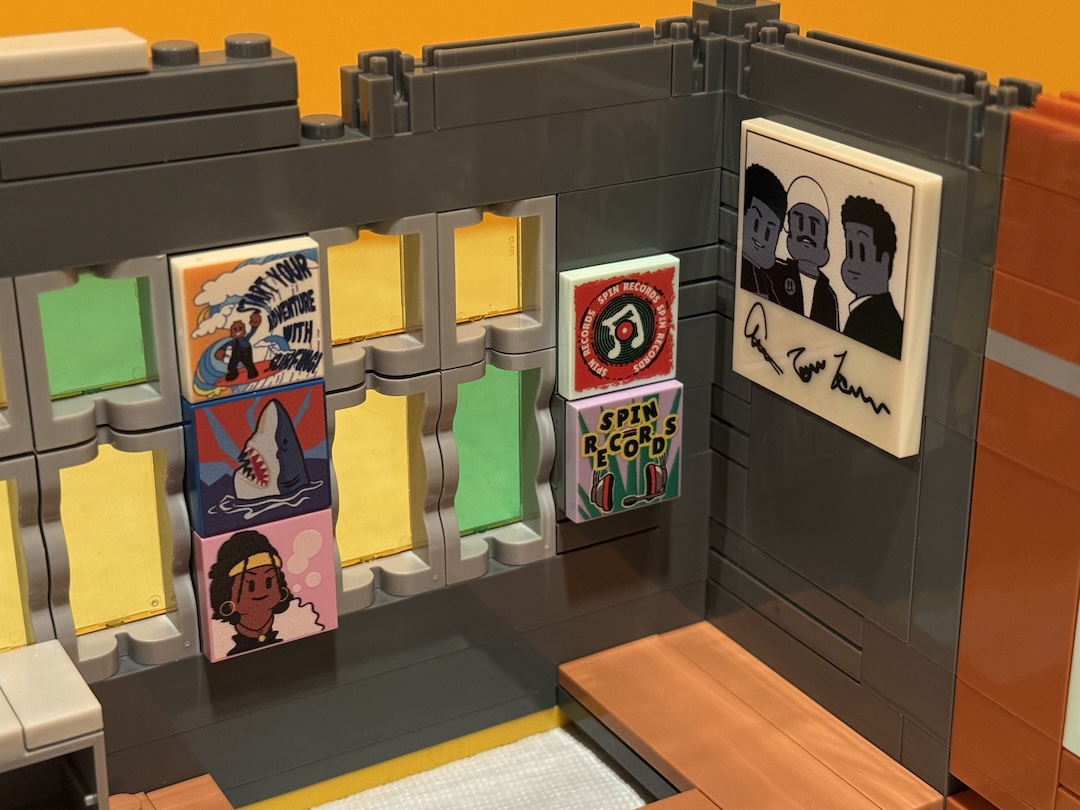
On the other side of the glass is the live room, complete with an acoustic guitar hanging on the wall and a synth workstation that includes a keyboard, drum machine, mounted microphone and a guitar mic in a shock mount (cleverly reusing what must have been a steering wheel piece in another set, purely by flipping it backwards). There’s also a reel-to-reel recorder for those who prefer analog (more reused steering wheels), a console (yes, it’s not in the control room), a speaker and plenty of notes on the bulletin board. There’s also the aforementioned janitor’s closet as well.
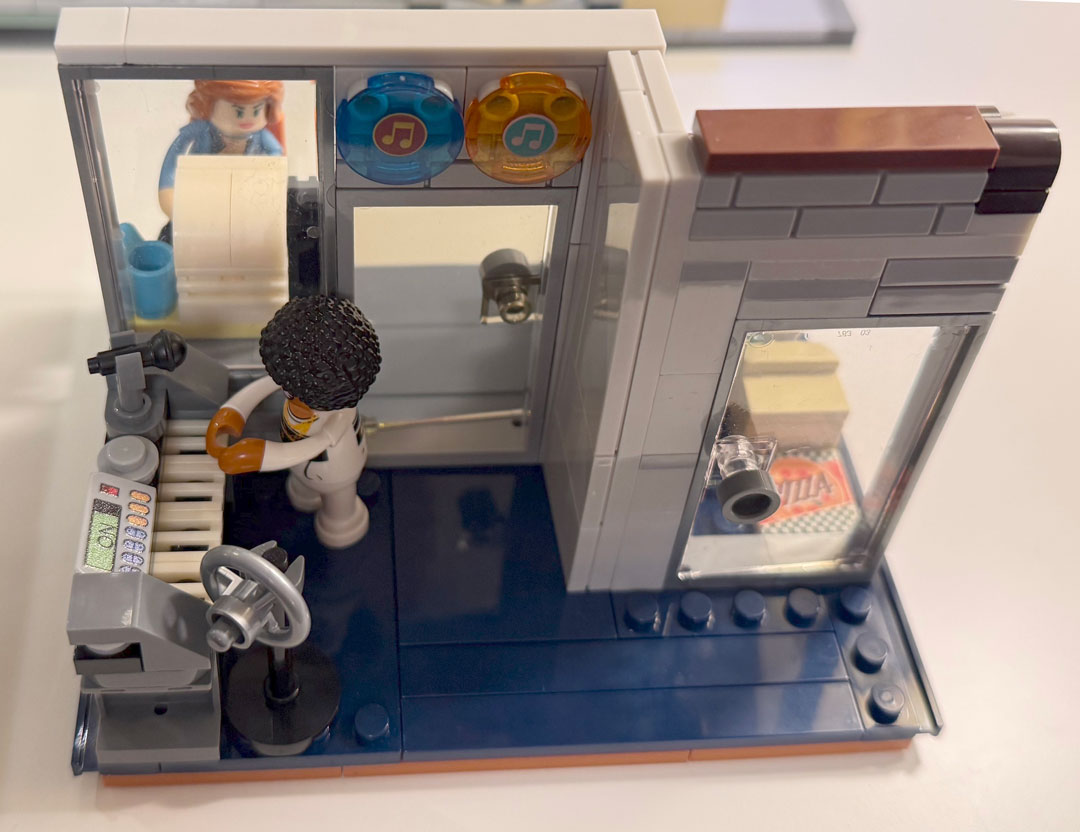
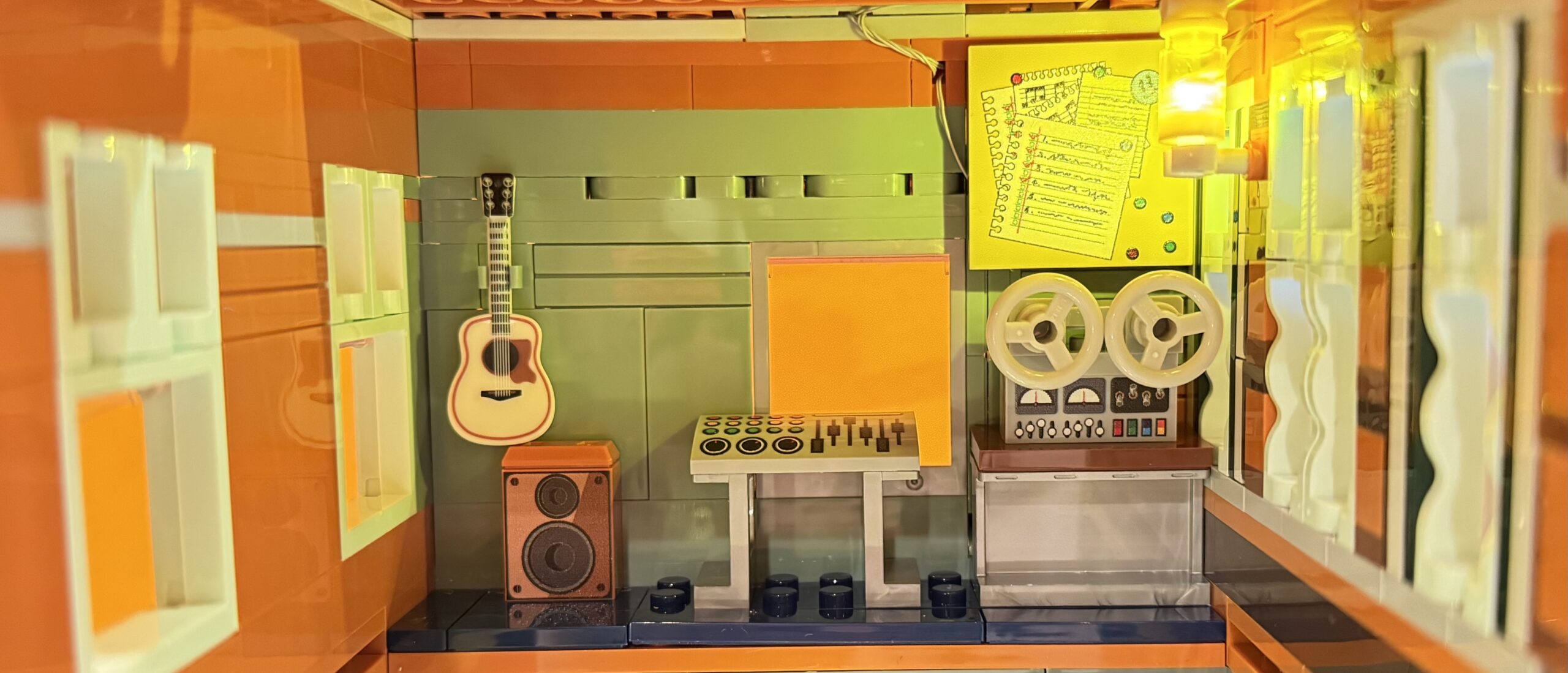
In short, your real-life recording studio may be acoustically sound and actually, you know, record, but this thing probably looks cooler.
WE BUILT THIS CITY ON ROCK AND ROLL
As mentioned before, this is a 12-15-hour build, and music fans will not be disappointed when they finally reach the end. If you drew a Venn Diagram of audio engineers and brick-building fans, there’d probably be a huge overlap, and this set will easily satiate both categories.
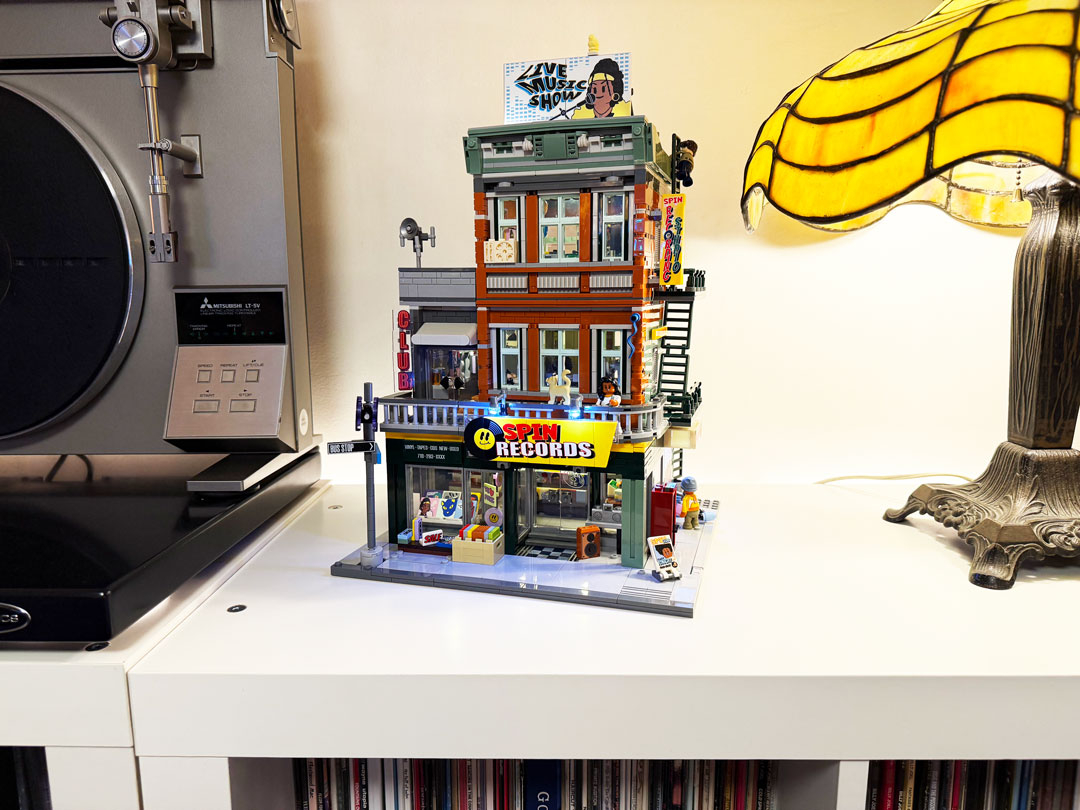
Lumibricks’ Record Store set is cleverly designed and never frustrating to build. The bricks are solid, the manuals are very clear, and the graphics are colorful and well-applied. The end result after all those hours is a set that looks exactly like what you see on the box, no Photoshop or AI trickery involved. Whether you’re a longtime adult brick-building hobbyist or not (I’m not), you’ll have a great time putting this thing together—and no doubt, it’ll look awesome in your studio afterwards.