
New York, NY (May 8, 2026)—Seven years after its introduction, the AEA KU5A continues to deliver as expected when it comes to most typical ribbon traits: robust low-frequency reproduction, smooth and buttery top-end translation, and transient response that rounds, soothes and euphonically softens.
Beyond those attributes, the KU5A goes off-path in modern directions: active electronics, a hot output level, a durable ribbon, front (end) address, switchable high-pass filter, high-SPL handling and most importantly, a supercardioid pickup pattern, which opens up a whole new set of atypical applications.
Those attributes are all useful in-studio, but AEA actually recommends the KU5A for live stage use with instruments, as well as vocals. This includes outdoor use, due to its minimal proximity effect, a sturdy ribbon and sufficient wind/pop filtering to mitigate gusts and plosives. It was time to look at this versatile mic once again.
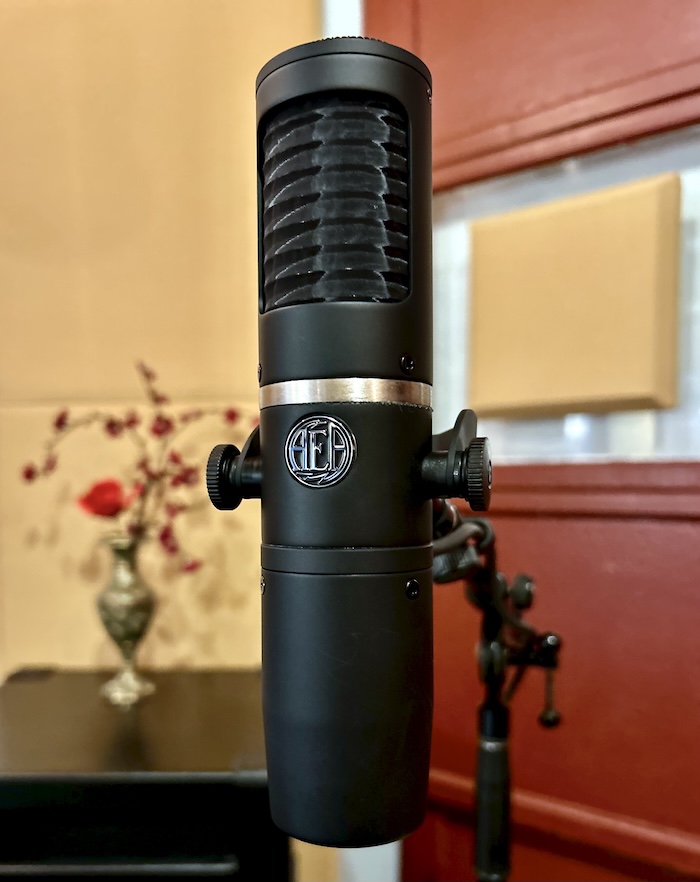
Like many AEA ribbon models, the KU5A incorporates an integrated mic cable, which takes a little getting used to, but once you consider it a “from-the-mic-to-the-floor” cable and not a “home run to your patch panel input,” you’ll get it. Also, like many AEA designs, there’s a built-in yoke here that, along with the end-address, makes for some easy placements, even around drum kits.
The active electronics require 48V phantom power, and they provide nice, hot, typical LDC output levels and a steady impedance that allows great flexibility in pairing with preamps. (Many ribbon mics are notorious for being persnickety about mic amps and impedance). The switchable high-pass filter adds to the flexibility as well; it’s -6 dB/octave at 283 Hz, which sounds high in frequency, but when paired with the strong bottom-end response, the low-slope net result can be very useful.
GUITARS AND DRUMS
I first tried the KU5A on acoustic guitar, where it shined in all the expected ways. The active electronics helped keep preamp noise down, the top-end was super smooth, the hefty low-mids allowed high single-notes to have body (and not just plink), and the high-pass filter was perfect.
That’s all great, but I was itching to try some more unusual stuff, like high-gain metal guitar, and the KU5A ate it up. It is spec’d to handle 141 dB (at 1 kHz), so I was able to close-mike the center of the 12-inch speaker and crank the amp up. I started out with the HPF off, and it was not the low-end mess I expected, although that filter was preferential as a matter of taste. I only needed +10 dB of gain on my mic pre, and at times, the KU5A sounded a little woolly, but at other times, sounded as good as my usual SM57/LDC combo put together!
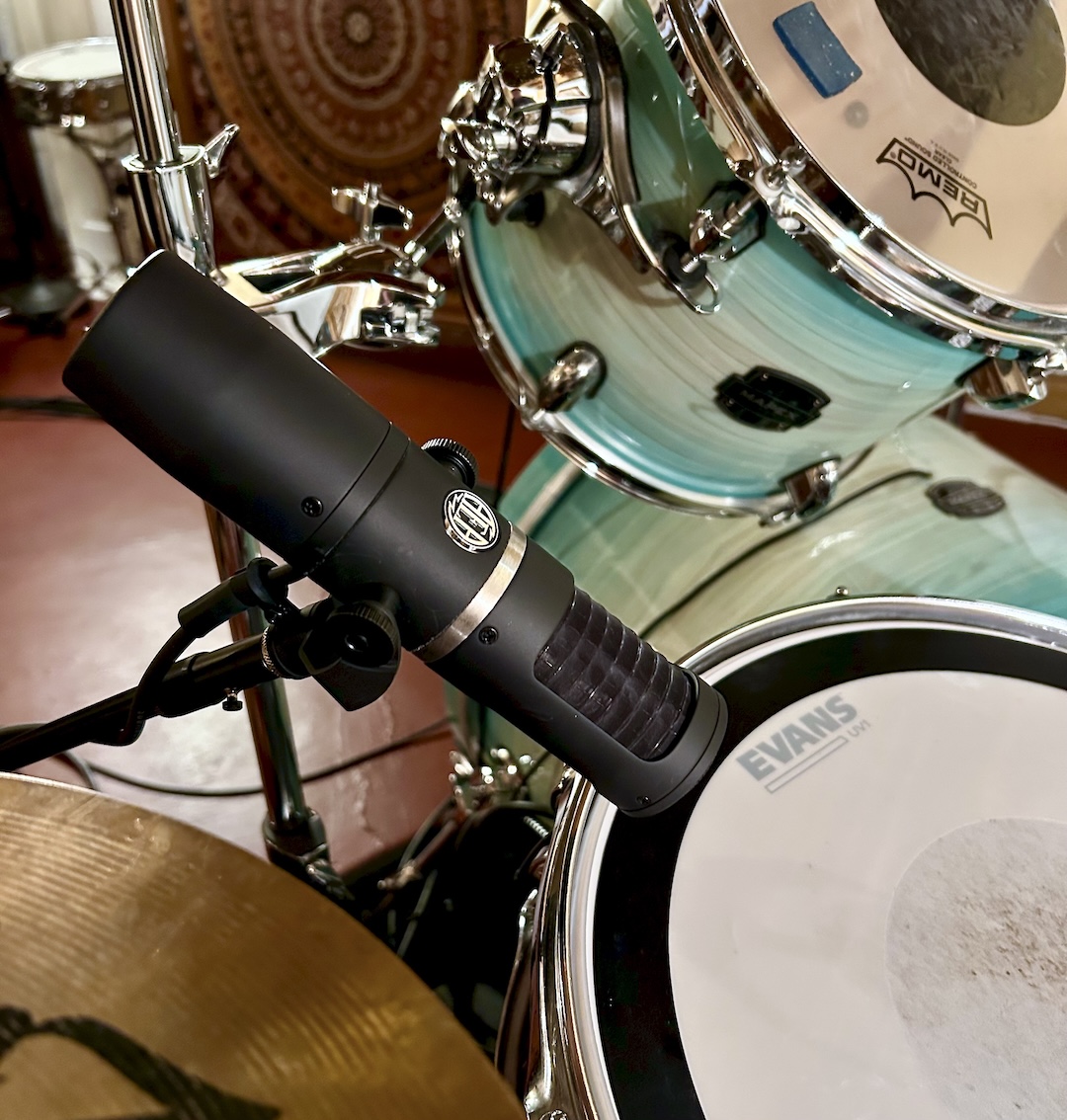
I next brought the KU5A into my drum room for a few loud and rocking sessions. Here, the tight pattern brought nice focus on a ride cymbal, as well as nice kick and hi-hat rejection on snare. Snare top works A-OK, SPL-wise; snare bottom requires some trial and error with aiming to grab the right amount of wire you want to catch. The snare side (shell) was the standout position—respectable isolation, and those punchy low-mids provide what can be missing when using typical methods.
I also tried the KU5A as a drum room mic, where the tonal balance and transient response were wonderful, but the supercardioid pattern wasn’t wide enough to grab the whole kit. The response on tom toms, in particular, was belly-punching good. My takeaway: Use the KU5A to pick up some punch in any difficult place you can squeeze it in, but not in a wide panorama.
VOCALS AND TAMBOURINE
I find ribbons to be hit or miss on vocals, but I did find two applications that were sure-fire winners. Really loud and aggressive vocals get nicely tamed by the KU5A signature, although a little mid scoop, or top boost, is likely needed. Whisper vocals worked well, too. With the HPF engaged and lips right up to the mic, there was a noticeable lack of the harshness that (perhaps counterintuitively) often pervades such vocal performances.
Finally, I had to try a favorite ribbon app—tambourine—and the KU5A delivered predictably. The overall transient response was simply wonderful, like some sort of delightfully musical optical compressor. Considerable lowmids made for a nice thwack (no HPF, please) on the 2 and the 4 beats, while there was a surprising amount of high-end, requiring no EQ in the mix. I even tried the KU5A on a percussion kit, where its directionality allowed bongos to pop right out amid all manner of opposing sounds.
Right before deadline, I quickly tried the KU5A on some bluegrass, where mandolin and banjo loved the thick low-mids and narrow pattern. On doghouse bass, percussive slaps were quite musical, and the high-pass filter was a viable option, dependent on placement and objectives. I would definitely recommend the KU5A for these instruments (and horns, too!) on a live stage, where isolation is paramount.
Discover more insightful reviews—get a free Mix SmartBrief subscription!
All things considered, the KU5A is attractive for grabbing classic ribbon mic tones from tight, loud and busy places where you couldn’t previously fit a typical ribbon, either sonically or physically. It is sure to be a problem-solver both on stage and in the studio, across a wide array of instruments and vocals.
Most of all (at least to me), the KU5A allows all kinds of interesting and unusual drum applications, and I’m sure I only scratched the surface.
| MIX VERDICT: AEA KU5A SUPERCARDIOID RIBBON MICROPHONE |
| THE TAKEAWAY: “It is sure to be a problem-solver both on stage and in the studio, across a wide array of instruments and vocals.” |
| COMPANY: AEA • www.aearibbonmics.com PRICE: $1,499 PROS: • Active electronics. • Durable enough for outdoor use. CONS: • Can’t be used passively or in traditional Blumlein placement. |