
Tarzana, CA (March 2, 2026)—From the top of a steep driveway in the Tarzana neighborhood of Los Angeles, producer/musician Rogét Chahayed flips a switch and an imposing gate slides open, allowing entry into his home studio. As the producer and songwriter behind this year’s Grammy nominations for “APT.” from ROSÉ & Bruno Mars (Record of the Year and Song of the Year), as well as production credit on FLO’s Access All Areas (Best Progressive R&B Album) and Lecrae’s Reconstruction (Best Contemporary Christian Album), he has good reason to seek a certain degree of impenetrability: He is now in-demand.
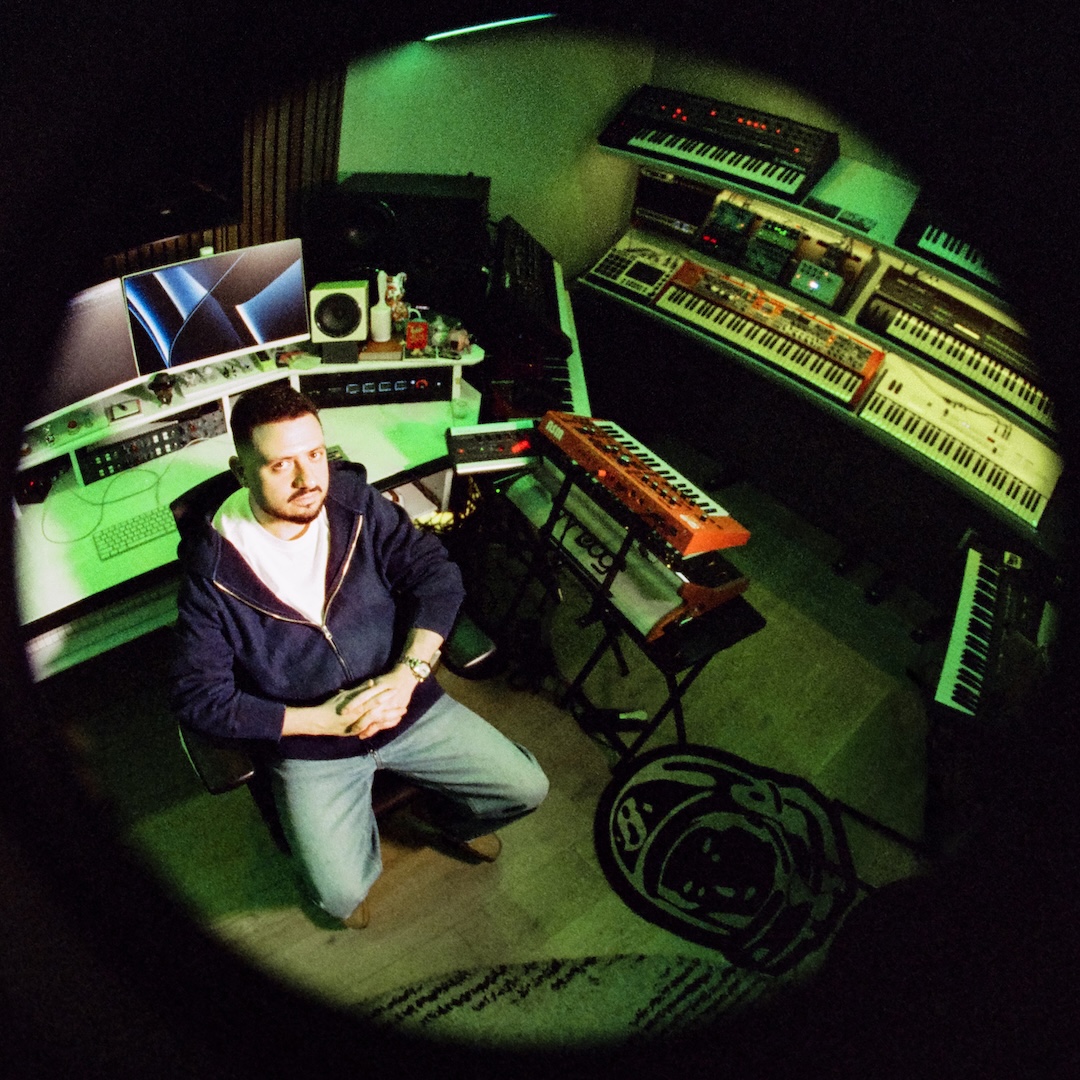
Stepping into the two-room studio tucked beneath his home, all five senses are immediately awakened. Spa-like scents set the tone, while mood lighting frames colorful toy figurines scattered across surfaces. Coffee-table books elevate the space, and sleek contemporary trays invite visitors to set down a drink. The multi-function live room houses a drum kit, a vocal recording area, and an inviting couch for whenever the songwriting inspiration strikes. The furnishings are plush, and the acoustic treatments are tuned and precise. It feels almost homelike.
Meanwhile, in the control room, floor-to-ceiling racks and stands along the side walls hold rows of synths—digital and analog, modern and classic—with cloth-covered stools spaced beneath them. Blinking lights twist across and through the array of keyboards, making the entire command and control center feel like the cockpit of a jet.
Here, Chahayed, a classically trained pianist who studied at the San Francisco Conservatory of Music, sits back in an ergonomic chair, resting his crossed legs on a matching ottoman. The space’s atmosphere, combined with his inherent talent and advanced musicality, has drawn a wide range of musical creatives over the past decade, including Jon Batiste, Doja Cat, BTS, Mary J. Blige, Anderson .Paak, Nas, Kali Uchis, Travis Scott, Halsey, as well as executive production on Jack Harlow’s Come Home the Kids Miss You and Jennifer Lopez’s This Is Me…Now.
FROM PIANO TO PROGRAMMING
Growing up as the son of a Syrian father and an Argentinean mother (who live nearby), hip hop was not encouraged in the Chahayed household. It wasn’t until college that he dove into the genre and began making beats entirely on his own.
After returning to Los Angeles, he established himself as a standout performer. From there, producer Mel-Man introduced him to Dr. Dre, where he was on call for keys and production. “If playing is the only thing you can offer,” he says, “then you better be good; it better be different.”
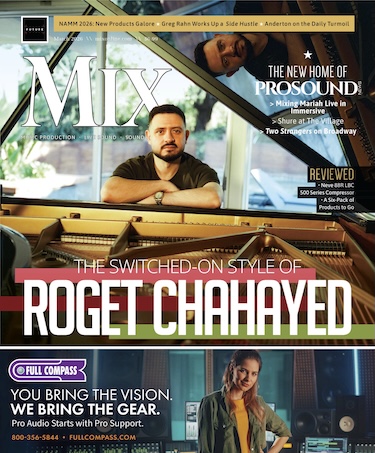
Over the past decade, Chahayed has firmly established himself at the top of the charts, collecting more than 10 Grammy nominations, including Producer of the Year in 2022. His classical training has served him well, he notes, citing composers Ravel, Scriabin, Rachmaninoff and Prokofiev as inspirations, while also admiring producer/songwriters such as Pharrell Williams, Scott Storch, Timbaland, Ryan Leslie and Jermaine Dupri for their use of real instruments.
• Capturing The Vibe of Lily Allen’s West End Girl
“I gave up on trying to be this insane pianist who masters all these pieces from 100, 200 years ago,” says Chahayed, adding that when seeking inspiration, he typically focuses on a few bars or a short passage from his favorites rather than entire compositions. “I was more fascinated by what they were doing in the composition, what they were going through at the time of their life and how they got to that place. I learned scales and finger exercises and technique, not so I can use it so much as it becomes embedded in you. I go off feeling. I go off the conversation I have with the artists. And in many cases, I go through what’s happening in my own life. Having feeling is part of having good technique.”
Discover more great stories—get a free Mix SmartBrief subscription!
Chahayed subscribes to the idea that, “Love is like playing the piano. First you must learn to play by the rules, then you must forget the rules and play from your heart.” To him, different key signatures tell different stories. Where you play affects the outcome of the song, and potentially the direction the artist wants to go. His understanding of orchestration, instrument ranges and where to place sounds gives him options on voicings and progressions, which in turn allows him to expand on ideas. He considers this one of his biggest strengths, a benefit that he brings to sessions.
Sometimes, he even finds himself scoring the artist while they’re speaking. As he gets a riff going, it often garners a reaction from the artist, who then wants to explore it further. “It’s good to confuse artists with something they’ve never heard,” he explains. “They hear a chord, and it’s like tasting a spice you’ve never had, and it’s interesting. They don’t know if they love it or hate it, but it’s giving them something. I feel that I’m able to incorporate that level of flavor because of my prior training.”